


A 1957 Toyopet Crown finished 47th in the Mobilgas Round Australia Rally. Nineteen days, thousands of miles of Outback, and a result that would get most programs cancelled.
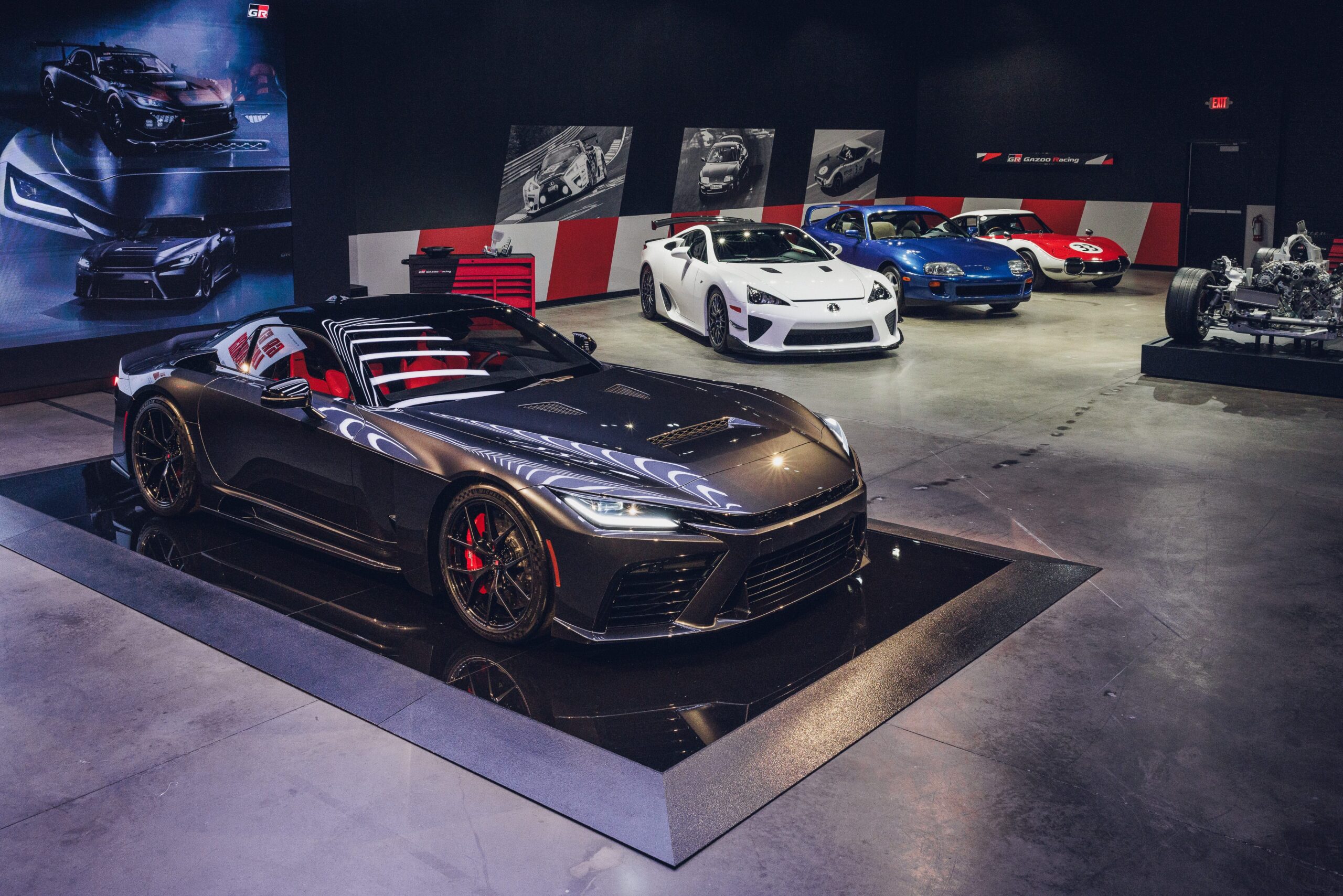
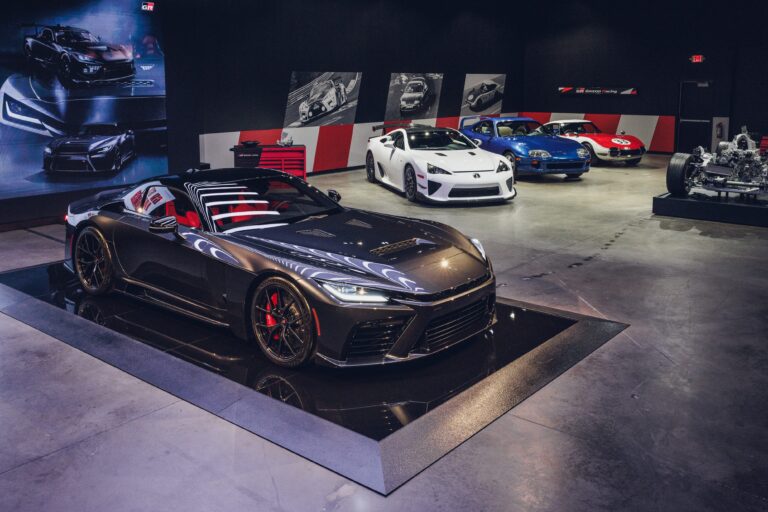
Toyota kept going. That Crown now sits in the new GR Garage Experience Center near Toyota’s North American headquarters in Plano, Texas, a few steps from a hybrid prototype making roughly 1,000 horsepower.
The distance between those two cars is the whole story of the room.
The Crown placed third among foreign entries. It didn’t win anything. What it did was expose weaknesses Toyota went home and fixed, a habit the company has never dropped.
Walk the floor and that habit shows up everywhere. The building is unassuming from outside. Inside, suspension parts, die-cast models, and racing memorabilia cover the walls and spill into the offices.
This is a carmaker better known for Camrys building a shrine to the thing most buyers never associate with it.
The résumé runs deeper than the badge suggests. In 1968, Toyota handed Carroll Shelby the 2000GT for SCCA competition, and only three were prepared.
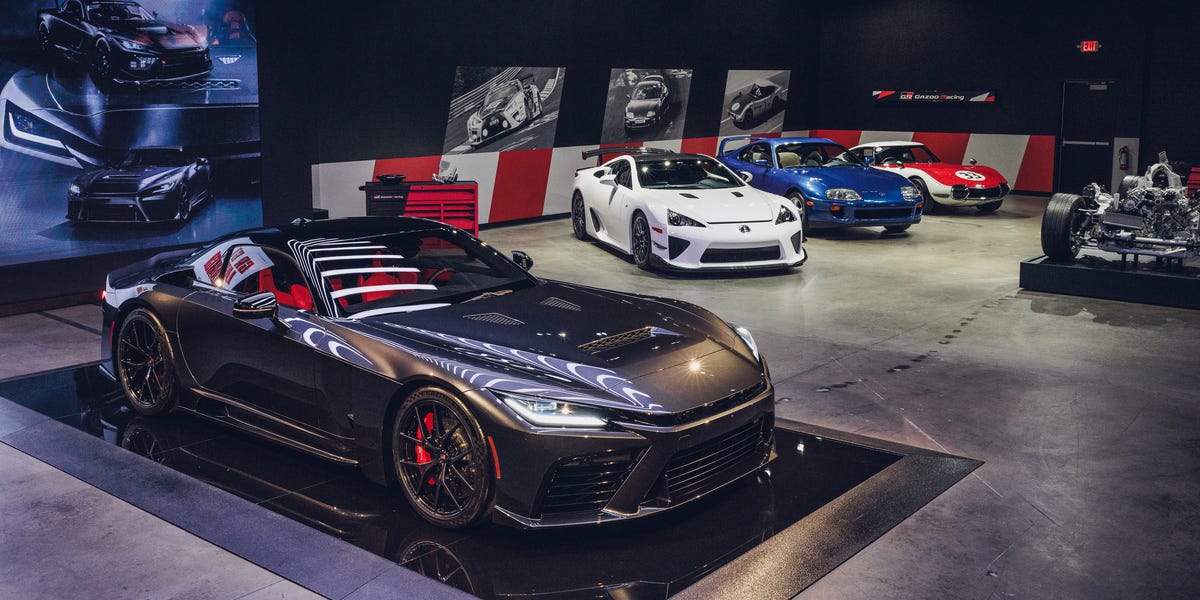
Scooter Patrick drove the No. 33 car on display to second in the C-Production standings. It ran about 200 horsepower from a 2.0-liter inline-six and held its own against Porsche.
Then came the cars that wore Toyota names and almost nothing else. Dan Gurney’s All American Racers built the IMSA GTO Celica on a tube frame with rear-wheel drive and a turbocharged four making as much as 600 horsepower. Chris Cord and Toyota took the drivers’ and manufacturers’ titles in 1987.
Gurney’s shop followed with the Eagle MkIII. More than 800 horsepower from a turbocharged inline-four. Consecutive IMSA GTP manufacturers’ championships in 1992 and 1993, with Juan Manuel Fangio II leading the effort.
At one stretch it won 17 straight races. The competition didn’t so much lose as stop showing up.
Off-road, the red-and-white PPI trucks of Ivan “Ironman” Stewart carry their own weight. Stewart piled up 84 wins and 10 championships, including 17 Baja 500 victories and three at the Baja 1000. He earned the nickname by racing without a co-driver.
The modern era is where the collection changes its argument.
The Lexus LFA Nürburgring race car marks the early Gazoo Racing push, when Akio Toyoda put himself in the driver’s seat at the Nordschleife. Beside the road-going Nürburgring Package LFA sits the Supra MkIV that master driver Hiromu Naruse used to teach Toyoda how to drive fast.
That Supra explains the GR badge better than any brochure. The man running the company learned in it.
The 2015 TS040 Hybrid shows where that thinking went at the top level. A 3.7-liter V-8, electric motors on both axles, supercapacitors instead of batteries.
Toyota had already taken the 2014 World Endurance Championship manufacturers’ and drivers’ titles before this revised car arrived. Le Mans still hadn’t fallen.
The newest metal is the most ordinary, on purpose. The GR Supra GT4 shares its 3.0-liter turbo six with the street car.
The GR86 Cup Car keeps the production 2.4-liter flat-four for a single-make series that began in 2023. The GR Corolla TC even retains the road car’s eight-speed automatic.
Prototypes built the reputation. Customer cars are paying it back.
One exhibit is a car on its way out. The Lexus RC F GT3 helped Vasser Sullivan Racing win the 2023 IMSA GTD Pro championship and a class victory at the 2024 12 Hours of Sebring, running a 5.4-liter V-8 against newer turbocharged rivals.
2025 was its final IMSA season. In January at Daytona, the GR GT3 takes its place on the grid, and a spot on this floor is already waiting.
Share this Story