
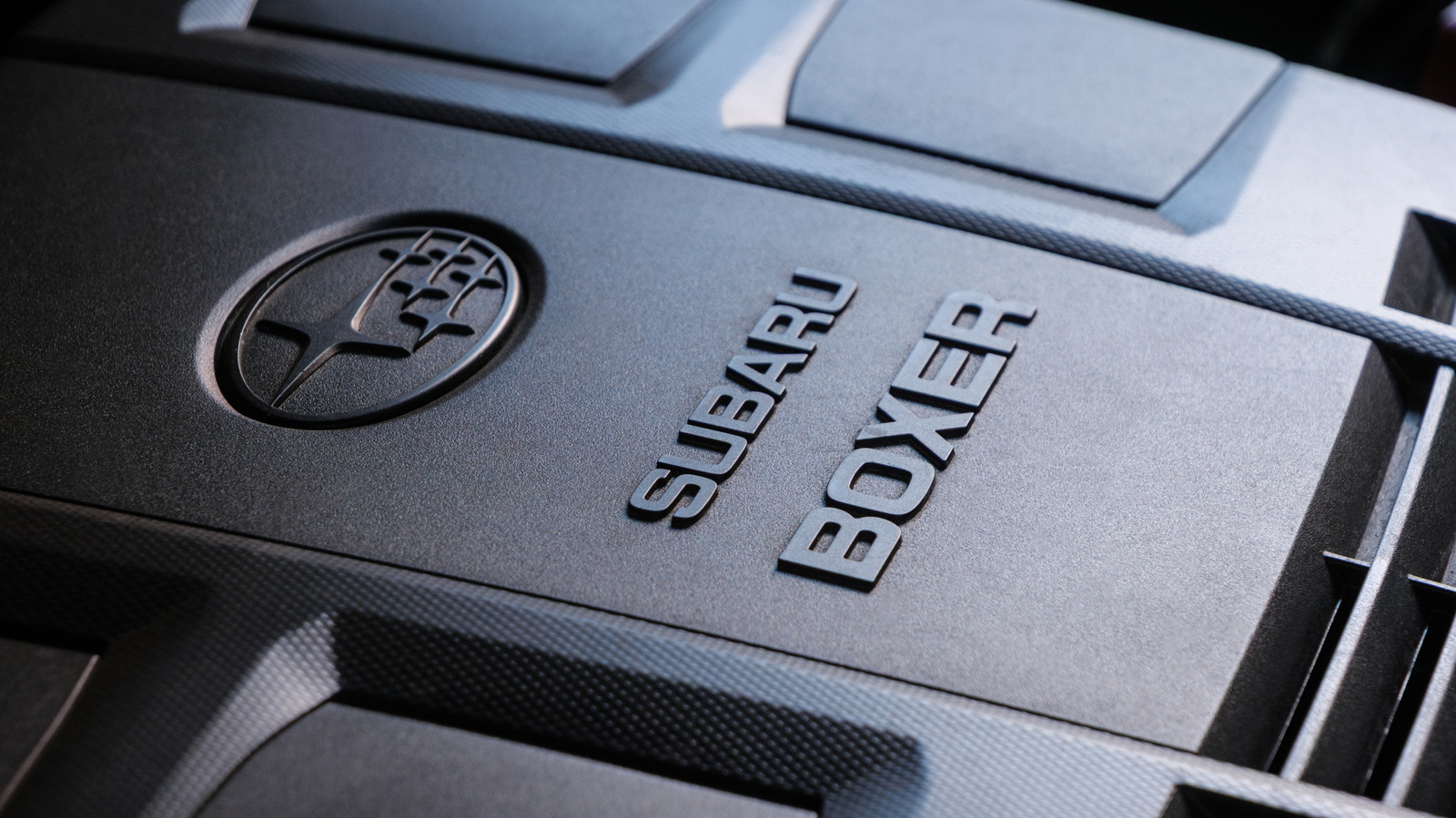


The first boxer engine ran in 1896, built by Benz & Cie. Subaru didn’t invent the layout. It just refused to let it go.
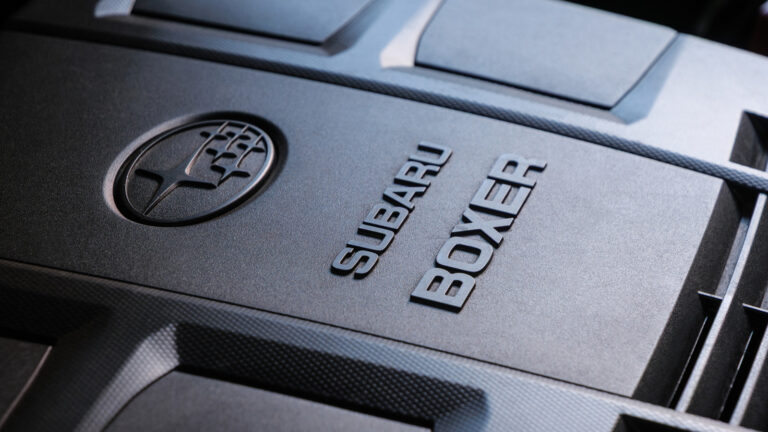
Lift the hood on nearly any new Subaru and you’ll find two banks of cylinders lying flat, punching outward like a fighter working the bag. That’s the boxer, and it’s still the company’s calling card.
The burble has gone quieter since the GC8 Impreza was tearing up rally stages. The engine layout hasn’t changed.
Subaru’s case for it is simple. The company says the symmetrical design cuts friction and vibration, which smooths out the ride. Anyone who has spent real seat time in these cars knows the character is there.
The physics help too. A flat engine sits lower in the bay than an inline-four, pulling the center of gravity toward the pavement. Bolt that to Subaru’s symmetrical all-wheel drive and you get a chassis that likes being driven hard.
That’s the brochure. The service bay tells the rest.
Boxers are wide. They’re also more complex than inline or V engines, and that limits packaging every time engineers sketch a new car around one.
Then there’s the oil. Lay the cylinders on their sides and oil pools at the low points, including parts of the cylinder heads. That raises the odds of head gasket work and leaves the engine exposed to oil starvation if someone revs it cold before lubrication circulates.
Subaru engines don’t forgive a low dipstick. Keep the oil at the right level, full stop.
Oil starvation isn’t a theoretical complaint. It was the basis of a 2024 lawsuit over the boxer-powered BRZ and its Toyota twin, the GR86.
Two cylinder heads means two head gaskets and two sets of related parts. The low mounting turns a spark plug change, a few minutes’ work on a conventional four, into a real labor bill.
The known failure points stack up. Many Subaru boxer families have burned oil, traced to low-tension piston rings fitted to chase fuel economy. Faulty crankcase ventilation can do the same.
Burn enough oil and you invite starvation. Under hard cornering with a low sump, the pickup tube can end up sucking air. Track drivers have learned this the expensive way, with some warranty claims denied after the fact.
Older flat-fours carried their own scar. Composite head gaskets didn’t survive repeated heat cycles, and owners discovered the “chocolate milkshake,” oil and coolant churned into sludge.
Newer engines use better materials. Older ones can be retrofitted.
So the low-tension rings bought efficiency and created an oil appetite. The low center of gravity bought handling and created a maintenance penalty. Every advantage of the boxer seems to arrive with an invoice attached.
Subaru knows how to build other engines. It has done it for decades.
Its kei cars and vans ran inline three-cylinders, and the 1980s Justy used a 1.2-liter EF-series unit. The EN-series straight four powered the R2 and other kei models into the 2010s.
None of those made it into the cars that define the brand. The Outback, the Forester and the WRX all kept the flat-four.
That’s a choice, made over and over, by a company that has proven it can build something simpler. The balance and the low stance are real. So are the second head gasket and the knuckles scraped reaching for spark plugs.
Subaru keeps betting buyers will accept both. So far, they have. The next engine program will show how long that bet holds.
Share this Story