
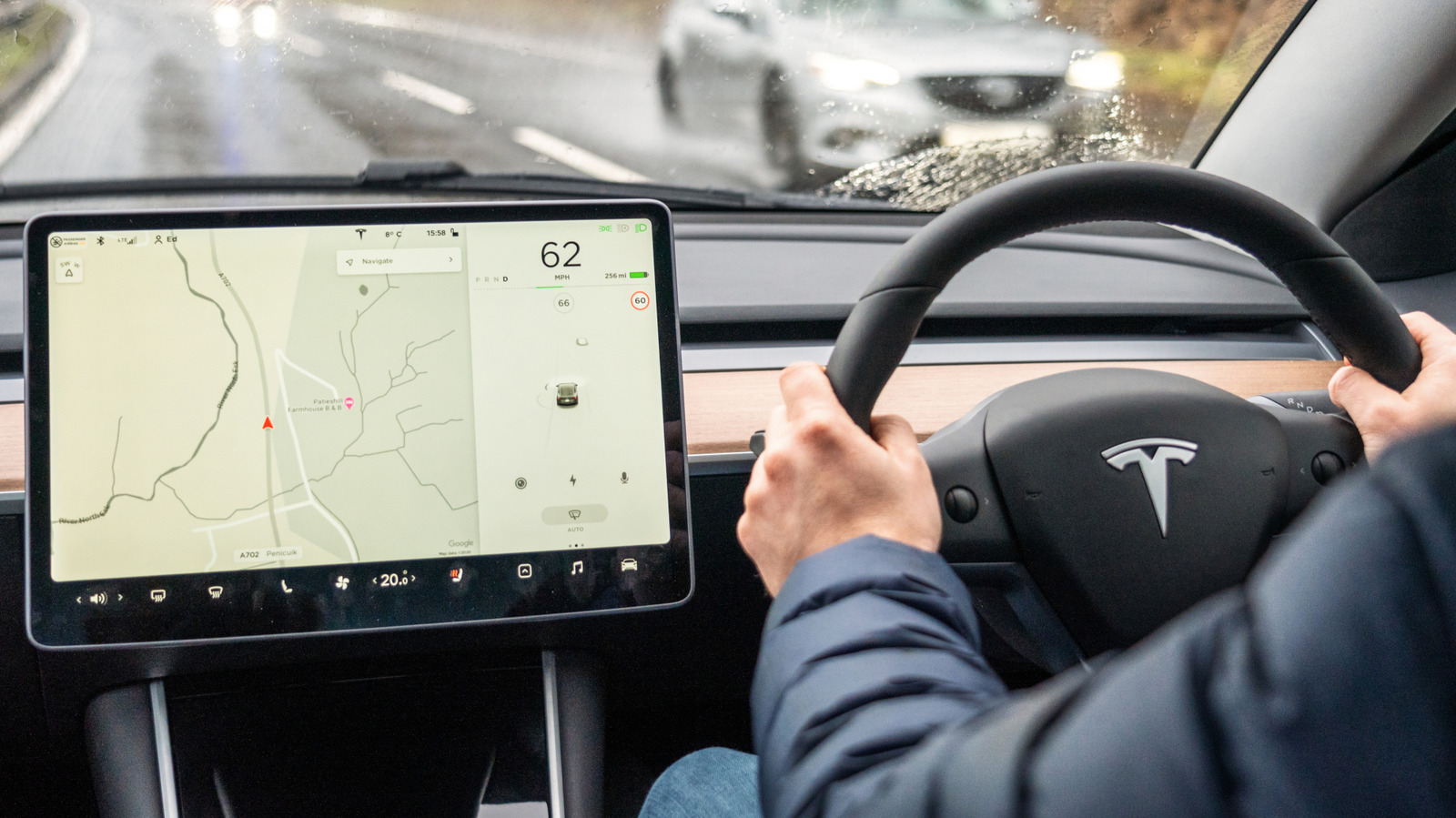


“Your Tesla will be able to drive itself almost anywhere with minimal driver intervention.” That line now greets Turo users who filter for Teslas equipped with Full Self-Driving (Supervised).
The key word there is “almost.” The word that should be carrying the weight is “Supervised.”
Turo announced last month that renters can search for and book Teslas running the automaker’s latest driver-assistance software. Thousands of FSD-equipped cars are already listed on the platform.
Strip away the branding and the classification is plain. FSD is a Level 2 system.
It is not hands-off, eyes-off, or mind-off. The person in the driver’s seat is responsible for the car at all times.
Turo knows this. The company is encouraging users to read Tesla’s FSD (Supervised) safety documentation before they book.
Anyone who has watched a rental counter at a busy airport knows how that goes. Travelers who skim a damage waiver are not going to study a software manual before picking up a car for a weekend in Phoenix.
So the platform is running two messages at once. The marketing copy says the car drives itself almost anywhere. The safety guidance says pay full attention or else.
Hosts are being asked to deliver the second message. Turo wants them to tell guests that the system demands full attention and that the driver stays in charge of the vehicle.
Guests should also be warned that FSD may suddenly stop working if its cameras are obstructed. That is no small footnote for someone in an unfamiliar car, on unfamiliar roads, who may have assumed the software had things handled.
Follow the money. Hosts whose listed Teslas lack FSD can get a free one-month subscription to try it.
There are conditions. The car needs Tesla’s latest AI4 hardware, and the owner must have completed at least one trip as a Turo host.
FSD cannot be sold as a paid add-on through the platform. But nothing stops a host from raising the base rental price on a car that has it.
That arrangement puts Tesla’s software in front of renters who have never paid for it, at no direct cost on the listing. A free trial for hosts. A first taste for guests.
Turo chief executive Andre Haddad framed it as access. “This industry-first integration with Tesla is another example of how Turo is redefining what car rental and access can look like,” he said as the rollout began.
“Most travelers have had limited opportunity to experience driver’s assistance technology, but the demand is clear,” Haddad added. He cited Turo’s own research showing 55% of Americans are interested in driverless technology for travel, rising to 71% among Gen Z.
Note the slip in his own language. He calls it “driver’s assistance technology” in one sentence and backs it with a survey about “driverless technology” in the next.
Those are not the same thing. The gap between them is exactly where a renter’s misunderstanding would live.
Haddad says Turo’s marketplace model is “uniquely positioned to close the gap between consumer curiosity and hands-on access.” Access is now solved. A curious renter can book a supervised self-driving Tesla with a few taps.
Understanding is a separate problem, and Turo has handed most of it to hosts and a PDF.
The cars are already out there, thousands of them, waiting for their next driver to find the filter and read that first line.
Share this Story