
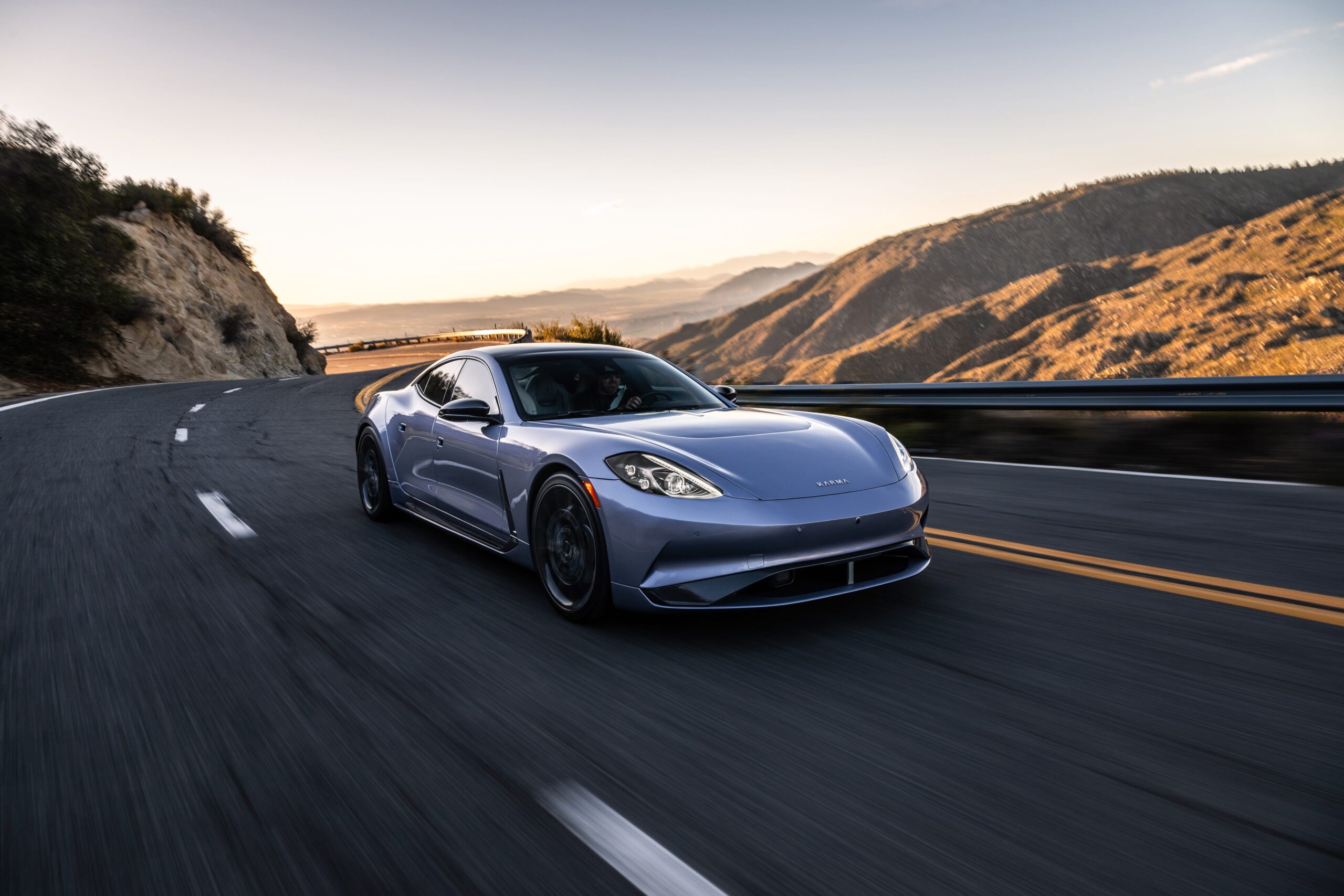


Two years ago, Karma Automotive showed the world a 590-horsepower electric sedan called the Gyesera. The car arriving at dealers this year carries the same name and a gasoline engine borrowed from a discontinued BMW.
That reversal tells you most of what you need to know about the company’s latest bid for survival.
Karma says it pivoted because the luxury market wasn’t moving toward EVs fast enough. So the battery-electric plan was shelved, and the Gyesera launches instead with the fifth generation of the plug-in hybrid powertrain that has followed this car through every one of its lives.
And it has had several. Henrik Fisker launched the original Karma in 2011, and his startup failed in 2014.
Chinese parts conglomerate Wanxiang Group bought the assets and revived the car as the Karma Revero in 2016. It has lingered through updates ever since without finding real traction.
Now comes the Gyesera, the first product under president Marques McCammon, a veteran of DaimlerChrysler, Roush, Saleen, and Ricardo who joined in 2023. It is a reinvention built on a familiar aluminum spaceframe.
The numbers have moved in the right direction. Output climbs to 566 horsepower and 594 pound-feet, gains of 30 hp and 44 lb-ft over the Revero. Karma claims 0 to 60 mph in 3.7 seconds, down from 4.5, and a 150-mph top speed, up from 125.
The architecture remains a series hybrid. A turbocharged 1.5-liter three-cylinder from the BMW i8 never touches the wheels. It charges a 28-kWh battery that feeds two rear motors, good for a claimed 80 miles of electric driving and 360 miles total.
Charging is less current. DC fast-charging tops out at 50 kilowatts, AC at 6.6.
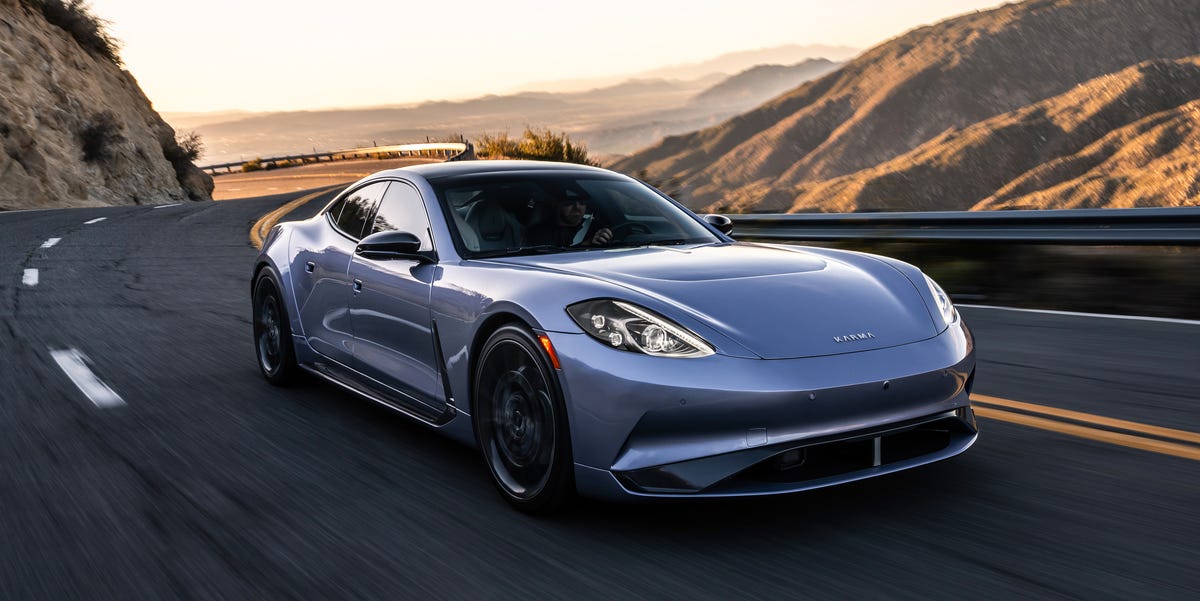
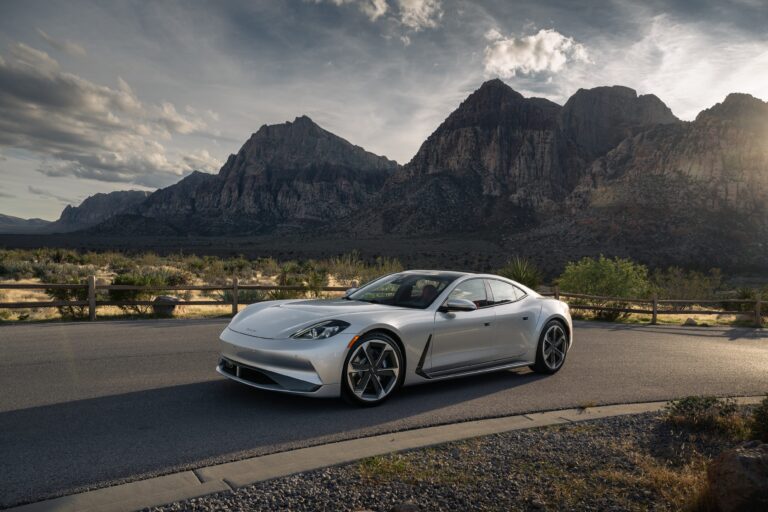
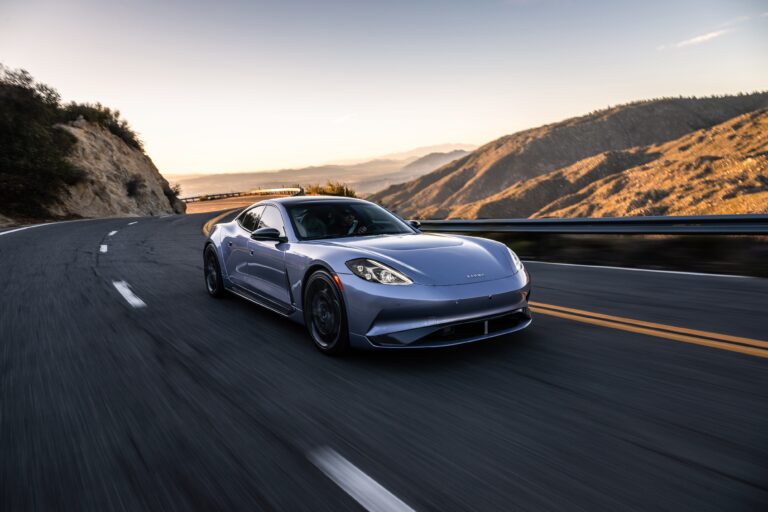
The design is where the money shows. Carbon fiber forms the hood, decklid, fenders, and rockers. The long hood and tapering roofline still echo Fisker’s original, and Car and Driver reports the car turned heads on the Las Vegas Strip, which is not an easy crowd.
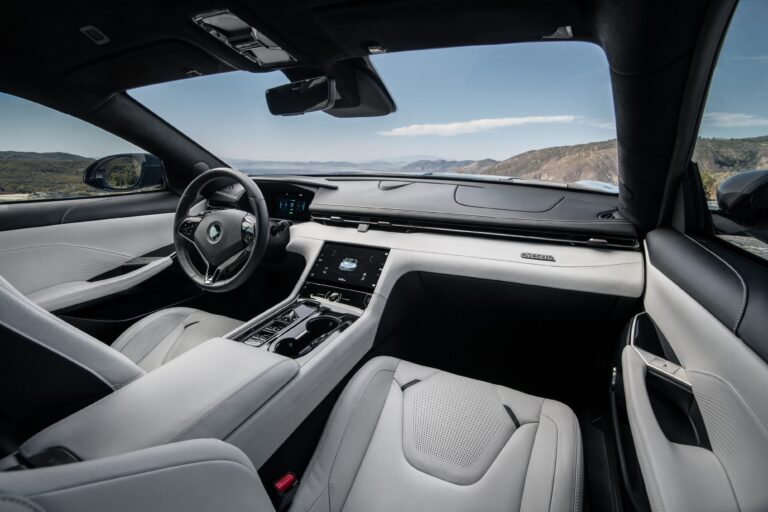
Inside, Bridge of Weir leather and Alcantara do the heavy lifting. Glossy black plastic on the console does not.
Some problems simply transferred from the old car to the new one. Car and Driver’s 5-foot-11 tester could barely fit behind his own driving position, knees jammed and head on the headliner.
The trunk holds 7 cubic feet. The front seats are narrow and the headrests don’t adjust.
Then there is the engine. In Sport mode, the three-cylinder delivers a buzzy note and what the reviewer called a flatulent thwack on lift-off, cycling on and off so the noise keeps arriving and vanishing. The exhaust exits right beneath the driver’s door.
That is a hot hatch soundtrack in a car starting at $139,995. The test example reached $158,995, and a Series One edition lists at $185,000.
The chassis makes a better argument. Öhlins coil-overs and unequal-length control arms deliver a smooth ride without air springs or adaptive dampers, and the 5,100-pound sedan feels nimble.
Steering weight builds naturally. Brembo brakes are strong, though the pedal offers little feedback.
Karma clearly knows where the sound problem lives. Its one-off Eximius 1 swaps the three-cylinder for a 6.2-liter V-8.
For now, the first 50 Gyeseras are due at dealerships before year’s end, handcrafted and deliberately scarce. They’re aimed at buyers who could just as easily sign for a Mercedes-AMG, Porsche, or BMW.
Share this Story