
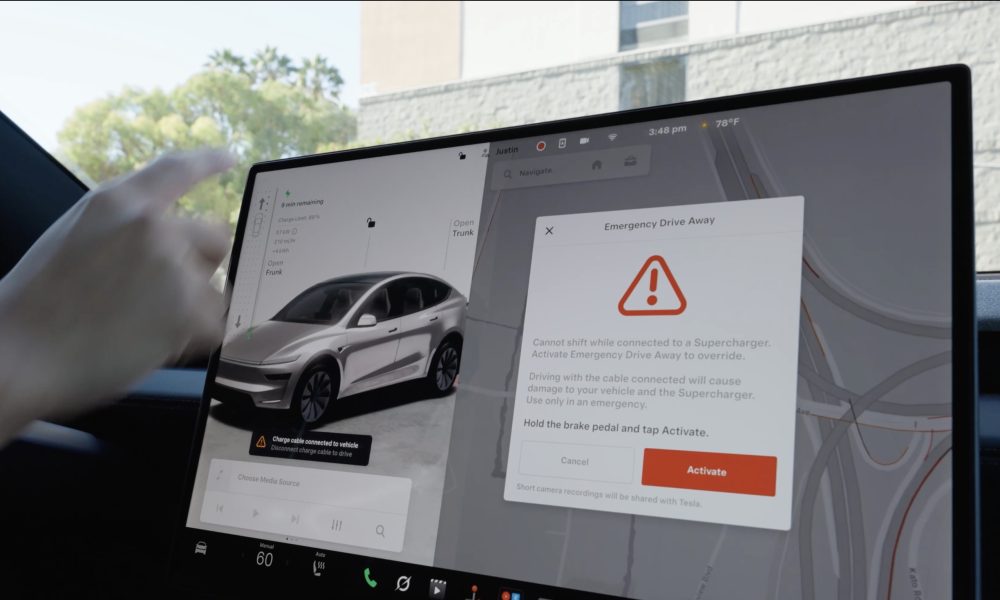


A Tesla owner tapped one button at a Supercharger, never moved an inch, and walked into a reported $539 service bill.
The button was Activate, the final step of Emergency Drive Away. Tesla pushed the feature to U.S. owners on October 1 with software update 2026.38.3. A month later, it is already teaching expensive lessons.
The case came to light through Yaro, who tracks Tesla service cases on X as @Tutrifour. A customer, still plugged in, shifted into Drive, pressed Activate, then remembered the cable and stopped.
Too late. The touchscreen threw a red alert reading “Emergency Drive Away has been activated,” with “Service is required” stamped underneath.
A Service Mode screenshot showed the fault code BMS_a228_EmergencyDriveAwayServiceRequired. According to Yaro, only Tesla Service can clear it.
“Don’t press Activate on the new Emergency Drive Away feature on your Tesla because service charges $539 to inspect the charge port and to clear the alert. Yes, even if you didn’t move the car an inch,” he wrote.
That number comes from a single case. Tesla has not published a set price for the inspection and has not commented on the post.
The car still charges with the alert lit. It just carries a permanent reminder that the owner touched the wrong thing.
The feature has a narrow job. It lets a driver pull away from a Supercharger with the cable still attached, for moments when staying put is the bigger danger.
Tesla made the process deliberate. Shift into Drive while connected, hold the brake, tap Activate. The prompt warns that driving off connected will damage both the car and the stall, and that short camera clips will be sent to Tesla.
Tesla Charging was blunt about what follows a real activation. Stall repairs can reach $25,000 depending on the site, a charge port service visit is mandatory, and deliberate misuse “will invoke additional penalties.”
What Tesla never spelled out is when the meter starts running. The service flag trips the instant Activate is pressed, not when a cable actually rips free.
From an engineering standpoint, that makes sense. Once the button is pressed, the car can’t confirm the charge port latch went unstressed. So it flags everything and lets a technician sort it out.
It also turns a software prompt into a priced transaction. A warning screen asks drivers to read carefully, but a $539 invoice makes sure they read the next one.
Careful reading hasn’t been common so far. The first known real-world use came in Austin during F1 weekend, when a driver appeared to trigger it by accident and dragged the Supercharger cable behind the car.
The Reddit user who filmed that scene said the driver seemed to have only half read the prompts. That’s two public incidents in a month, and both started with a mistake.
The fix for a nervous owner is simple. If the red prompt appears after you shift out of Park by accident, shift back and unplug the normal way. Use the touchscreen, the Tesla app, or the button on the charge handle.
Tesla built an escape hatch for genuine emergencies and wrapped it in warnings, camera footage, and repair bills. The real question is how many owners will learn the price by pressing it first.




Share this Story