
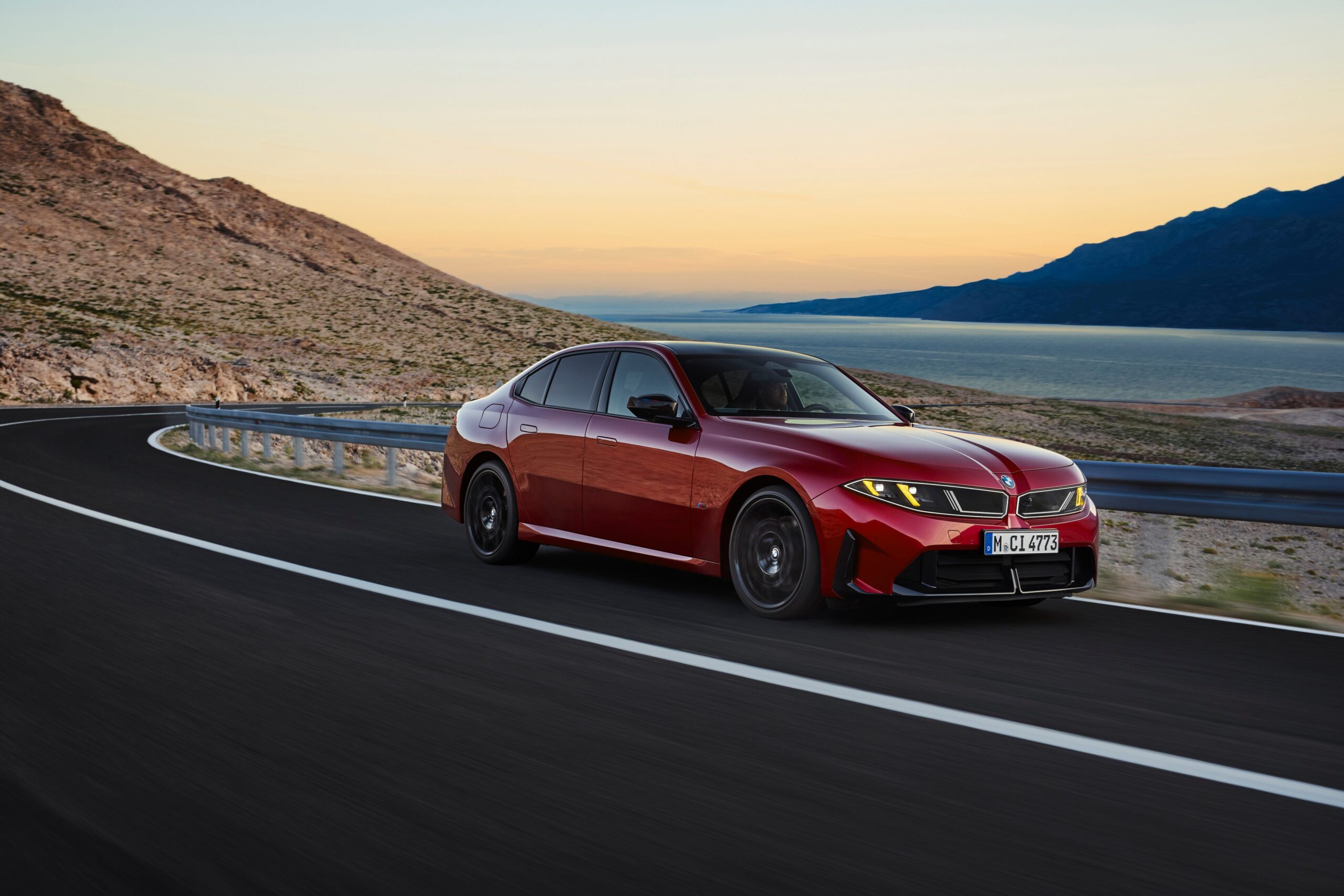


The 2027 BMW M350 xDrive makes 437 horsepower. That is 51 more than the outgoing M340i, courtesy of a larger turbocharger, reshaped intake ports, revised combustion chambers, and tweaked camshaft timing. It also weighs roughly 4200 pounds, about 200 more than its predecessor.
Whether that tradeoff lands as progress or bloat depends entirely on which number matters more to you.
BMW insists the new 3-series, built on its own dedicated combustion platform at the Dingolfing plant, owes nothing to the electric i3 rolling out of Munich at the same time. No shared architecture, no compromises, no repeat of the 4-series and i4 situation where one platform tried to serve two masters. Gas gets its own bones, and EV gets its own.
The bones themselves are slightly bigger in every dimension. Wheelbase grows 0.4 inch to 112.6. Overall length stretches 1.7 inches to 187.6, width adds nearly an inch, and height rises 0.6 inch mostly because the standard 19-inch tires have a taller rolling diameter.
None of these numbers are dramatic, but they add up, and the weight gain is real.
Both engines use Miller-cycle valve timing and switchable exhaust valves that reduce engine braking to feed more energy into the 48-volt mild-hybrid system. The base 330 carries forward with 255 horsepower from its 2.0-liter turbo four. The M350’s 3.0-liter inline-six is the one that got the real attention.
BMW estimates a 60-mph time roughly a tenth or two quicker than the 3.7 seconds Car and Driver recorded from the old M340i xDrive. Call it 3.5 or 3.6 seconds, which puts this sedan uncomfortably close to the last-generation M3.
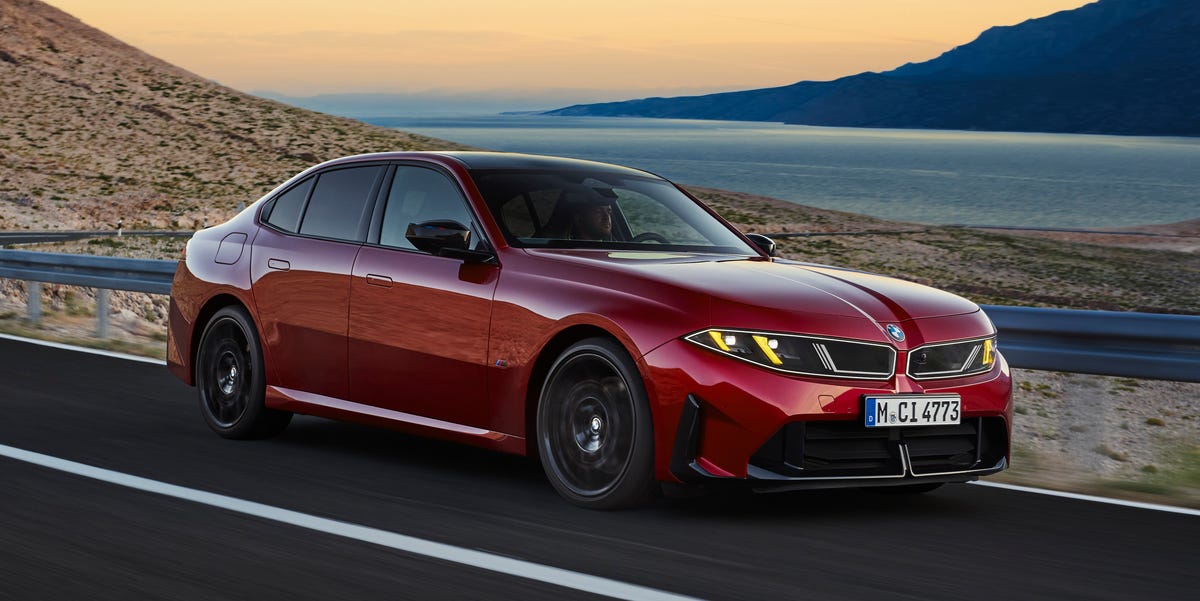
The chassis work underneath is careful rather than radical. A wider front subframe increases track width. Higher caster angle and reduced static negative camber on the front end are aimed at improving on-center steering feel, and early impressions from driving in southern France suggest BMW got that right.
Stiffer anti-roll bar mounts cut flex. Revised rear bushings manage passive toe characteristics to keep the car feeling playful without getting nervous.
The M350 xDrive comes standard with adaptive dampers, variable sport steering, an M Sport differential, and a strut tower brace. BMW has also recalibrated the xDrive torque split and diff behavior so the car resists understeer more when you carry too much speed into a corner. The adaptive suspension has been retuned for better comfort through an improved rebound-to-compression damping ratio, though the smooth roads of Provence are a poor proxy for American pavement.
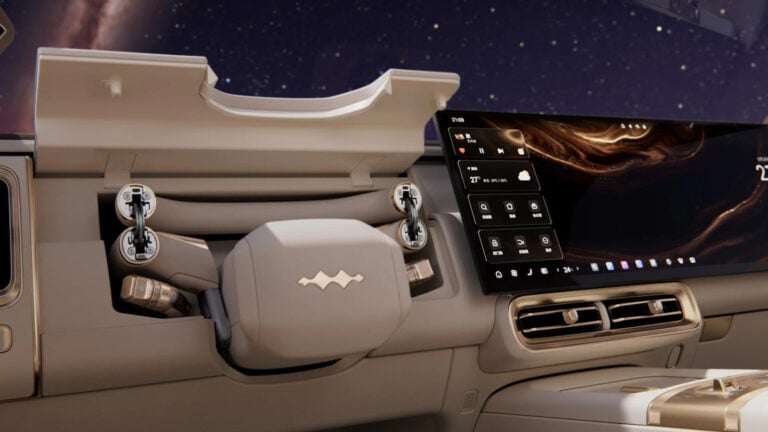
Inside, the Neue Klasse interface dominates. A 17.9-inch angled touchscreen handles most functions. The Panoramic Vision display, a strip spanning the base of the windshield, replaces conventional gauges.
It works well enough, but the optional head-up display projects navigation data directly on top of the road ahead, which is exactly where your eyes should be looking at traffic instead. Fixed buttons are scarce. Adjusting air vents means diving into touchscreen menus, a regression that no amount of software updates can fully excuse.
BMW is calling this a Software Defined Vehicle. A feature called Drift Moment, which routes all power to the rear wheels with stability control off, will arrive via over-the-air update once BMW certifies it. A hands-free highway driving mode works up to 85 mph and supports automated lane changes confirmed by a glance in the mirror.
Pricing starts at $51,250 for the rear-drive 330, $53,250 for the 330 xDrive, and $67,250 for the M350 xDrive. All variants arrive near the end of Q1 2027. The entry price has crept up, and so has the curb weight, and BMW is banking on 437 horsepower and sharper chassis tuning to make buyers forget both numbers.

Share this Story