
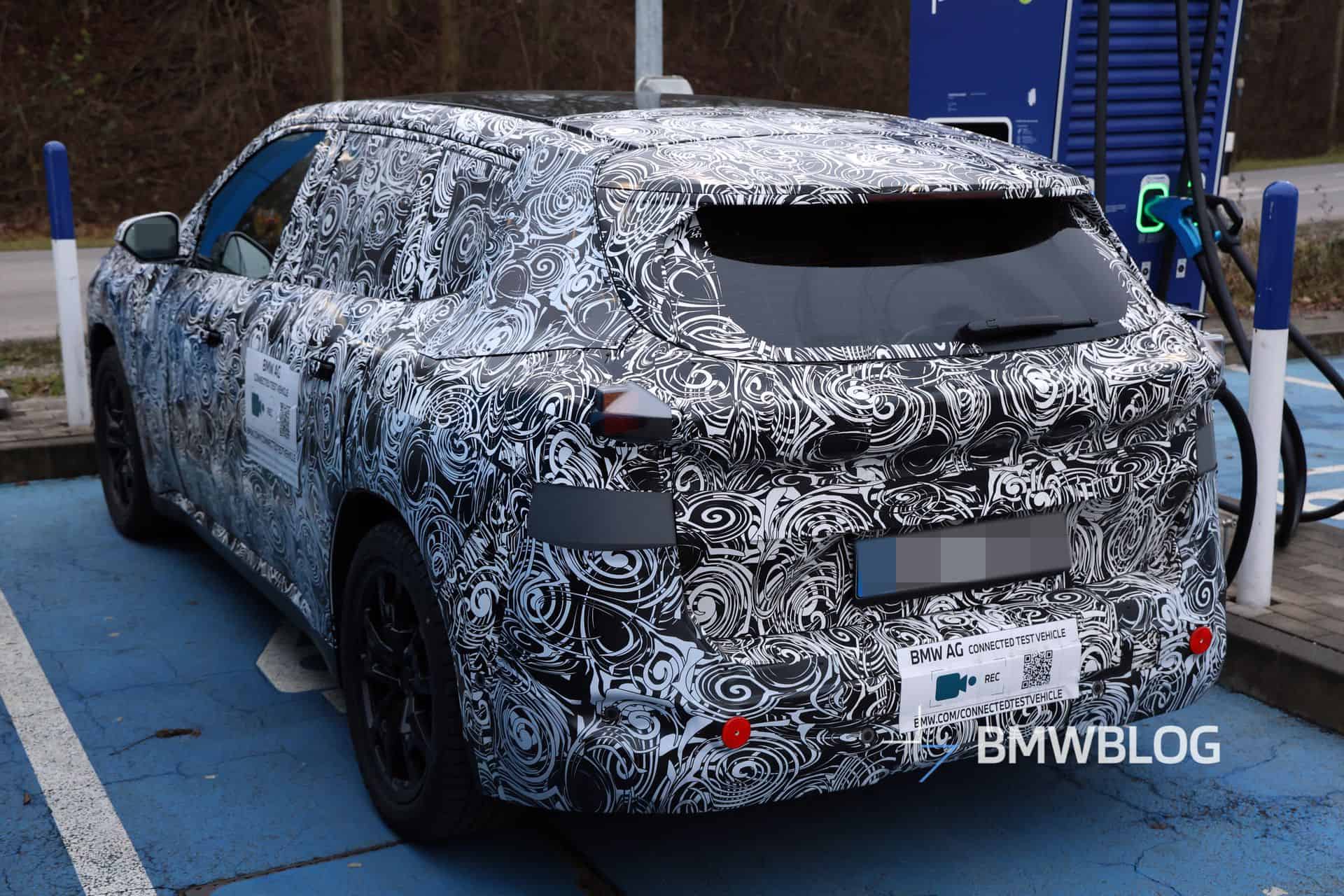


BMW is testing its next-generation iX1 at the Nürburgring, and despite the heavy camouflage wrapping, the compact electric SUV has already given away its biggest secret. It shares nothing with the gas-powered X1 anymore.
That’s the real story buried under the spy video footage. Today’s iX1 is an X1 with its engine swapped for batteries and motors. The next one, internally coded NB5, rides on BMW’s dedicated Neue Klasse electric platform. Same nameplate, completely different car.
The prototype caught lapping the ‘Ring wears the visual DNA of BMW’s new iX3, shrunk down to compact crossover proportions. Up front, the kidney grille stands more upright, flanked by slimmer headlights. The rear gets a redesigned tailgate with wider taillights that appear to span most of the vehicle’s width.
Flush door handles line the profile, though those won’t survive in every market. China’s new safety regulations ban pop-out handles, so the long-wheelbase version sold there will stick with BMW’s older semi-enclosed design.
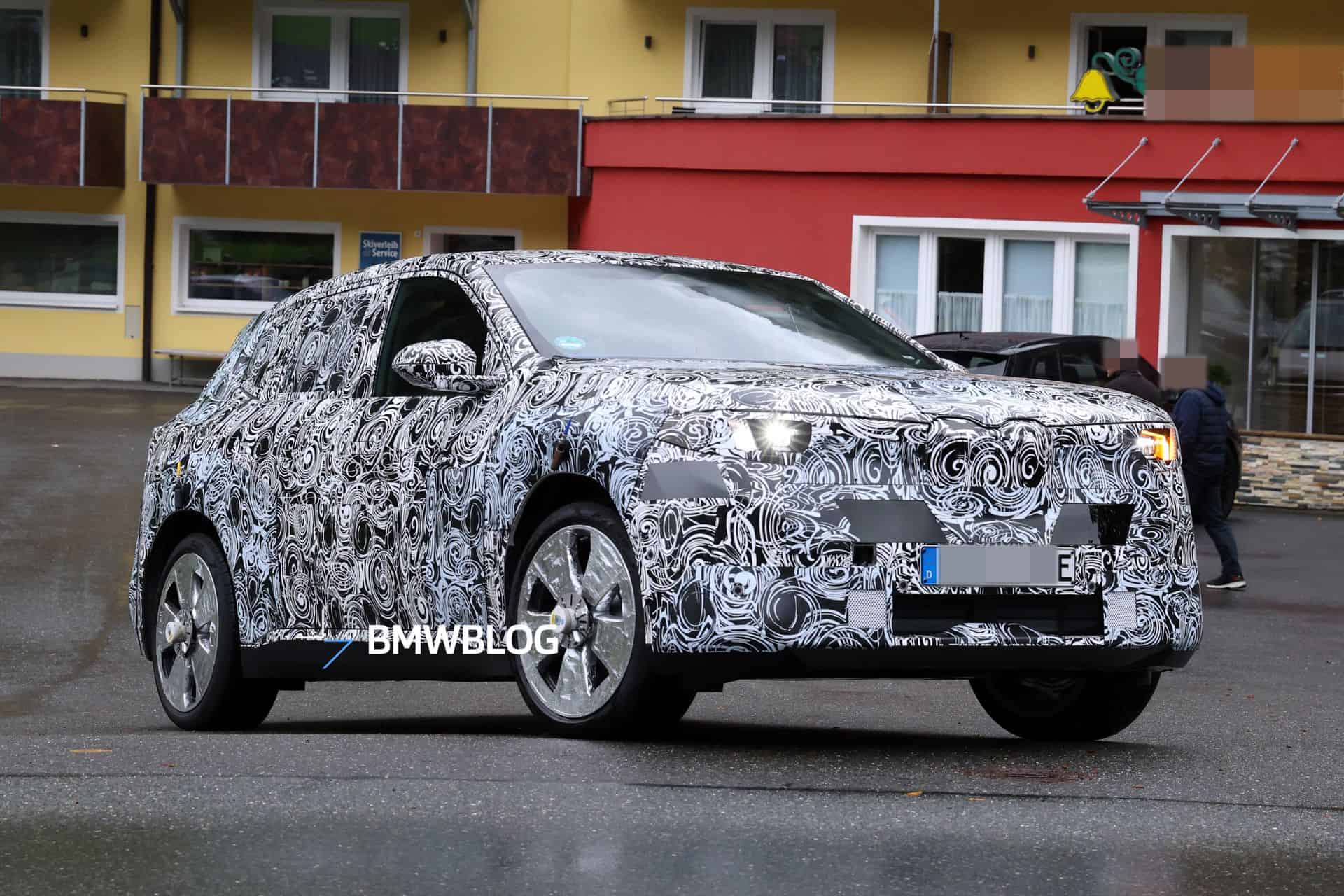
The surface changes matter less than what’s underneath. Moving to Neue Klasse flips the drivetrain layout entirely. Base versions will be rear-wheel drive, not front-wheel drive.
All-wheel-drive xDrive variants with dual motors will sit higher in the lineup. That’s the opposite of the current iX1’s architecture, which is a front-drive platform adapted for electrification.
BMW’s sixth-generation battery technology comes along for the ride. Cylindrical cells replace the current prismatic ones, delivering roughly 20 percent more energy density. That translates to better range without necessarily stuffing a bigger, heavier battery pack into a compact crossover.
Faster charging is also part of the upgrade, though BMW hasn’t published specific numbers yet.
Inside, the cabin gets the full iDrive X treatment. The Panoramic Vision display will project information across the base of the windshield. A central touchscreen replaces what’s left of the physical controls, and the steering wheel adopts the same unconventional design seen in the iX3.
BMW appears to be skipping the traditional mid-cycle facelift for the electric model entirely. Instead of an LCI refresh, Munich is jumping straight to a second-generation iX1, expected to debut sometime in 2027. The combustion-powered X1, with its gasoline, diesel, and plug-in hybrid variants, follows a separate path and will get a conventional facelift borrowing Neue Klasse styling cues while keeping its existing front-drive-based architecture.
This split is deliberate. BMW is decoupling its electric and combustion lineups at the platform level, letting each evolve on its own terms rather than forcing EVs to conform to packaging constraints dictated by engines and transmissions they don’t have. The iX1 is the smallest, most affordable vehicle to get that treatment so far.
It won’t hold that distinction long. BMW has a smaller, cheaper electric model planned for Europe in 2028, possibly the long-rumored i1 hatchback under the internal code NB0. If that car lands at the price points being discussed internally, it would slot below the iX1 and give BMW a true mass-market EV entry point.
For now, anyone considering a current iX1 faces an awkward calculus. The car on sale today is perfectly competent, but it’s built on borrowed architecture that BMW has already decided to abandon. The replacement is roughly a year away, shares almost nothing with it, and promises meaningfully better range and charging. That’s a tough sell for the outgoing model, and Munich knows it.
Share this Story