
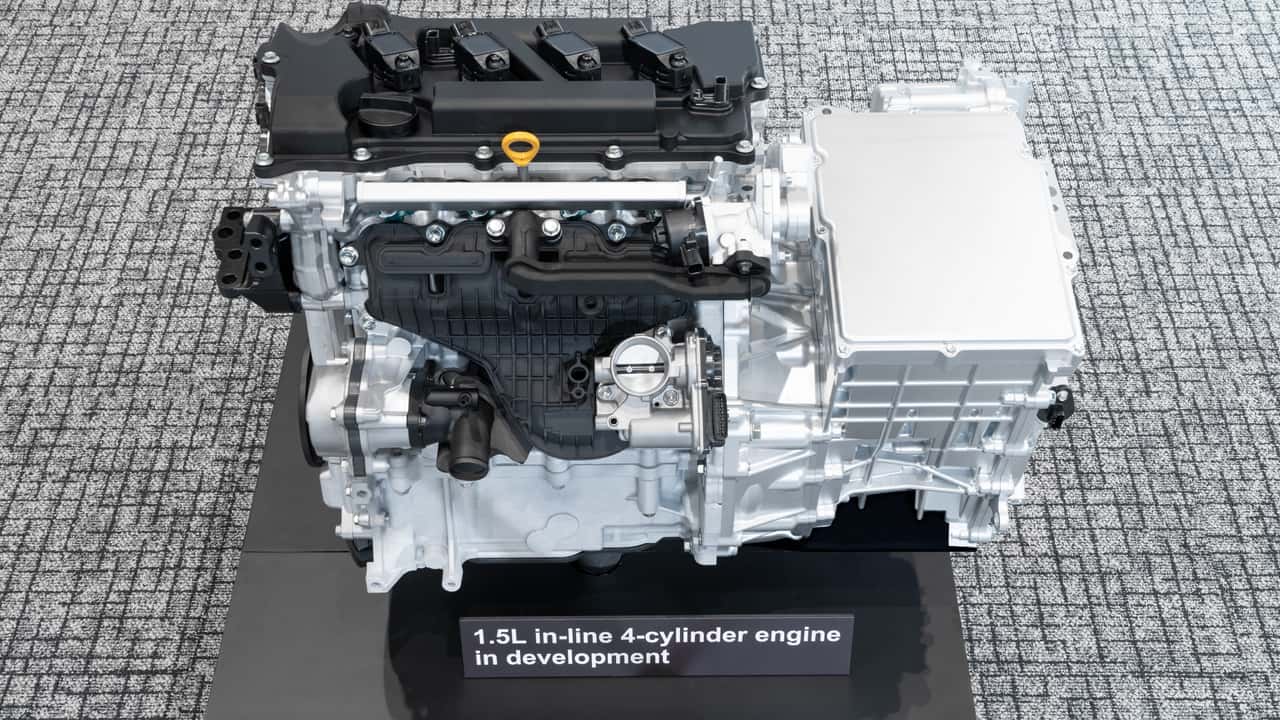


While every other automaker on the planet is trying to figure out how to stop building combustion engines, Toyota is designing brand-new ones and shopping them around to rivals. The company expects to pocket $1.7 billion annually by 2032 selling its next-generation powertrains to other manufacturers.
That number, first reported by Automotive News, is not a stretch goal scribbled on a whiteboard. Toyota is targeting $562 million in orders this year alone, with deliveries of the new engines and hybrid systems starting as early as 2027.
Nobody else is doing this. Developing an entirely new family of internal combustion engines in 2026 is almost perverse. Most manufacturers are tweaking what they already have, bolting on mild-hybrid systems and catalytic upgrades to survive the next round of emissions regulations. Toyota is laying fresh concrete while the rest of the industry eyes the exits.
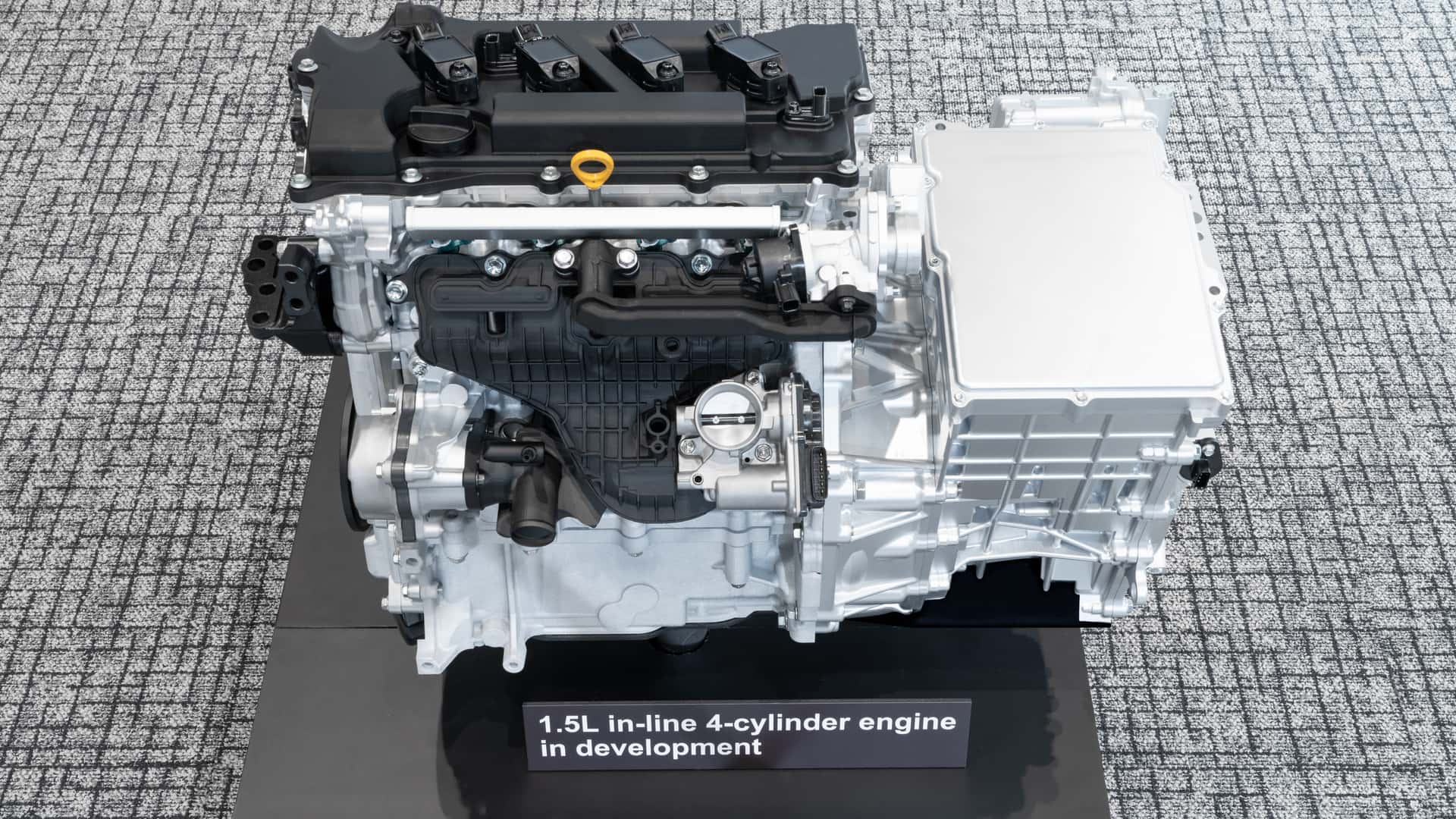
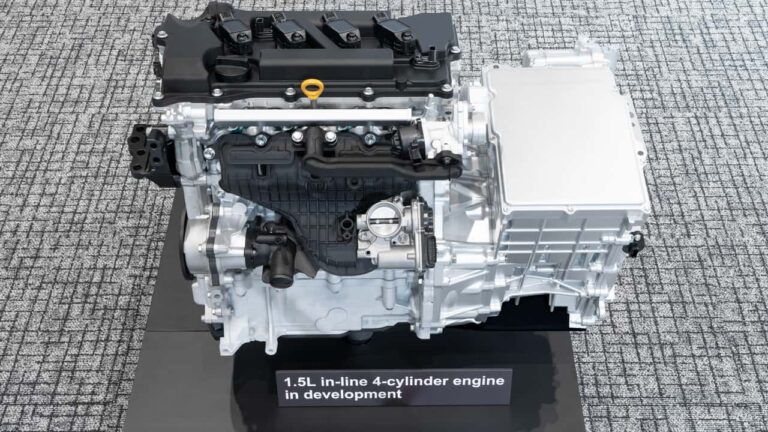
The new engine lineup includes a naturally aspirated 1.5-liter four-cylinder, a turbocharged version of the same block, and a 2.0-liter turbo four. Toyota claims the turbo 1.5 will match the output of a conventional 2.5-liter engine. The 2.0-liter turbo aims to outpunch today’s 2.4-liter turbo while burning less fuel.
Smaller, lighter, more efficient. The pitch writes itself.
The customer list hasn’t been made public, but the map practically draws itself. Toyota owns Daihatsu outright, holds 21.5 percent of Subaru’s voting rights, and controls a 5.1 percent stake in Mazda. Combined, that ecosystem builds roughly 16 million vehicles a year.
Suzuki already runs Toyota engines in some models. The Mazda CX-50 and the European-market Mazda2 both use Toyota hybrid technology. Subaru’s latest hybrid tech leans on Toyota electrical components.
But alliance partners are not blank checks. Mazda is pushing ahead with its own next-generation four-cylinder, the Skyactiv-Z, paired with a proprietary hybrid system for the redesigned CX-5. Subaru’s engineers remain committed to the boxer layout and are chasing 50 percent thermal efficiency on their own. Brand identity matters, engineers have egos, and procurement chiefs have spreadsheets.
Toyota’s calculus is straightforward. Spreading development costs across a larger customer base makes each engine cheaper to produce. For smaller automakers staring down tightening emissions rules and shrinking R&D budgets, buying a proven powertrain from the world’s largest manufacturer could beat spending billions on something they might not recoup.
The engines are designed with electrification baked in. The smaller units pair with hybrid systems, while the 2.0-liter turbo can run standalone or as part of a plug-in hybrid setup. Their compact dimensions fit across multiple vehicle platforms, including architectures designed to accommodate both electric and combustion drivetrains.
Toyota is not making an either-or argument. It is making a both-and business case.
One engine conspicuously absent from the sales catalog: the twin-turbocharged 4.0-liter V8 developed for the GR GT supercar. That stays in-house, presumably reserved for Lexus flagships or the Century brand that now sits at the top of Toyota’s hierarchy.
The broader bet is clear enough. Toyota watched competitors torch billions chasing full electrification targets that keep sliding to the right. It watched EV demand plateau in key markets. And it decided the internal combustion engine still has decades of commercial life left, especially in hybrid form, especially in regions where charging infrastructure remains a fantasy.
Whether $1.7 billion a year in external engine sales materializes depends on how many automakers swallow their pride and write the check. Toyota is building the product either way. The question is how many others quietly admit they need it.

Share this Story