
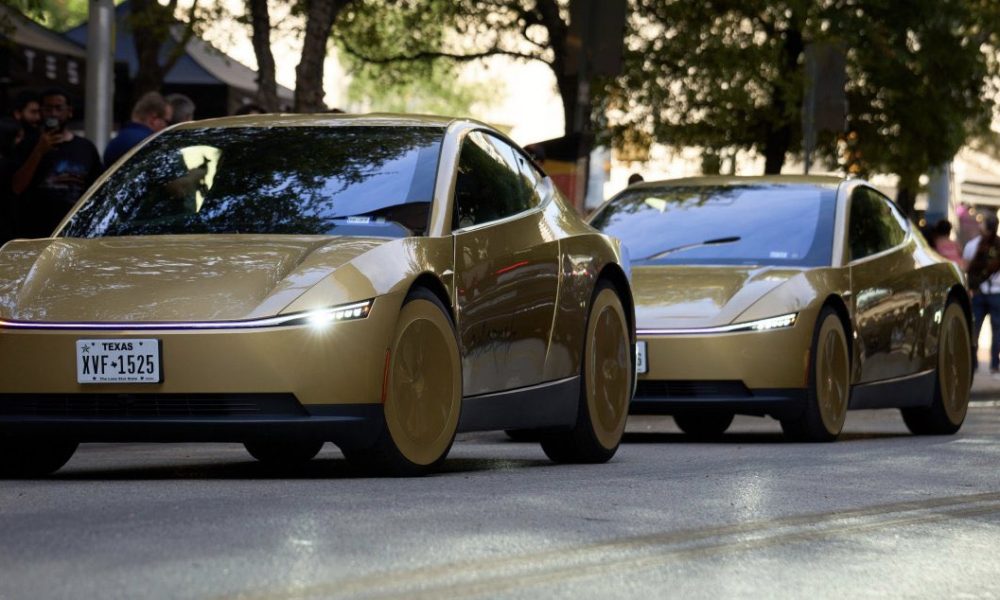


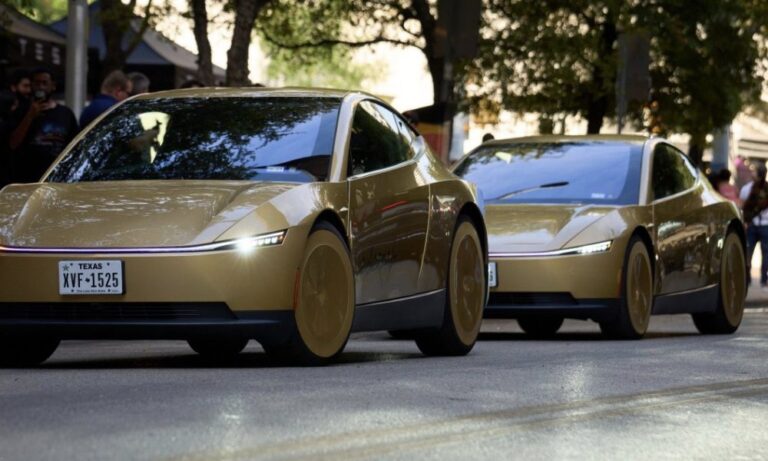
Tesla quietly expanded its Austin Cybercab service area to wrap around Circuit of the Americas days before the Formula 1 United States Grand Prix. Then it flooded the zone with driverless gold pods without telling anyone it was coming.
On Saturday, qualifying day, the Cybercab Spotter account logged 1,250 sightings across Austin. The previous record was 1,072, set just nine days earlier. Those numbers count the same vehicle more than once, so they measure fleet activity rather than fleet size. But the Texas automated vehicle registry listed 463 Cybercabs by Sunday midday, up from the 300-plus Tesla claimed on October 10.
By Sunday afternoon, Tesla’s head of AI software Ashok Elluswamy was posting photos of Cybercabs stacked bumper to bumper on roads near the track. “Robotaxis as far as the eye can see!” he wrote, quoting an image from rider Ben Steindl.
The setup was surgical. Rider David Moss posted app screenshots late on October 22 showing the service boundary stretched toward Elroy and FM 812, covering the area around COTA. A banner in the app read “Last call is 1am · Limited to nearby dropoffs.” Just weeks ago, Austin rides shut down at 11 p.m.
Not everything was smooth. Early app searches flagged locations like COTA Karting as “Service blocked.” One rider who took a Cybercab to the track on Friday reported a walk of nearly 20 minutes from the rideshare drop to the front gate.
Waymo, Tesla’s only real competitor in autonomous ride-hailing, was nowhere near the circuit. Its Austin service, which runs exclusively through Uber, stops well short of COTA. No race day expansion was announced.
The F1 weekend also coincided with a burst of software updates that suggest Tesla is polishing the Cybercab experience at breakneck pace. Late Friday, rider Ethan McKanna discovered a live rearview camera feed on the center display mid-trip. Tesla UI engineer Evan confirmed passengers can tap to cycle through additional cameras and swipe the feed up or down.
Until now, the rear and repeater cameras only appeared on the exit screen so riders could check for cyclists before opening a door. A quiet mode that darkens the entire cabin screen also surfaced the same day. Neither feature came with release notes.
The rearview camera went from public request to working feature in roughly two weeks. Earlier this month, rider Dan Burkland asked Tesla for exactly this capability. Evan replied “In development.” Now riders have it.
These are not trivial additions for a vehicle with no mirrors, no rear window, and no steering wheel. The Cybercab’s design left passengers with zero ability to see behind them. Eight exterior cameras were already feeding the autonomy stack, so the fix was pure software.
Tesla has not disclosed how many rides it completed to and from the circuit, or whether the expanded service area and 1 a.m. cutoff will survive past race weekend. On the Q3 earnings call, Elluswamy said 2 a.m. service is coming “pretty soon” and that Tesla plans to run its robotaxis around the clock before year’s end. The company is also targeting first Cybercab deliveries to outside customers before 2026 closes, which would put these vehicles into hands Tesla does not directly control.
Dallas is next on the expansion list, per Elluswamy. The registry numbers keep climbing. And the fleet that just handled 100,000 race fans leaving a circuit on a Sunday afternoon is still, technically, in beta.
Share this Story