
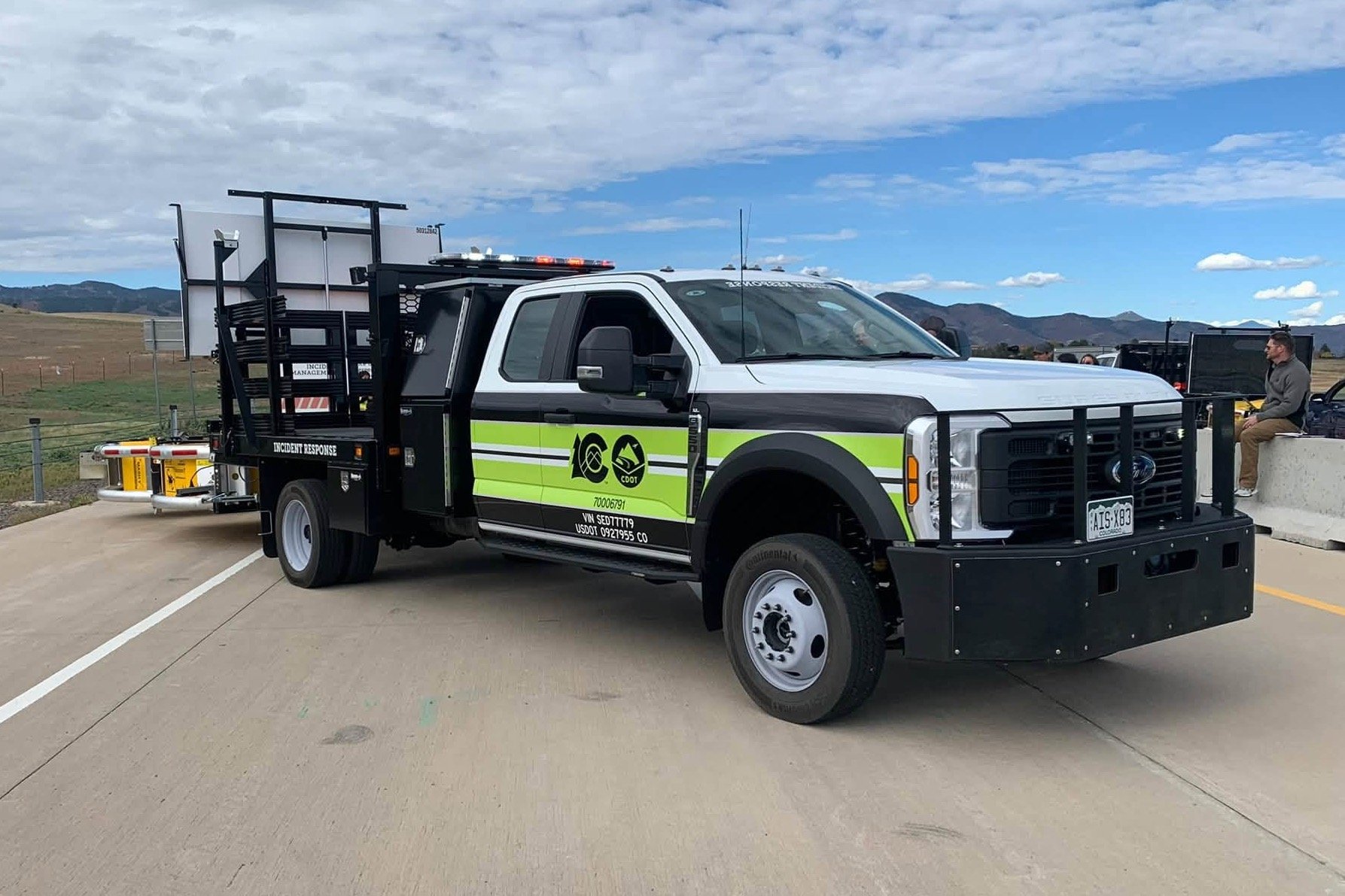


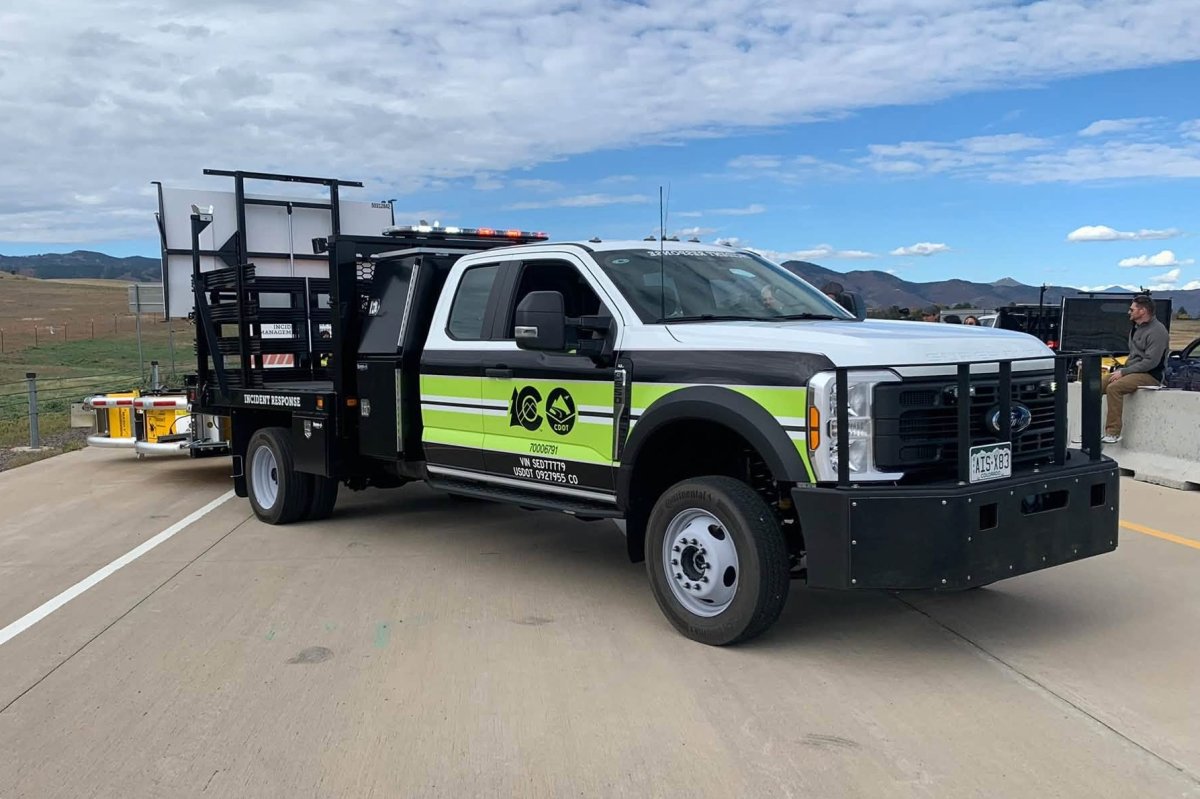
Colorado’s first responders have a new bodyguard, and it weighs several tons. The state’s Department of Transportation is rolling out bright neon green Ford Super Duty trucks equipped with crash attenuators and rear-facing illuminated arrows to shield emergency personnel working roadside incidents in the Denver metro area.
The concept isn’t new. Construction crews have used truck-mounted attenuators for years, parking reinforced tail vehicles at the back of work zones to absorb the impact of inattentive drivers. What’s new is applying that same logic to emergency scenes, where troopers, paramedics, and firefighters are routinely exposed to highway-speed traffic with nothing but flashing lights between them and disaster.
Those flashing lights, it turns out, aren’t enough.
CDOT already has proof. On Oct. 10, a driver heading straight toward an active crash scene struck one of the protection trucks instead of plowing into first responders. CDOT executive director Shoshana Lew told reporters the truck “worked exactly how it was designed and protected our first responders tending to the scene.” That’s one deployment and one confirmed save.
The trucks will initially patrol Interstate 25, Interstate 225, and Interstate 70 around Denver before expanding to other corridors across the state. Their neon liveries are deliberately loud, the vehicular equivalent of a crossing guard’s vest, designed to grab attention from drivers who somehow filter out the reds and blues of a standard emergency vehicle.
Every year, first responders across the country are struck and killed working highway shoulders. The numbers are grim enough that “Move Over” laws exist in all 50 states. Those laws demand drivers change lanes or slow down when passing stopped emergency vehicles. Compliance remains spotty. You can legislate behavior all you want, but you cannot legislate attention spans.
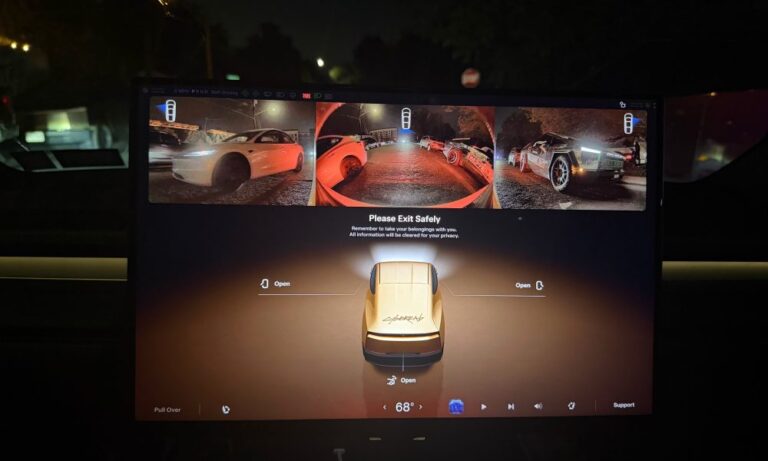
And it’s not just human drivers who struggle. Automated driving systems have a well-documented problem with stationary emergency vehicles. Tesla’s Autopilot has been involved in multiple crashes with stopped fire trucks and police cruisers, a failure mode that prompted a federal investigation. If algorithms trained on millions of miles of data can’t reliably detect a parked fire engine with its lights blazing, asking a distracted commuter to do the same feels optimistic.
So Colorado went with steel and physics instead of faith. The attenuators mounted on these Ford trucks are engineered to crumple in a controlled manner, absorbing kinetic energy and decelerating an impacting vehicle more gradually than a head-on collision with a parked cruiser would. The driver who hits one will have a bad day. The trooper writing a report 50 feet ahead will go home.
The approach is pragmatic to the point of being bleak. It accepts, without argument, that a percentage of drivers on any given highway are not paying attention, will not pay attention, and cannot be made to pay attention through signage, law, or common decency. Rather than fight that reality, CDOT is engineering around it.
Other states are watching. If Colorado’s deployment keeps saving lives at the rate its first month suggests, expect neon Ford trucks to become standard equipment at highway incident scenes nationwide. The question nobody in Denver is asking anymore is whether these trucks are necessary. October 10 settled that.
Share this Story