


Bruce Meyers built one of the most recognizable shapes in American automotive history. Then he tried to do it again, and almost nobody noticed.
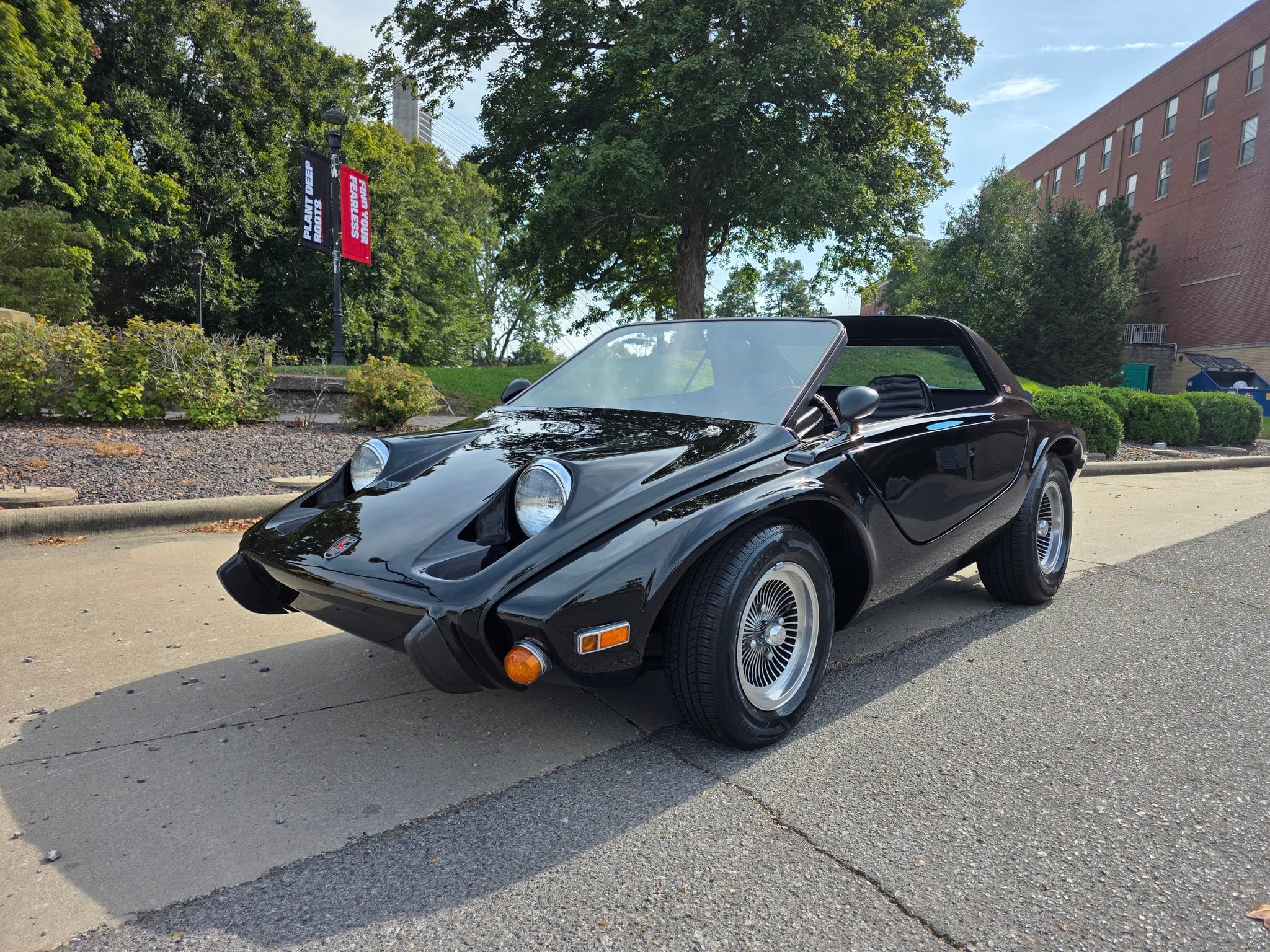
A Karma Coachworks SR2, the obscure successor to the legendary Meyers Manx dune buggy, just appeared on Bring a Trailer wearing gloss black paint and an attitude that owes more to a comic book than a California beach. The auction closes October 21, and it represents one of the stranger detours in kit car history.
The backstory matters. Meyers created the original Manx in the 1960s as a fiberglass shell bolted to a shortened Volkswagen Beetle chassis. It became a cultural touchstone, the definitive sand toy, copied hundreds of times over.
But Meyers wanted something that worked on pavement, too. So he developed the SR, short for Street Roadster, a more road-focused version that landed on the cover of Car and Driver in May 1970.
Only 200 first-generation SRs were ever built before Meyers folded his business in 1971. One of those factory cars reportedly ended up with Malcolm Bricklin, the serial entrepreneur who later gave the world the gullwing SV-1. Whether the SR directly inspired that ill-fated Canadian sports car is debatable, but the fiberglass recipe was clearly in the air.
After Meyers shut down, a small outfit called Karma Coachworks in Costa Mesa, California, picked up the thread. Working with input from Meyers himself, they developed the SR2, sticking to the proven formula of a fiberglass body over a chopped VW platform. The car listed on Bring a Trailer sits on a 1970 Volkswagen chassis with an 80-inch wheelbase, though the body was applied sometime after that.
The styling is aggressively weird. Scissor doors, a rear spoiler, removable roof panel, removable side windows, and fat rear tires crammed under bulging fenders. In black, it reads less like a beach cruiser and more like something a Bond villain’s nephew would drive to a nightclub in 1977.
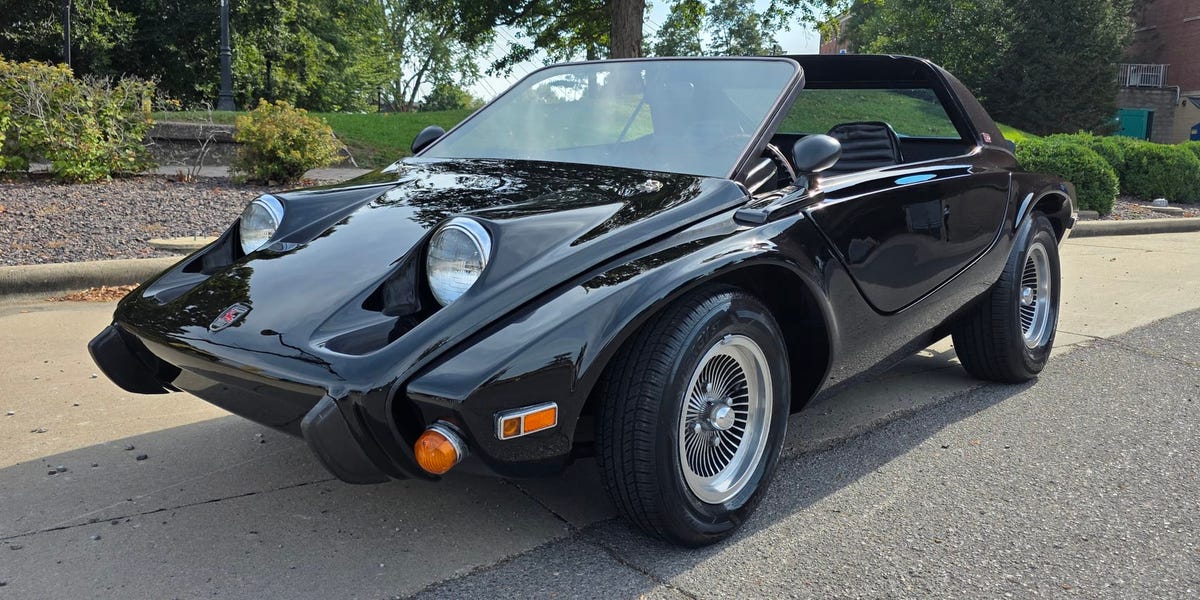
Underneath all that drama sits a 1.6-liter VW flat-four fed by a Holley Bugspray 2110 carburetor. Output is somewhere around 70 horsepower, which sounds feeble until you consider the car weighs roughly as much as a riding lawn mower. A four-speed manual with a Hurst shifter handles the gears.
The SR2’s real currency is its Manx certification, a formal acknowledgment that this car sits within the Bruce Meyers lineage. That matters in a kit car world flooded with unauthorized clones and loosely inspired tributes. This one has a paper trail connecting it to the man who started the whole genre.
Kit cars have always occupied an uneasy space in the collector market. Most are homebuilt curiosities with questionable craftsmanship and no provenance. The SR2 has provenance, even if the name Karma Coachworks draws blank stares from most enthusiasts.
The original Manx sells for serious money now. First-gen SRs, when they surface, command attention. The SR2 is the third chapter in a trilogy that most people never knew existed.
Where this one lands at auction will say something about whether the market values the Meyers connection or just the Meyers name. Bidding is active, but the SR2 has never carried the cultural weight of the original dune buggy. It is a fascinating artifact from a moment when Bruce Meyers was still pushing his idea forward, still believing the next version could be better than the last.
Share this Story