
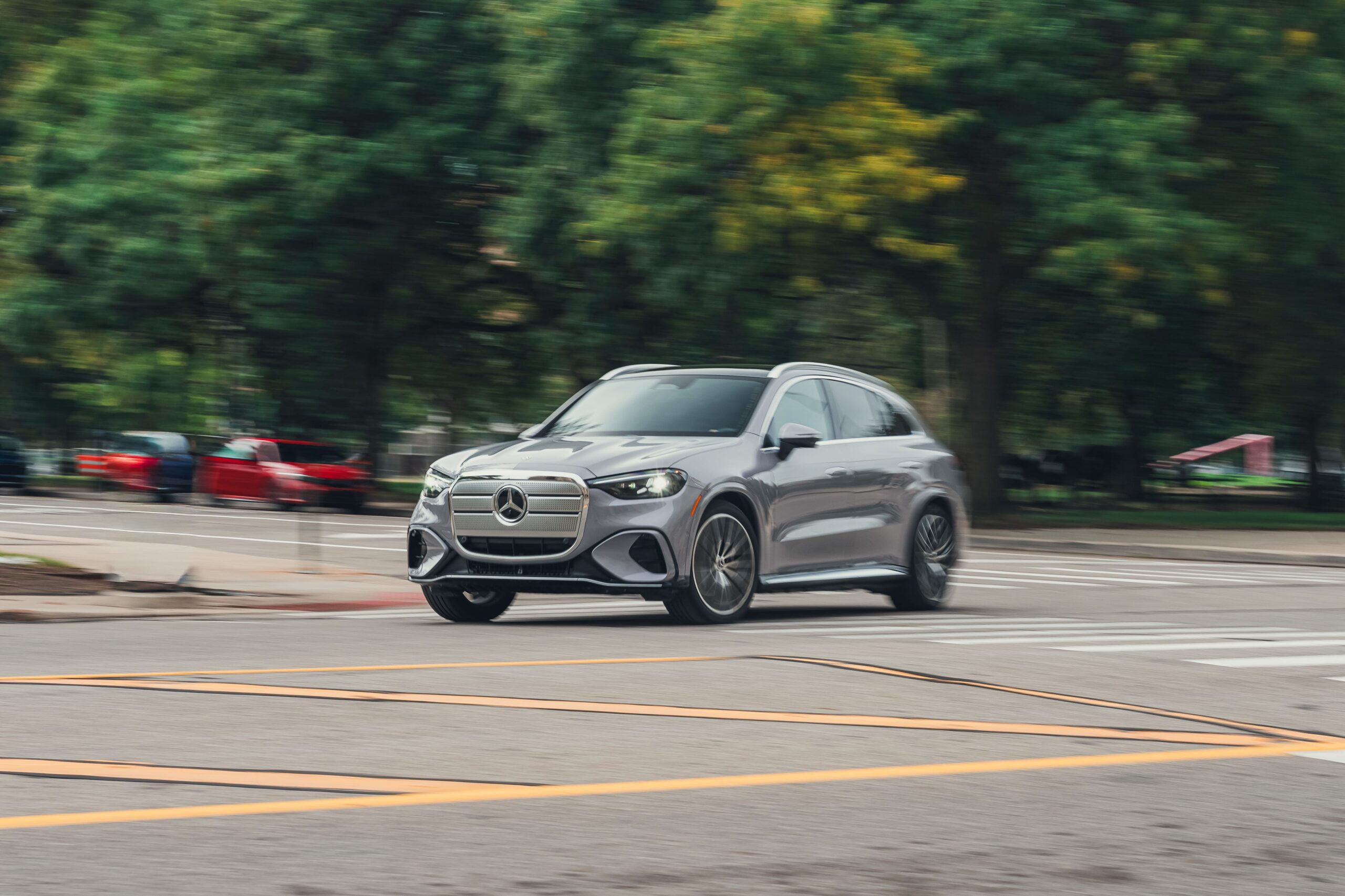


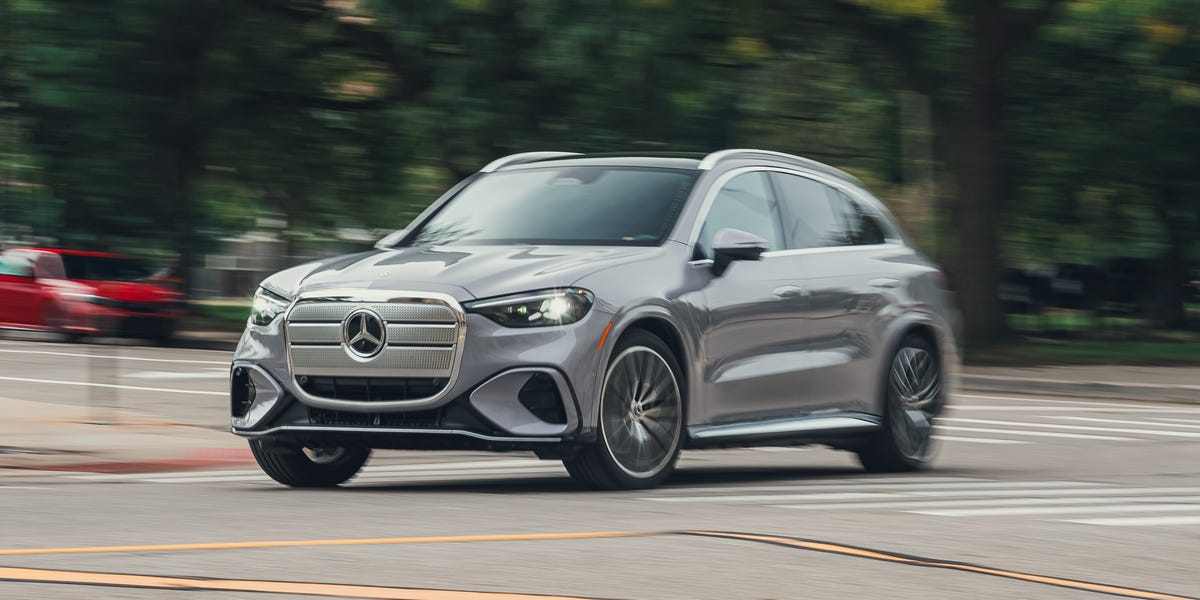
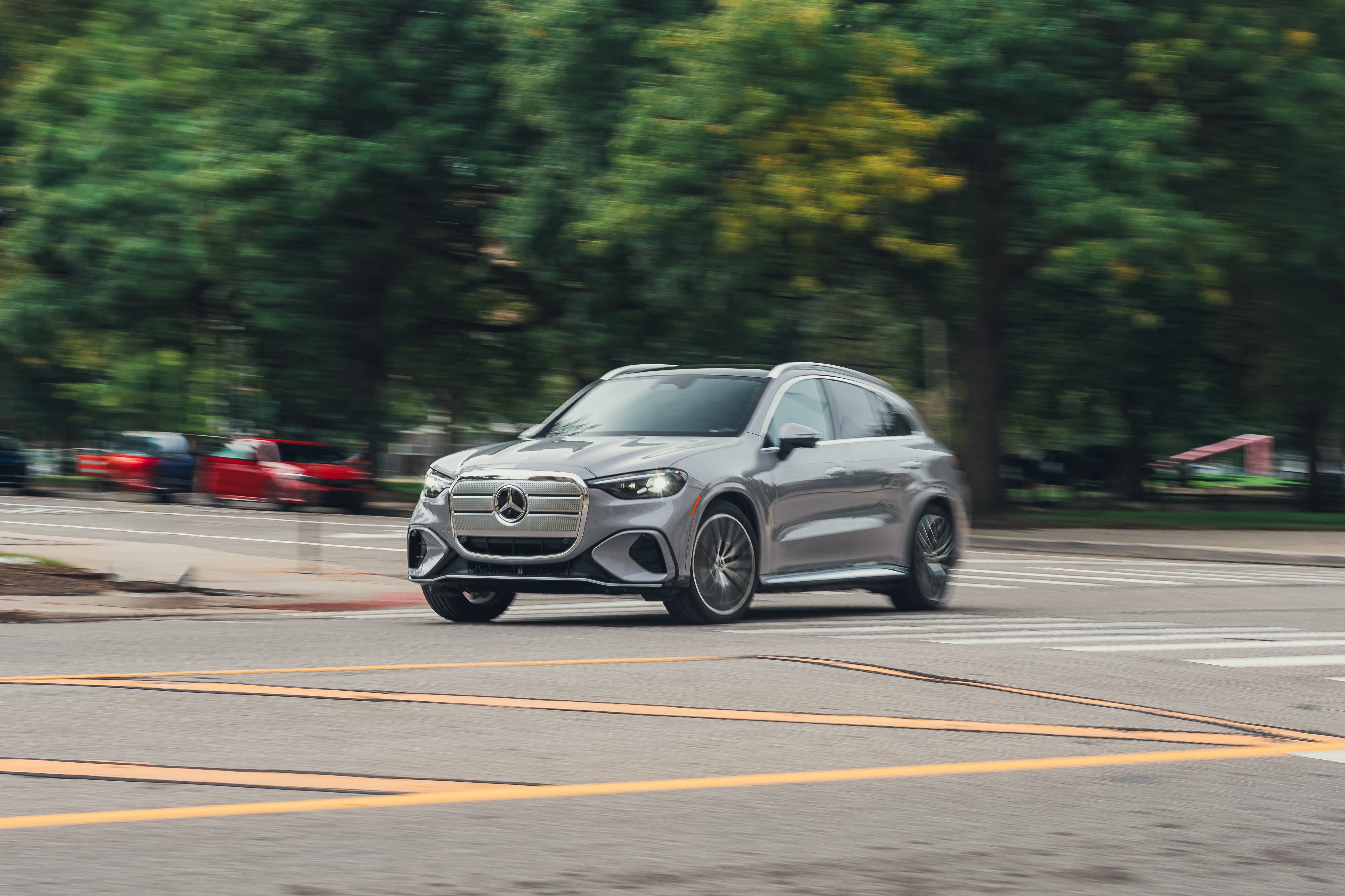
Mercedes-Benz finally has an electric SUV that doesn’t need an asterisk. The 2027 GLC400 4Matic Electric, tested by Car and Driver with full instrumentation, ran 330 miles in a 75-mph highway range test, hit 60 mph in 3.7 seconds, and ripped through the quarter-mile in 12.2 seconds at 114 mph. Those are not press release numbers.
Those are real-world results from a 5,605-pound luxury SUV that starts at $64,950. That price undercuts the outgoing EQE, and it does so while delivering a better vehicle on a better platform.
The GLC Electric sits on an entirely new architecture, 5.0 inches longer than the gas-powered GLC with a wheelbase stretched to 117.0 inches. The 94-kWh battery runs on an 800-volt system, and in testing it peaked at 350 kW on a DC fast charger, going from 10 to 90 percent in 28 minutes at an average rate of 188 kilowatts. Those charging numbers put it in the top tier alongside Hyundai-Kia’s best.
The EPA rates range at 350 miles and efficiency at 119 MPGe. The testers saw 86 MPGe over their loan period, which they attributed to liberal use of Sport mode. Fair enough.
Two permanent-magnet motors produce a combined 483 horsepower and 590 pound-feet. The rear motor does the heavy lifting at 402 hp, routed through a two-speed gearbox that shifts around 55 mph for better highway efficiency. The front motor, making 215 hp, engages in less than a quarter second when needed, and the transition is smooth enough that the testers couldn’t feel it happen.
The optional Agility and Comfort package, a $2,900 add, brings air springs, adaptive dampers, and rear-axle steering. Mercedes has integrated car-to-cloud communication that pre-adjusts damping for road hazards previously cataloged by other Mercedes vehicles. The ride was described as smooth and supple, though the difference between Comfort and Sport modes proved underwhelming.
No active anti-roll bars, and steering feel barely changes between settings. The skidpad returned 0.87 g, respectable but not thrilling. This is a well-mannered luxury crossover, not a canyon carver pretending to be one, and that honesty is refreshing.
Braking from 70 mph took 160 feet with a firm, consistent pedal. Three fixed regeneration levels plus an auto mode give the driver real choices, with the strongest setting delivering true one-pedal driving at up to 300 kW of recuperation. The car remembers your preference between startups, a small detail that reveals actual software competence.
Inside, the available 39.1-inch Hyperscreen is a single continuous panel stretching across the dash. It supports driver instruments, center infotainment, and a passenger display in one integrated surface. A new MB.OS system powers voice controls that can distinguish between driver and passenger, shutting down passenger video content if the driver glances at it.
The panoramic roof offers segmented opacity control across nine zones and can display 162 illuminated three-pointed stars in ambient lighting. A certified vegan interior is available, verified down to the glues and dyes, which Mercedes says is an industry first.
The as-tested price reached $84,975 with the Pinnacle Plus trim, driver assistance package, AMG Line cosmetics, and those air springs. A rear-drive variant is coming, though Mercedes hasn’t released specs.
This is the car the EQS and EQE should have been. Mercedes spent billions learning what not to do with its first wave of EVs and appears to have absorbed those lessons. The GLC Electric doesn’t try to be weird or futuristic.
It just tries to be a very good Mercedes, and the numbers suggest it is exactly that. A rear-drive model with a lower price could make this the volume EV Mercedes has been chasing since it announced its electrification strategy years ago. Whether buyers at this price point have moved past their range anxiety, or past Tesla, remains the open question.

Share this Story