
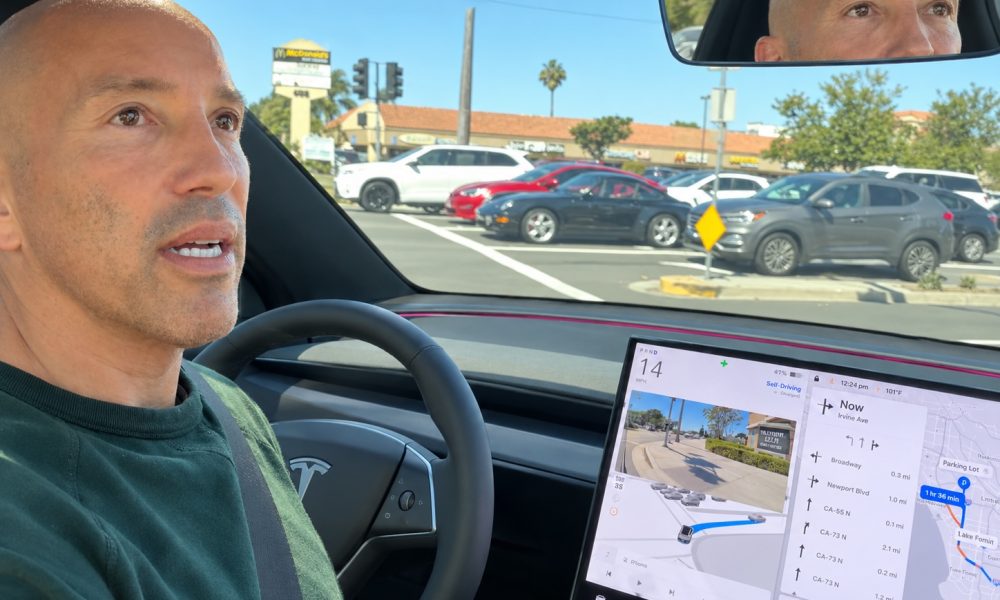


Jason Oppenheim, the luxury real estate broker who anchors Netflix’s Selling Sunset, posted a video Saturday night that he called “the most important video I’ve ever posted.” In it, he rides from Newport Beach to his Los Angeles office, roughly 75 minutes, while Full Self-Driving handles every lane change, every merge, and parks the car at the end. He says he gave his Bentley to his father because he has no use for it anymore.
Then he upped the ante. He said he is buying 10 of his employees a Tesla with FSD subscriptions.
“It’s life-changing,” Oppenheim said in the clip. “I was on the phone with my brother last night, and I made him buy one. He literally bought one while we were talking.”
Elon Musk amplified the video within 30 minutes, posting “Tesla FSD feels like magic.” Tesla’s main X account reposted it two hours later. The celebrity endorsement playbook is old, but the timing here is not accidental.
Tesla just reported 486,532 deliveries in Q3, its best quarter ever without the $7,500 federal EV tax credit propping up demand. FSD subscriptions, priced at $99 a month in the U.S. since February, hit 1.48 million active users, up 56 percent year over year. More than 55 percent of new North American deliveries now leave the lot with FSD attached.
That attach rate is the number investor Ron Baron pointed to last month when he told CNBC “the time to buy the stock is now.”
Oppenheim’s candor about why he switched is more revealing than the endorsement itself. He admitted on camera that he is a distracted driver who answers emails and texts behind the wheel. He framed the employee car purchases as a way to keep his team off their phones.
Ten employee cars at $99 a month each adds $11,880 a year in recurring FSD revenue for Tesla, a rounding error on the balance sheet but a useful proof of concept for fleet-style adoption.
Tesla AI head Ashok Elluswamy said in July that FSD had logged more than 12 billion miles while going roughly twice as far between collisions as manual driving. The latest software, v14.3.10, adds Automatic Collision Evasion, which can steer or brake on its own to dodge a frontal crash. One of the first owner videos of that feature surfaced last week, showing the system reengaging to prevent a curb strike.
FSD remains a supervised system. The driver is still legally and technically responsible for watching the road. That caveat tends to get lost when a celebrity tells millions of followers he rode hands-free for over an hour.
Oppenheim’s claim that FSD is “8x safer than the average driver” echoes Tesla’s own quarterly safety reports, but those numbers measure miles between airbag deployments. Critics say that metric is too narrow to capture the full picture of driving risk. The National Highway Traffic Safety Administration has not endorsed that multiplier.
A luxury broker trading a six-figure British sedan for a mass-market crossover because the software impressed him more than the leather tells you where the value proposition has shifted. It is no longer about the car. It is about what the car can do while you sit there answering emails you probably should not be answering at 75 miles per hour.
Tesla’s next major software release, FSD v15, promises earlier hazard prediction and faster reaction times. Oppenheim’s 10 employees have not taken delivery yet.
Share this Story