
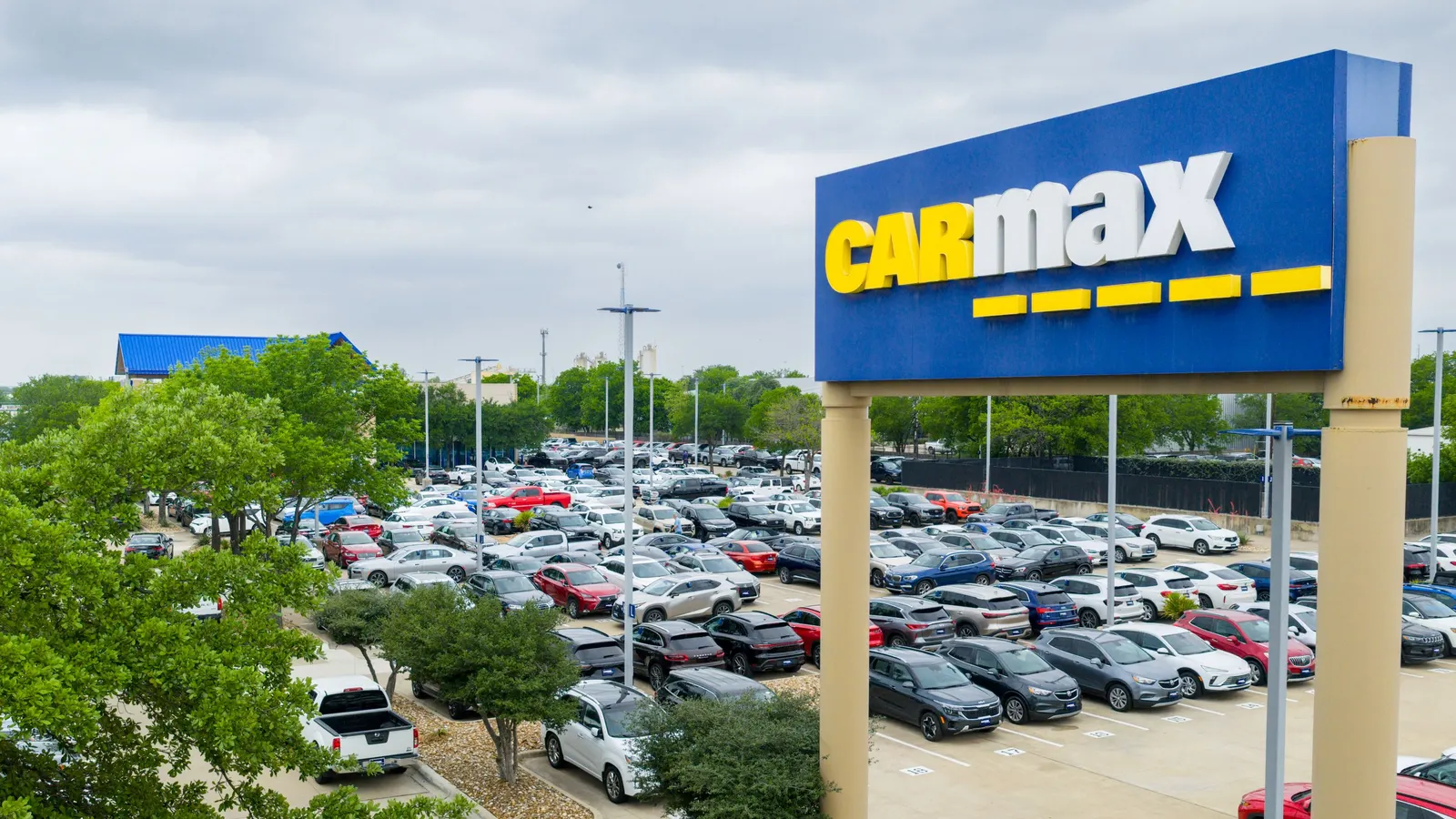


CarMax just posted a 73.3% jump in net earnings to $165.3 million in its fiscal second quarter, and it did it by deliberately making less money on each car it sells. That contradiction tells you everything about where the used-car giant is right now.
Total net revenues hit $7.9 billion for the quarter ending Aug. 31, up 19.5% year over year. Combined retail and wholesale unit volume climbed 14.7% to 387,735 vehicles. The average retail selling price rose to $27,623, up $1,630 per unit, but average gross profit per unit dropped $111 to $2,205.
CEO Keith Barr, who took over in March after being recruited from InterContinental Hotels Group, framed the margin compression as intentional. “We further strengthened our price competitiveness to support retail sales growth,” he told analysts. Translation: they cut prices, moved more metal, and made it up on volume and efficiency.
Barr was candid with WardsAuto that the soft comparisons to a weak Q2 last year helped the optics. Fair enough. But the operational changes underneath the headline numbers are real and structural.
CarMax is sourcing fewer vehicles from wholesale auctions, the most expensive channel. CFO Enrique Mayor-Mora spelled it out plainly: buying directly from customers is the most profitable acquisition path, auctions the least, and dealer sourcing falls somewhere in between. The company is shifting its mix accordingly.
The captive finance arm, CarMax Auto Finance, is pulling more weight. It originated 22% of its low-prime finance contracts in Q2, up from just 10% a year earlier. Those are still prime-rated borrowers, just below the super-prime tier. Last year, CarMax routinely handed those customers off to third-party lenders for a referral fee. Keeping those loans in-house means keeping the spread.
Then there’s the warranty play. CarMax replaced its 90-day warranty with a 30-day warranty, which costs less. The company says it passes those savings to buyers, and it has rolled out revamped extended-service contracts and protection packages to upsell. Shorter standard coverage, more aftermarket product. The economics are obvious.
This entire strategy traces back to late last year, when CarMax was catching heat from investors who said it was overpricing inventory and fumbling the online buying experience. The board launched an executive search to replace longtime CEO Bill Nash, a company lifer. Bringing in Barr, a hospitality executive with no automotive background, was a clear signal that the board wanted a reset, not a tweak.
Six months into the job, Barr’s playbook looks like classic retail turnaround doctrine: compress margins, grow volume, cut sourcing costs, capture more finance income, and restructure the product mix around protection plans. It is not a new idea, but CarMax is executing it at scale.
Mayor-Mora said the company is sticking with its earlier guidance that average gross profit per retail unit will decline about $200 for the full fiscal year. CarMax is actually beating that forecast so far, but the CFO expects GPU to fall further in the third and fourth quarters as pricing gets more aggressive.
“I would expect GPUs for this year as a whole, and by quarter, to be down year-over-year in support of driving sales,” he said.
The bet is straightforward. Sell more cars at thinner margins while squeezing cost out of reconditioning, sourcing, and financing. If volume holds and the captive keeps growing its loan book, the math works. If the used-car market softens or credit losses spike, that thinner margin leaves a lot less room to absorb the hit.
CarMax is running fast and lean right now. The question is whether this pace is sustainable or just the easy part of a turnaround that gets harder from here.



Share this Story