
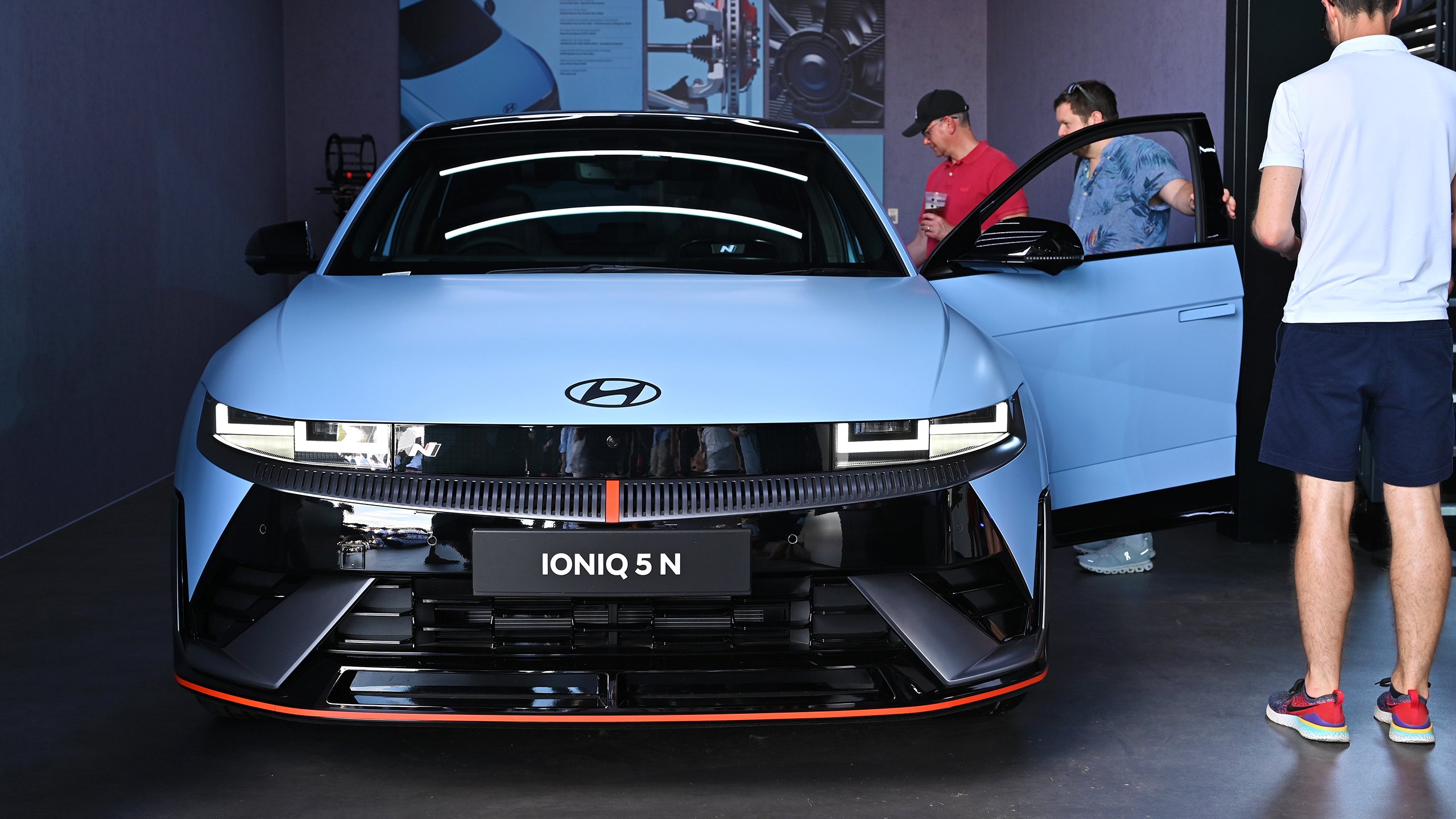


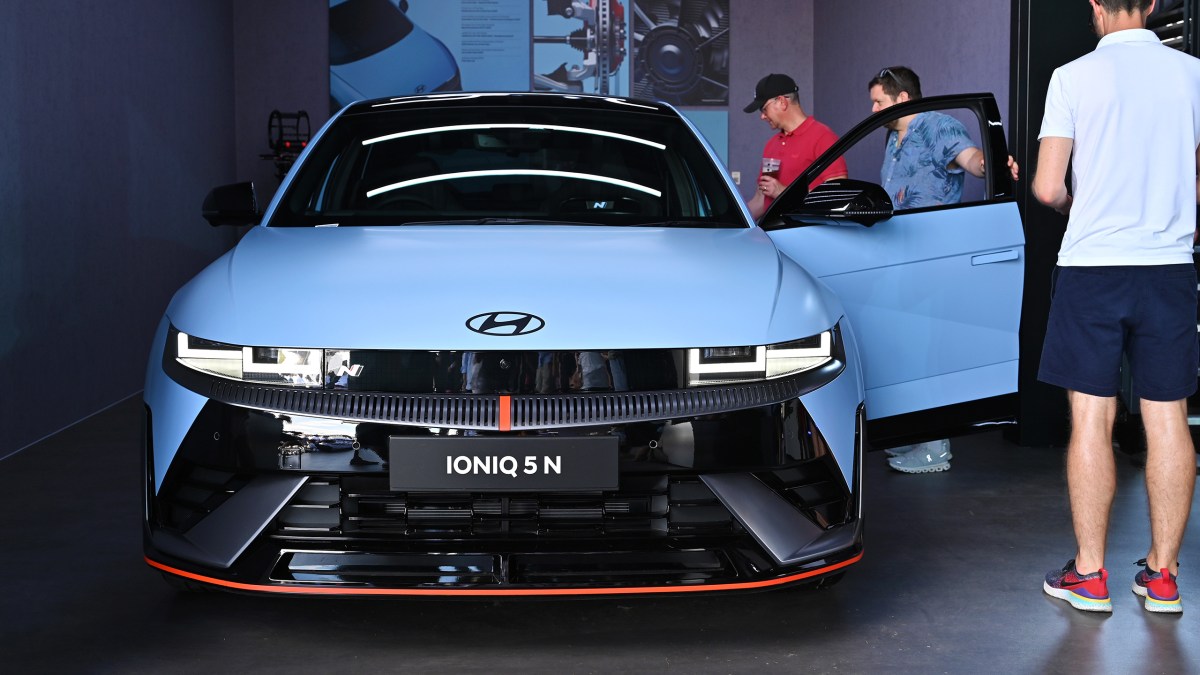
Hyundai just carved out a new performance tier that didn’t exist yesterday. During the company’s Investor Day in South Korea on Wednesday, CEO Jose Munoz described a product category that slots between the cosmetic N Line trim and the full-bore N track weapons. He called it “a new volume high-performance variant carrying over the powertrain and parts package” from N models, aimed at buyers “who want that feeling every day on the way to work without buying a track car.”
That’s a telling admission. Hyundai knows it has customers willing to pay for real hardware, not just badges and body kits, but who don’t need a car tuned to punish apexes at Road Atlanta. The N Line has always been a visual tease without mechanical substance.
The full N cars are brilliant but niche. This new middle ground is where the money is.
It mirrors what BMW did decades ago with M Sport packages that eventually grew into quasi-M cars packing real drivetrain upgrades. Hyundai is watching the playbook and accelerating its own version.
The performance play wasn’t the only headline out of the investor meeting. Hyundai simultaneously announced plans for a hybrid tsunami in the U.S. market, with 10 new electrified models landing by 2030. At that point, the company expects hybrids to account for half its American sales volume.
That’s a massive pivot toward electrification without the full EV bet that has burned other automakers. Hyundai is hedging smartly, using hybrids as the volume play while reserving battery electrics for customers who actually want them.
Hyundai isn’t the only one recalibrating. Honda told Reuters it’s reluctant to commit to an eighth North American plant without a renegotiated U.S.-Mexico-Canada trade agreement in place. Executive Vice President Noriya Kaihara said the company needs to decide within two years if the plant, ideally operational by 2030, gets the green light.
Trade uncertainty is freezing capital decisions across the industry, and Honda is being unusually candid about it.
Separately, Automotive News reported that the Honda CR-V and Accord could go hybrid-only next decade. The Accord would follow the Toyota Camry’s lead in dropping pure internal combustion entirely. Acura may also add a new three-row SUV above the MDX around 2029, tentatively called the XL.
Honda is clearly moving its entire lineup toward electrification, even if it won’t say so in one clean press release.
In other news, Toyota recalled nearly 50,000 Tacoma Off-Road trucks over faulty Bilstein shock absorbers with external oil reservoirs that can corrode and detach. Not every truck in the recall population will need new parts, so Toyota is directing owners to check their specific VIN on the NHTSA website.
And in a quieter corporate reshuffling, Lotus Technology, the Chinese-headquartered arm of the brand, now wholly owns both Lotus UK and Lotus Engineering. Those are the operations that build the Emira sports car and run the consultancy business in England. The full consolidation under Chinese parent Geely’s tech entity marks another step in Lotus’s transformation from a scrappy British sports car company into something very different.
Back in Seoul, Hyundai’s investor pitch painted the picture of a company trying to be everything to everyone. Track-ready performance for enthusiasts, approachable speed for commuters, and hybrids for the masses. The question is whether filling every niche dilutes the brand or defines it, and Munoz is betting on the latter before the production lines have even started tooling up.

Share this Story