
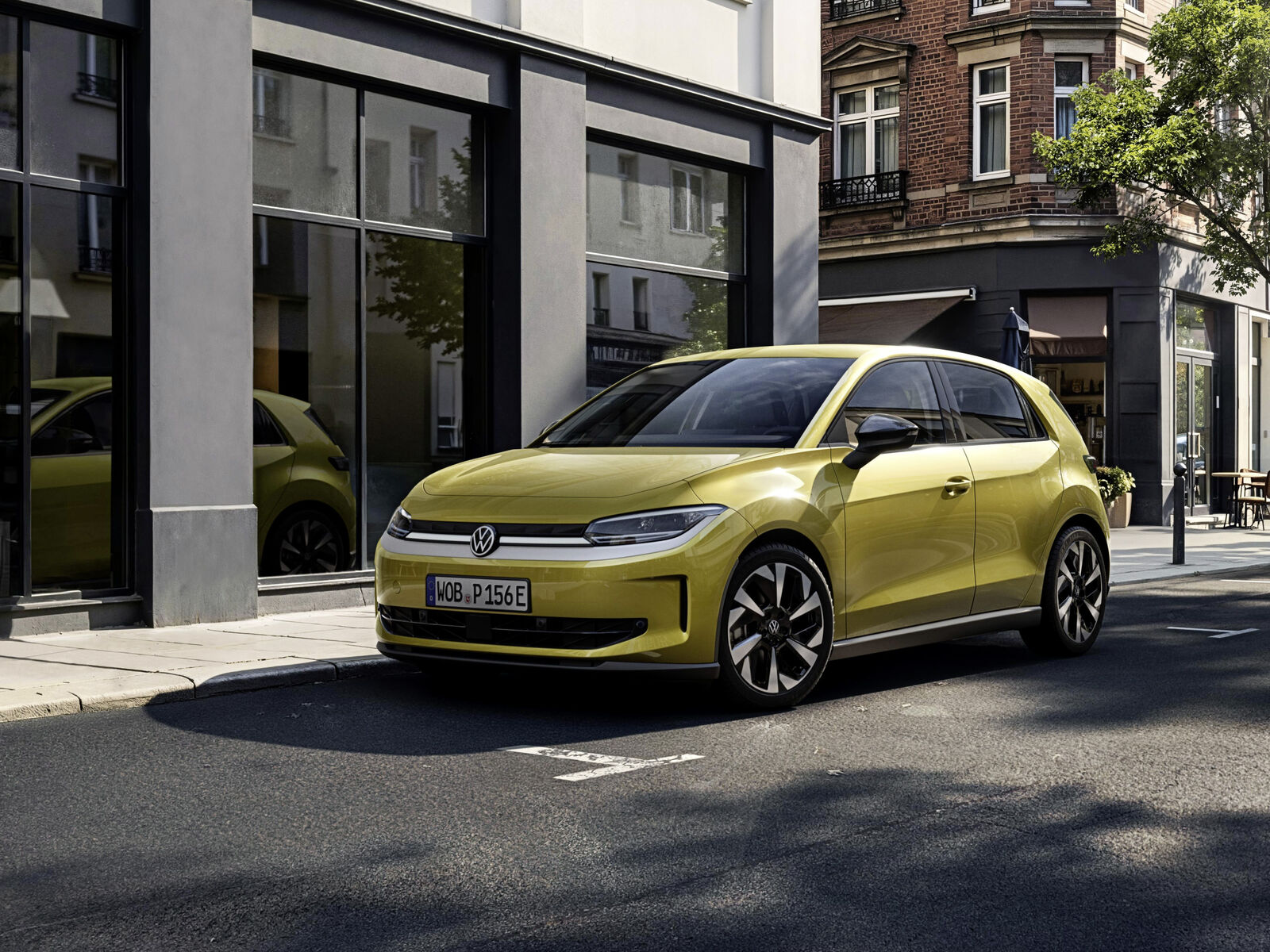


Volkswagen just put a price tag on its answer to the question that has dogged European automakers for years: how cheap can you make an electric car that people actually want? The answer, apparently, is €24,995.
The ID. Polo with a 37-kWh battery opened for pre-sales this week in Germany, slotting beneath the 52-kWh version that launched just weeks earlier. It offers 334 kilometers of WLTP range, two power outputs of 85 kW and 99 kW, and DC fast charging from 10 to 80 percent in roughly 23 minutes. Those are commuter-grade numbers, and Volkswagen isn’t pretending otherwise.
This is the car Wolfsburg desperately needs to work. The broader Electric Urban Car Family from VW’s Brand Group Core, which includes the ID. Polo, ID. Cross, and Škoda’s Epiq, has racked up more than 70,000 orders in its first few weeks on sale. The ID. Polo alone accounts for 25,000 of those.
That velocity suggests pent-up demand for something VW has been painfully slow to deliver: an EV that doesn’t require a second mortgage.
For context, when VW launched the ID.3 in 2020, the entry price hovered around €35,000 and climbed from there. The original ID.4 pushed past €40,000. Those cars sold to early adopters and fleet buyers, not to the young urban commuters who once made the Polo a household name.
Five years and billions in platform development later, VW has finally driven the sticker below €25,000, though only for the base Trend trim in Germany.
Step up to Life trim with adaptive cruise control and a rear-view camera, and you’re looking at €29,195. The Style trim, with LED matrix headlights and massage seats that seem almost absurd in a supermini, pushes higher still. The options list reads like it was borrowed from a Passat brochure, with Harman Kardon audio, a panoramic roof, and 12-way power seats. VW is clearly betting that some buyers will option their way well north of €30,000.
The 37-kWh battery is the strategic heart of the proposition. It shaves cost and weight, trades long-distance range for urban practicality, and still charges fast enough to be genuinely usable. For the daily school run and office commute, 334 kilometers is more than sufficient.
At 13.3 to 14.8 kWh per 100 km, the ID. Polo sips electrons.
Whether this moves the needle on Europe’s stalling EV adoption is another matter. Chinese competitors like BYD’s Dolphin and the MG4 have been circling this price point for over a year, often with more range. The Citroën ë-C3 undercuts VW by thousands, and Renault’s R5 plays the nostalgia card at a similar price. The ID. Polo enters a knife fight, not an open field.
But VW has something its Chinese and French rivals lack: the weight of the Volkswagen badge in European driveways and a dealer network that stretches from Lisbon to Helsinki. The 25,000 orders suggest the brand still carries currency, at least when the price is right.
The real test comes when production ramps and deliveries begin. Orders are promises. Registrations are facts.
VW has stumbled before on the journey between those two points, plagued by software delays and supply chain chaos that turned the ID.3 launch into a cautionary tale.
This time, the car is simpler, the platform is shared, and the ambition is appropriately modest. The ID. Polo doesn’t need to be revolutionary. It just needs to be the electric car that normal people can actually afford. At €24,995, Volkswagen is finally in the conversation.


Share this Story