
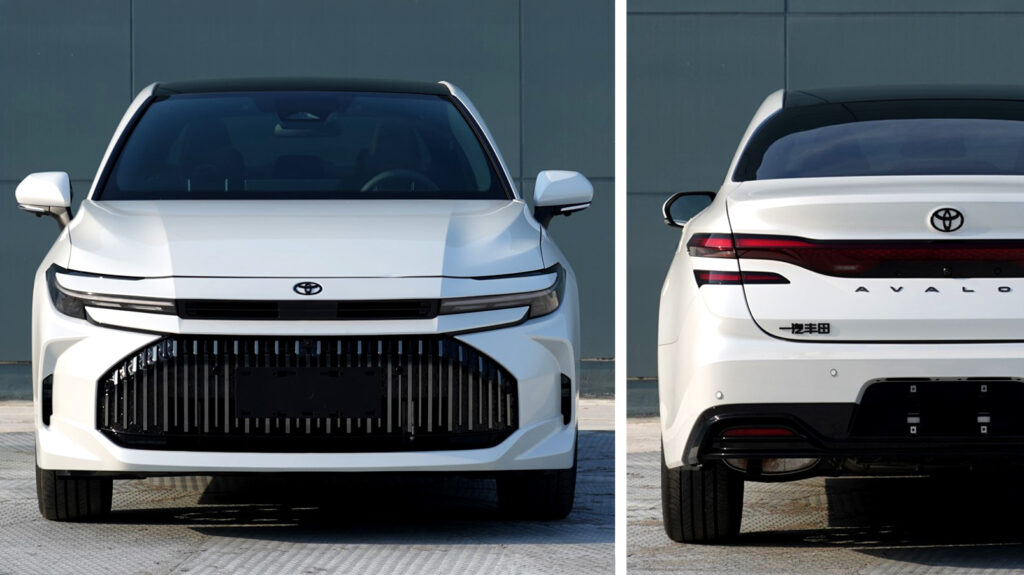


Three years after Toyota pulled the Avalon from American showrooms, China just gave the sedan its third facelift. Not its first. Not its second. Its third since the U.S. said goodbye.
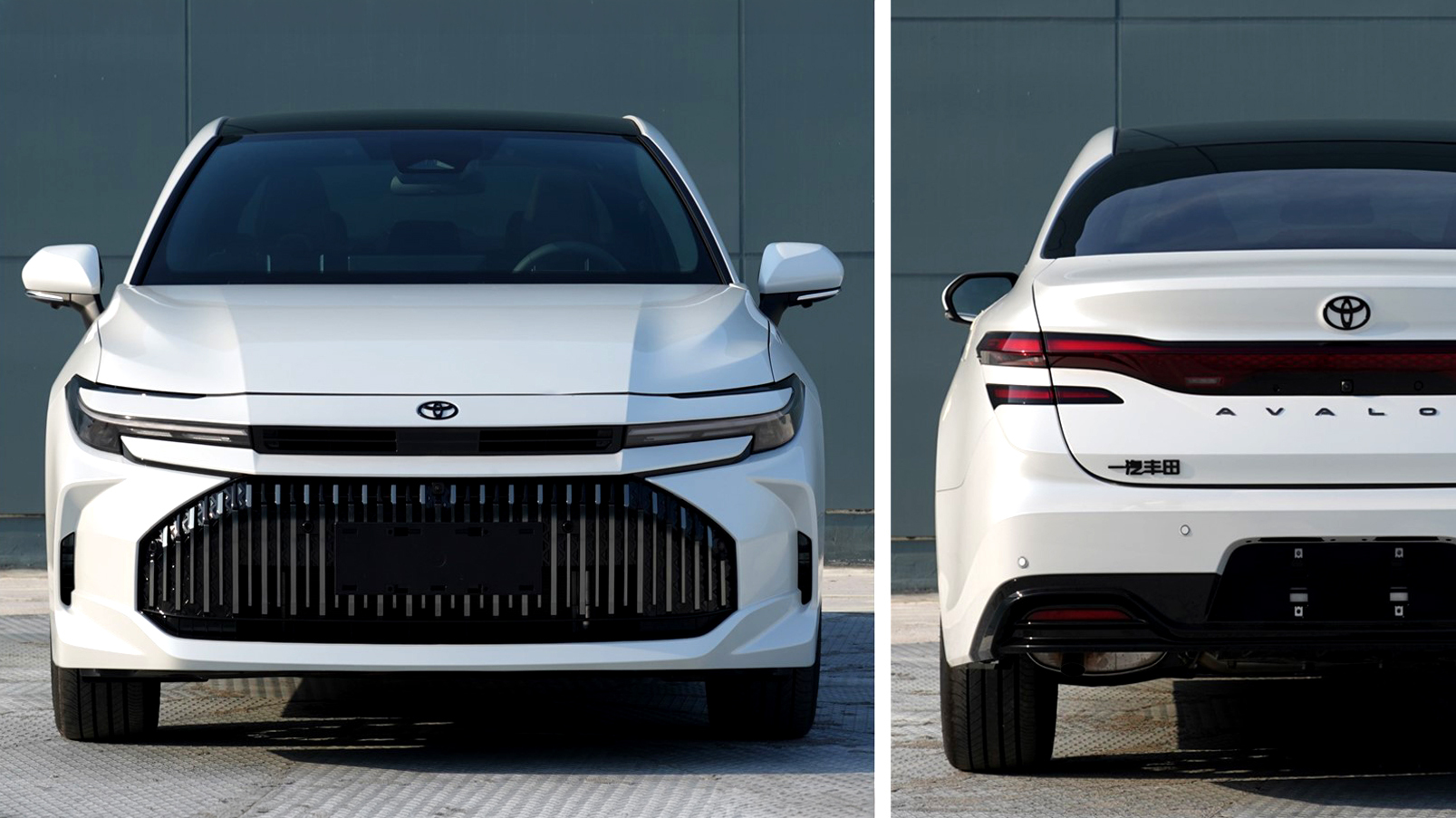
The updated model was quietly revealed through China’s Ministry of Industry and Information Technology, the bureaucratic equivalent of a leak that nobody bothers to deny. Built through Toyota’s joint venture with FAW, the refreshed Avalon borrows styling cues from the current Camry and the rear-wheel-drive Crown. Up front, you get C-shaped lighting units, a large grille with vertical bars, and angular bumper work.
Out back, the changes are more noticeable. New split taillights replace the previous design, the Avalon badge migrates from the light bar to the center of the trunk, and the license plate recess drops down to a redesigned bumper. It looks like a different car from behind, which is the cheapest way to make something feel new without actually engineering anything new.
The filing shows two body lengths — 196.5 inches and 199 inches — both powered by a 150-horsepower engine. One version carries HEV badging and a hybrid powertrain that bumps output to 184 horsepower while delivering a claimed fuel consumption rating of just 4.31 liters per 100 kilometers. That translates to roughly 54.6 mpg, the kind of number that makes you wonder why Toyota didn’t try harder to keep this car alive stateside.
But the American sedan market answered that question years ago. When Toyota discontinued the Avalon after the 2022 model year, it wasn’t a surprise. Sales had been sliding as buyers migrated to SUVs and crossovers. The Camry, Toyota’s smaller and more popular sedan, survived — barely — by going hybrid-only for its latest generation.
The Avalon, positioned above it with a quieter ride and a slightly older buyer demographic, didn’t get that chance.
China is a different story entirely. Sedans still command serious market share there, and the competitive pressure from domestic Chinese automakers means foreign brands have to keep refreshing products or risk irrelevance. BYD, Geely, and others have been eating into Toyota’s position with aggressive pricing, advanced tech, and electric powertrains.
A 54-mpg hybrid Avalon is Toyota’s way of staying in the conversation without committing the resources a full redesign would demand.
This is the third facelift since 2022. The first arrived that same year, concurrent with the American car’s death. A more thorough reworking followed in July 2024. Now this one lands in 2025, borrowing a face from one sibling and taillights from another.
Whether that strategy holds depends entirely on how long Chinese consumers remain interested in a platform that dates back to 2018. Toyota has been masterful at stretching vehicle lifecycles — the Land Cruiser and 4Runner proved that patience pays — but those are body-on-frame trucks with cult followings. A front-wheel-drive sedan in a market that is rapidly going electric operates under different rules.
For now, the Avalon soldiers on, wearing its third new face in three years. America moved on. China hasn’t. The question is whether that says more about the car or the markets.
Share this Story