
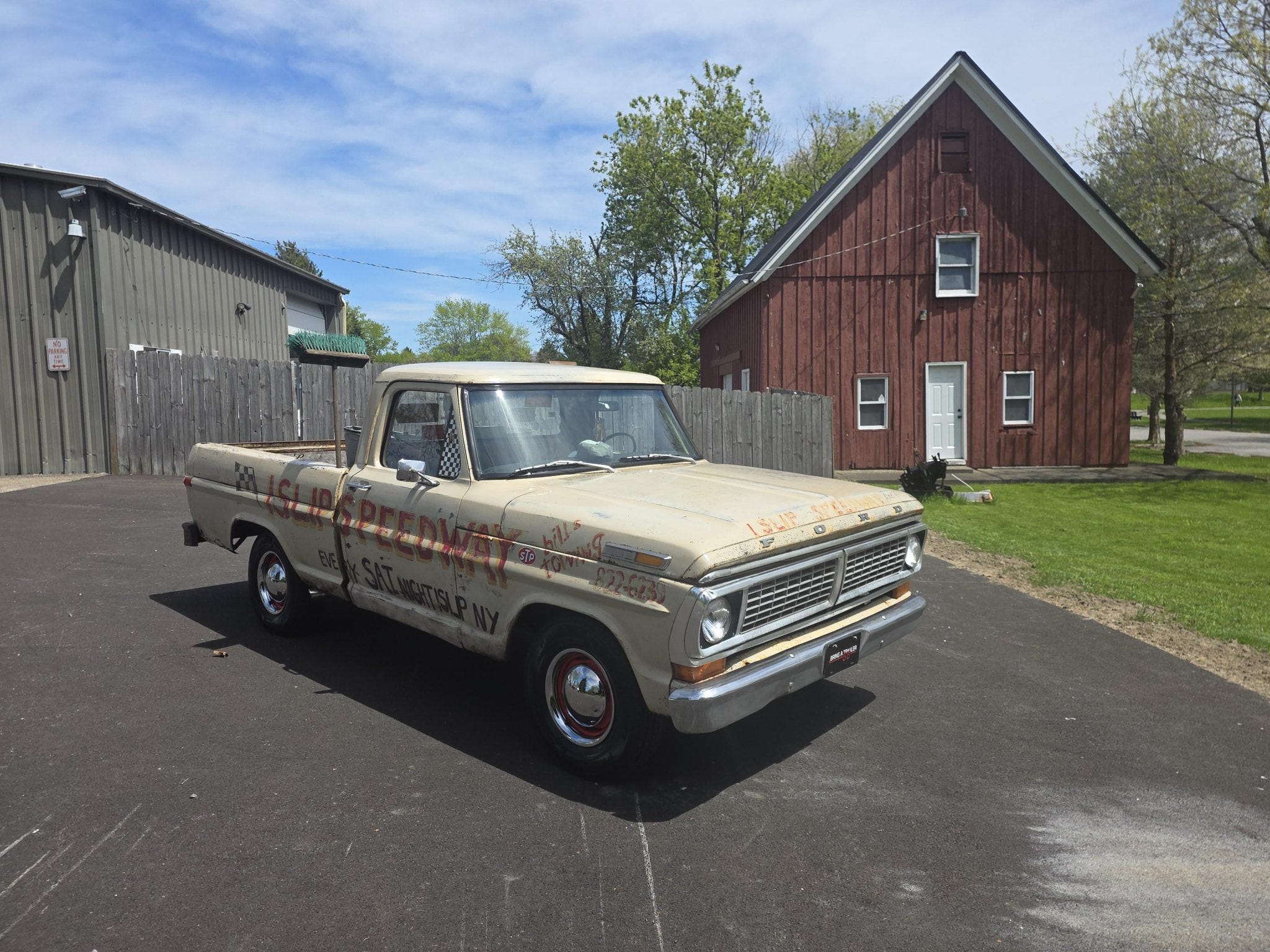


A battered 1971 Ford F-100 with trash cans still riding in its bed just rolled onto Bring a Trailer, and it might be the most honest vehicle listed on the auction site all year. No concours restoration. No matching-numbers drama. Just a working truck that spent its life cleaning up after demolition derbies and stock car races at Islip Speedway on Long Island.
That speedway is gone now. So is the era it represented. But the truck survived.
Islip holds a peculiar place in American motorsport history. At just two-tenths of a mile, it was the smallest oval in the NASCAR Grand National Series. It was also, according to racing lore, the birthplace of the demolition derby.
In 1958, promoter Larry Mendelsohn reportedly noticed that fans cheered louder for crashes than for checkered flags, so he built an entire event around the carnage. Somebody had to mop up afterward. This F-100 was that somebody.
It spread oil-absorbent on spills, hauled twisted sheet metal out of the infield, and swept up the debris of a hundred Saturday nights. The truck was at Islip for the last NASCAR race ever held there, in 1971, when drivers wrestled full-size stock cars around a track barely bigger than a parking lot.
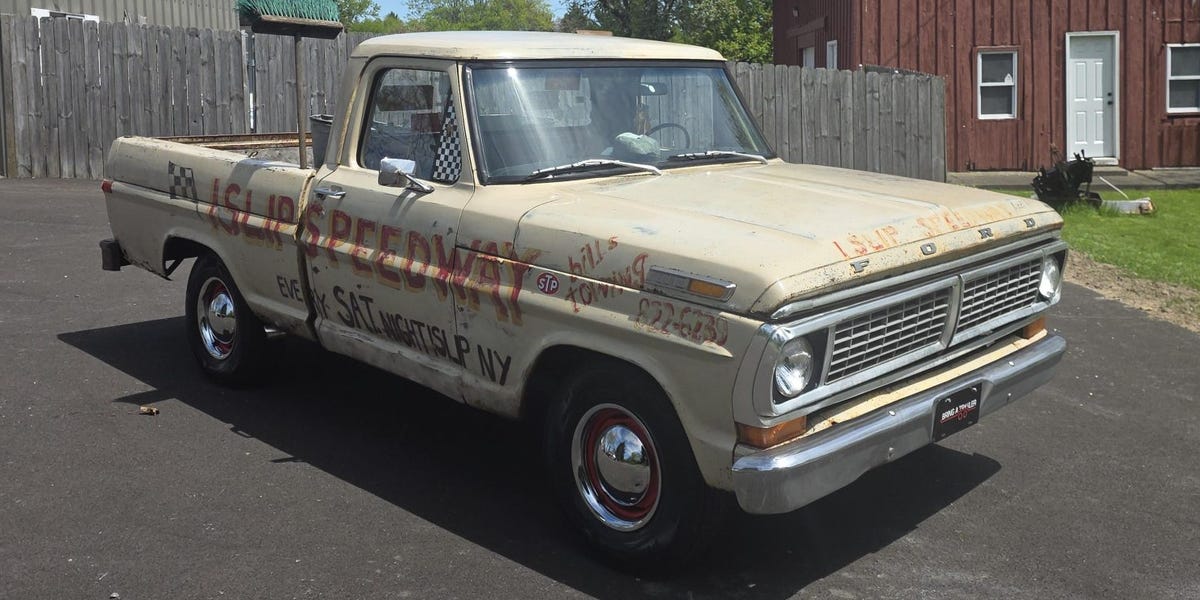
The patina on this Ford isn’t curated or faked. Hand-lettered “Islip Speedway” signage runs down the flanks alongside painted checkered flags, all of it faded and chipped in the way that only decades of outdoor work can produce. The bench seat hides under a blanket, and a three-speed manual sprouts from the floor.
Open the glovebox and you find something no restorer could replicate: dozens of scrawled signatures from drivers, crews, and track regulars whose names have mostly been forgotten by everyone except the people who were there. This truck was a background player in countless family photos, a fixture so constant that nobody thought to document it properly until it was almost too late.
Under the hood sits Ford’s 302-cubic-inch V-8, rated around 210 horsepower when Kissinger was still making headlines. The oil has been changed, fresh tires have been mounted, and it runs. The listing also includes a scale model of the truck, a nice touch that underscores how deeply someone cared about preserving this thing as a complete artifact rather than just a vehicle.
What makes this F-100 compelling isn’t mechanical. Local short tracks once dotted the American landscape like drive-in theaters and corner drugstores. They ran on shoestring budgets, volunteer labor, and community loyalty.
Islip Speedway closed its gates decades ago, swallowed by development and changing tastes. The trucks and cars that raced there were crushed or parted out. The grandstands came down.
This F-100 wasn’t fast enough to race and wasn’t important enough to save on purpose. It just kept working until the lights went out, and then it kept existing, which in the world of old trucks amounts to the same thing.
The auction closes June 5. Whoever buys it should resist every urge to repaint, re-letter, or restore. The scratches and scribbles on this truck are the whole point. Strip them away and you have a tired half-century-old pickup worth a few thousand dollars. Leave them, and you have a piece of American racing’s grassroots DNA that no museum thought to collect.
Some trucks haul lumber. Some haul boats. This one hauled away the wreckage of a sport that doesn’t exist in quite the same way anymore, at a track that doesn’t exist at all.


Share this Story