
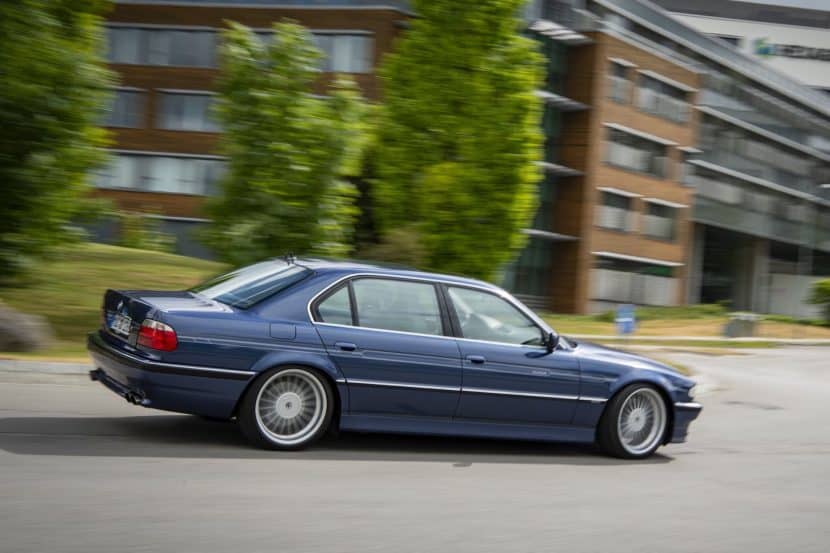


Fewer than 100 were ever built. Most have vanished into collections in Japan and the United States. And the ones that surface in Europe now carry price tags that would have bought you a decent house in parts of Bavaria when these cars were new.
The BMW ALPINA B12 6.0, built on the E38 7 Series platform between 1999 and 2001, remains the closest thing to an M7 that ever existed. BMW could never bring itself to stamp that badge on a flagship sedan. ALPINA, then still an independent operation out of Buchloe in the Allgäu, had no such hesitation.
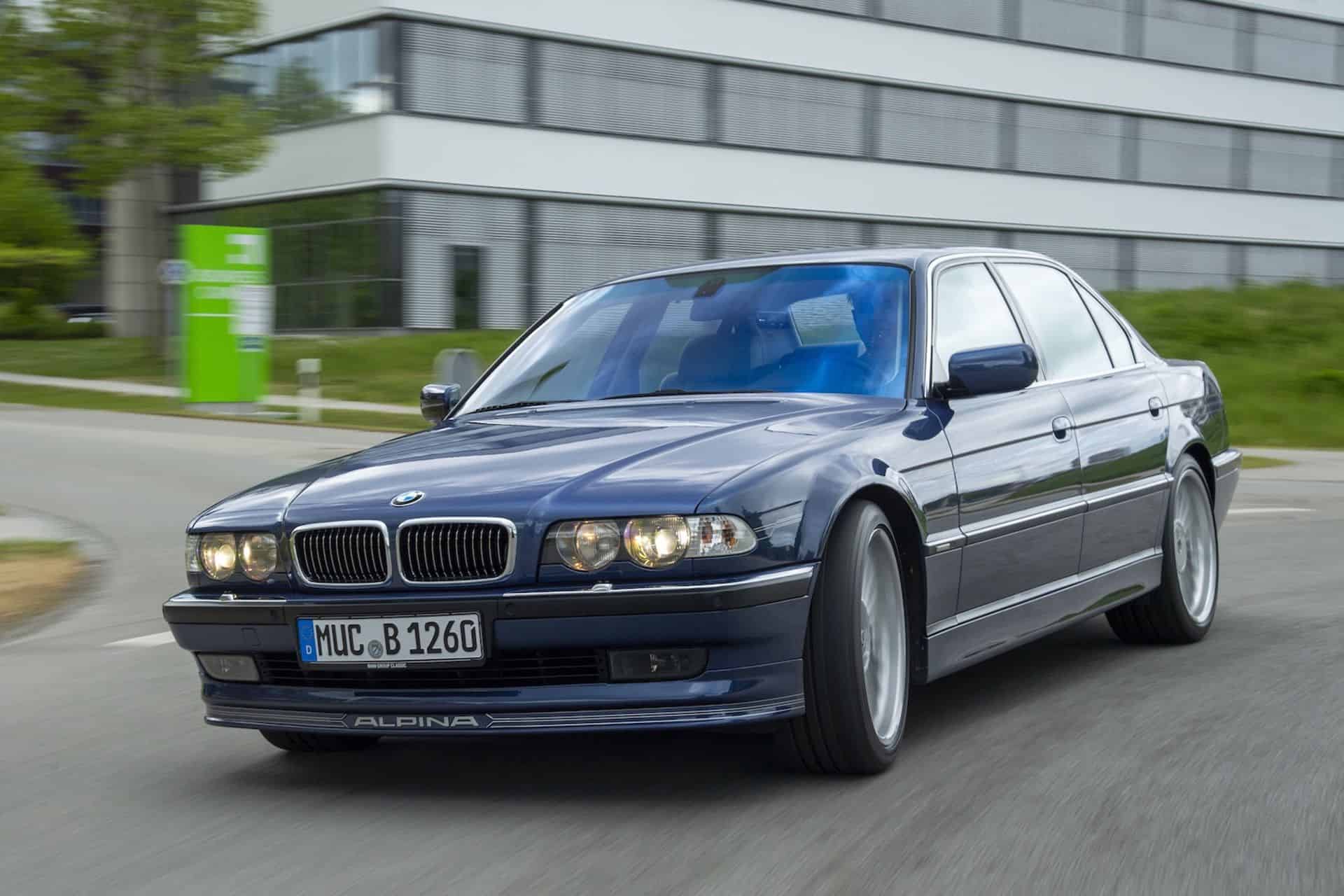
The recipe was straightforward and extravagant. Take BMW’s M73-generation V12, bore it out from 5.4 to 6.0 liters, and extract 430 horsepower and 600 Nm of torque. Pair it with a ZF five-speed automatic featuring Switch-Tronic manual shifting, a feature that was almost comically unnecessary given the engine’s wall of torque. Wrap it all in a long-wheelbase 7 Series wearing ALPINA’s signature pinstripes and 20-inch wheels with hidden valve stems.
The result hit 60 mph in under six seconds and topped out at a verified 290 km/h, roughly 181 mph. The speedometer read to 330. Nobody has ever accused ALPINA of underselling the dream.
What makes the B12 6.0 remarkable nearly three decades later isn’t the straight-line speed, which modern hot hatchbacks can approximate. It’s the character of the delivery. At 250 km/h on the autobahn, the cabin was quiet enough to hear Mozart through the factory sound system.
A Porsche 993 Turbo driver running flat out at the same speed was white-knuckling the steering wheel with engine noise hammering through the firewall. The ALPINA driver was adjusting the climate control.
This particular example, production number 005, wears blue metallic paint over a grey full-leather interior that ALPINA’s own upholstery shop reworked. It carries 135,000 kilometers, practically nothing for a car designed to eat continental distances. The burl-wood plaque on the dash reads like a birth certificate: “ALPINA B. Bovensiepen GmbH + Co, Production of Exclusive Automobiles.”
The interior shows its age honestly. The Philips Carin navigation screen looks like it belongs in a museum. The rear side window shades are manual, there are no individual rear seats, no massage functions.
This was a driver’s luxury car, not a chauffeur’s. The priorities were velocity and refinement, in that order.
Finding one today requires connections and stubbornness. Clean European-market cars with fewer than 125,000 miles and documented service histories command at least 110,000 euros. Rougher examples with higher mileage start around 70,000. The market is thin because the production run was tiny and global demand scattered the surviving cars across three continents.
The timing of this nostalgia isn’t accidental. ALPINA ceased independent operations at the end of 2025 after 60 years when BMW absorbed the brand entirely. The first BMW-built ALPINAs, exclusive versions of the current 7 Series and X7, aren’t expected to debut publicly until late 2027. Whether those cars will carry the same handbuilt credibility as a B12 with a numbered plaque on the dashboard is a question the market will answer with its wallet.
At 4,600 pounds, the B12 6.0 was never a canyon carver. On fast, winding roads, the mass announces itself. But that was never the point.
This was a car built to cover enormous distances at enormous speed with enormous composure, and by every account, it still does exactly that. The naturally aspirated 6.0-liter V12, unmuffled by turbochargers, produces a deep exhaust note through four tailpipes that no forced-induction engine will ever replicate. It is a sound from a world that no longer exists, built by a company that no longer exists in the form that created it.
Some cars age. The B12 6.0 just appreciates.

Share this Story