
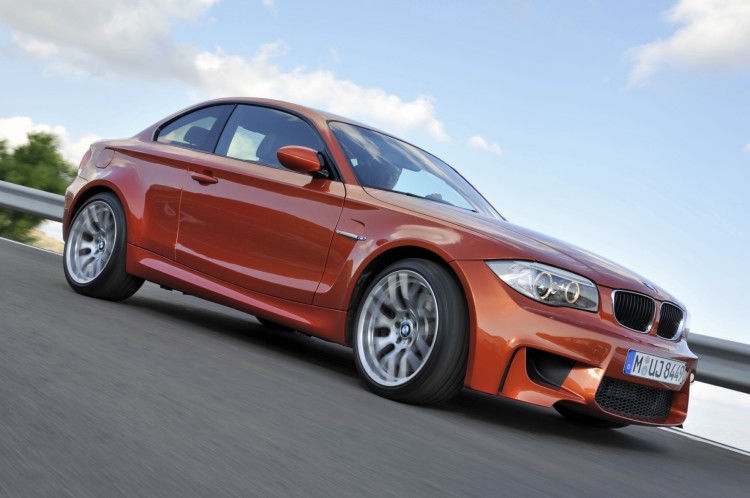


BMW built 6,309 of them in 2011. No automatic option, no standard sat-nav, no DAB radio. A 340-horsepower turbocharged straight-six in a stubby 1 Series shell with M3 brakes and suspension, a six-speed manual, and not much else.
Original sticker was 44,000 pounds. Today a clean one costs you 70,000. The market doesn’t lie like that for no reason.
Vicki Butler-Henderson and Tiff Needell took a 1M Coupe and the new G87 M2 CS to Anglesey Circuit in the rain, and the result was not what the spec sheet would predict. The M2 CS packs 530 horsepower — 190 more than the 1M — and reaches 62 mph over a second quicker. It sits 8mm lower than the standard M2, sheds 30 kilograms through carbon on the bonnet, roof, and boot lid.
On paper, it should have humiliated the older car. On a soaked Welsh circuit with traction control switched off, it spent most of its time trying to terrify two of the most experienced drivers in British motoring television.
The M2 CS demands a specific contract with its driver. You push through understeer first, commit to the front axle, and only then does the rear come alive. That’s textbook road-car tuning — safe, progressive, correct.
It is also, with 530 horsepower on a greasy surface and no electronic safety net, a substantial act of faith. The 1M is more forgiving in its manners but snaps out faster when you stop paying attention. Different traps, same lesson: respect the car or it will educate you.
Neither driver picked a winner, which tells you everything.
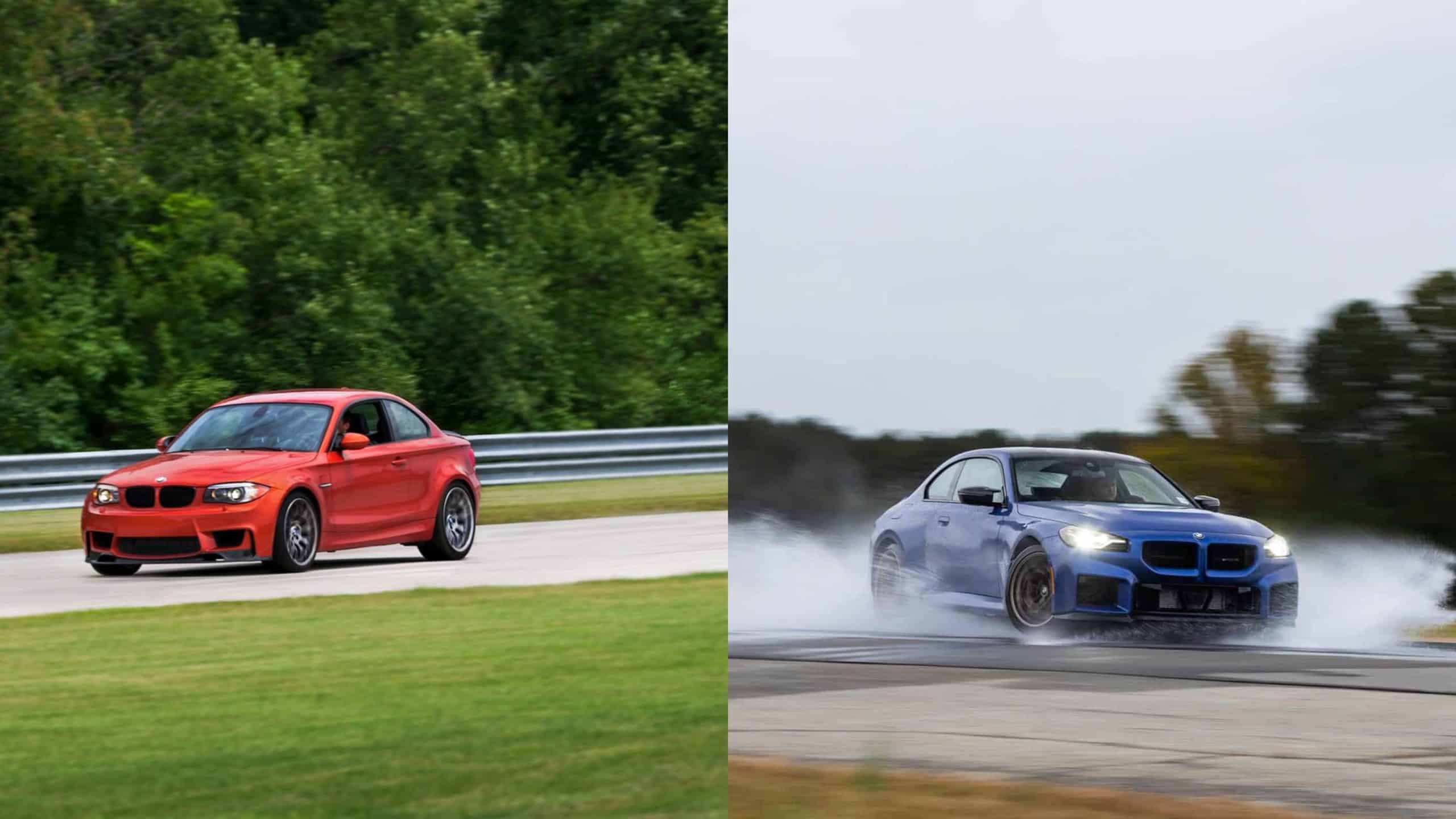
Needell owns a 1M. He first drove one at an Evo Car of the Year test, voted it winner after two corners, then watched a Pagani Huayra take the trophy. He hasn’t fully forgiven the outcome. That kind of grudge doesn’t form around ordinary cars.
The M2 CS has its own problems that no amount of horsepower solves. The carbon fiber sport seat features a central bolster between the legs — fine in an automatic, brutal in a manual. Needell drove a standard M2 at Pembrey for a full day and came home with bruised legs.
The CS uses the same seat. Both drivers also found the flat-bottom steering wheel baffling in a car that otherwise takes itself so seriously.
Back in the 1M, with its narrower, simpler seats and unadorned cockpit, neither driver missed the carbon buckets. The older car is quieter by modern standards and lighter in feel, easier to read at the edge. It doesn’t announce itself. It doesn’t need to.
BMW’s compact M car philosophy has changed in fourteen years. The 1M was an exercise in subtraction — take the minimum platform, add the best hardware from the parts bin, leave everything else out. The M2 CS is an exercise in escalation — more power, more carbon, more technology, more aggression.
Both approaches work. They just answer different questions.
The uncomfortable truth for BMW is that the simpler question produced the more enduring car. A 2011 model with a third less power, no fancy materials, and a radio that barely worked still forces the company’s latest and most extreme compact M car to fight for every inch of credibility on a wet track. The M2 CS is faster, louder, and objectively superior by every measurable metric.
And yet two seasoned drivers couldn’t bring themselves to say it was better.
BMW was never going to keep building cars like the 1M. The economics don’t work, the emissions regulations don’t allow it, and the market demands features the 1M never offered. The M2 CS is the best compact M car BMW can build today.
That it still lives in the shadow of a car from 2011 says less about its failings than about what BMW stumbled into fifteen years ago — and hasn’t quite recaptured since.

Share this Story