
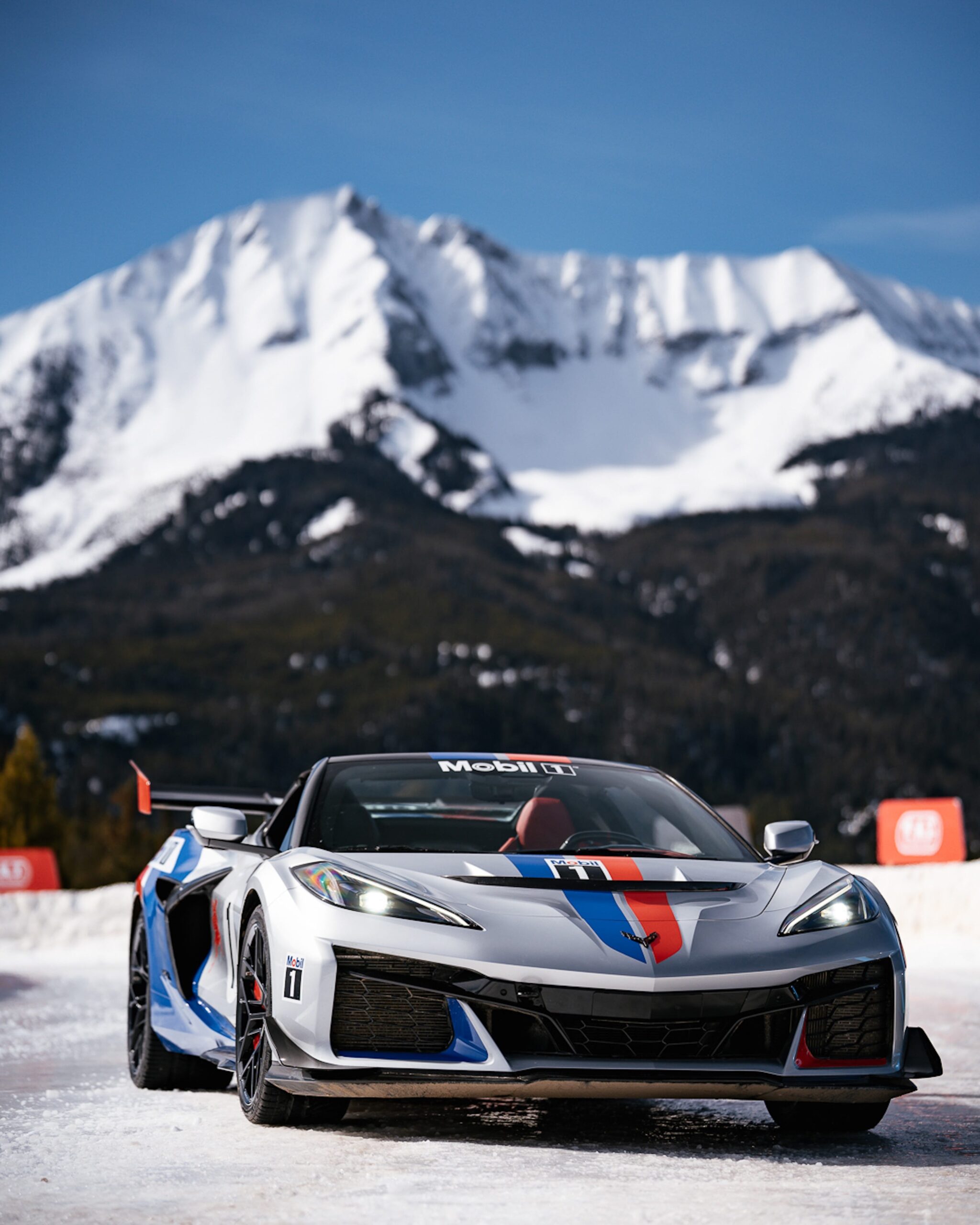


The 2026 Chevrolet Corvette ZR1X runs an 8.675-second quarter mile at 159.57 mph. That’s fast enough to break the NHRA’s street-legal safety rules, which cap non-caged production cars at 9.0 seconds and 150 mph. It’s also fast enough to make the car effectively illegal at sanctioned drag strips without a roll cage and competition license.
And yet, Corvette executive chief engineer Tony Roma daily drives one through Michigan winters.
That contradiction sits at the heart of what the ZR1X actually is — a 1,250-horsepower, all-wheel-drive hybrid supercar that starts at $212,195 and can be purchased at your local Chevrolet dealer. It combines the ZR1’s twin-turbocharged 5.5-liter LT7 V8 making 1,064 horsepower with an upgraded front electric motor borrowed from the E-Ray, adding another 186 horses. Zero to 60 takes 1.68 seconds, peak acceleration force hits 1.75g, and these are purpose-built race car numbers bolted to a chassis with a trunk and a factory warranty.
The NHRA’s Street Legal program never anticipated a dealership car this quick. The 9.0-second, 150-mph threshold exists because at those speeds, a crash inside an uncaged car becomes survivable only by luck. Even on road tires on an unprepped surface, Car and Driver clocked a 9.2-second pass at 155 mph — still over the speed limit.
GM’s engineers actually had to reprogram the front motor’s software cutoff from 150 mph to 160 mph so the all-wheel-drive system would stay engaged through the full quarter mile. They built the car knowing exactly where it would land.
The NHRA will figure it out. It always does. But the fact that a stock Corvette now occupies a regulatory gray zone designed to prevent fatalities tells you something about where the performance ceiling has moved.
The winter story is almost stranger. Chevrolet puts every Corvette — including the track-focused ZR1 and ZR1X — through the same cold-weather validation: deep-freeze tests, extreme cold starts, specific calibration of traction and stability systems. The mid-engine layout, with the powertrain’s mass sitting over the rear axle, gives the car surprisingly competent grip in snow.
Executive design director Phil Zak, who daily drives a rear-wheel-drive ZR1 through Detroit, put it plainly: “The only time it gets challenging is if you get more than four or five inches of snow. It starts to act like a snowplow.”
Zak liked the car enough in foul weather that he refused to turn it in last November. Instead, he had Chevrolet source him a set of Michelin Pilot Alpin winter tires. Roma approved without hesitation.
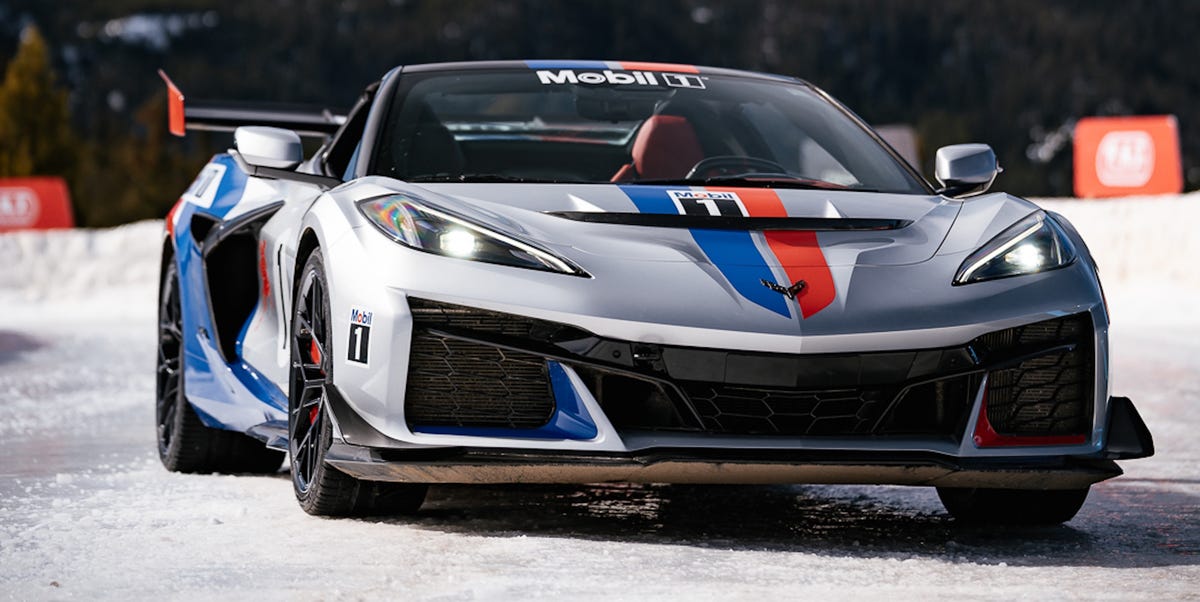
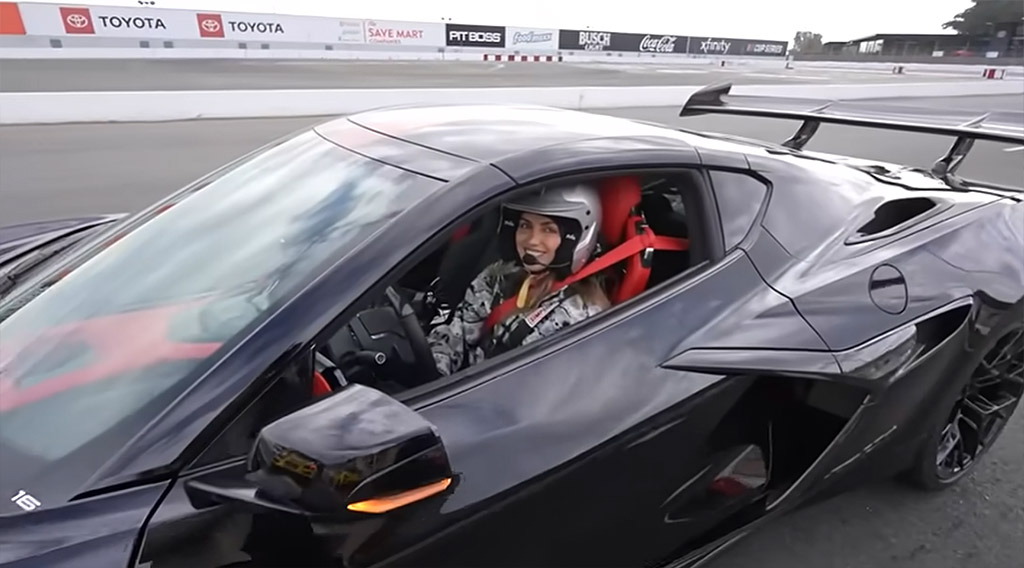
The ZR1X recently competed at the FAT International ice race in Montana, finishing second overall — on winter rubber, on ice, with over a thousand horsepower available. YouTuber Emelia Hartford, one of the first C8 owners and a longtime quarter-mile record holder on the platform, drove the car at Sonoma Raceway and reported running a 9.1-second pass at 156 mph on her third attempt. Drivers the previous day, in better conditions, were dipping into the eights.
“The fact that the car can do it is pretty darn cool, right?” Roma said about winter driving. “When you get stuck and you have to move it from A to B, the fact that the car shrugs it off and just says, ‘Yeah, no problem’ — that’s pretty cool.”
Cool is one word for it. A car that dominates a drag strip so thoroughly it can’t legally run there, then gets fitted with snow tires and commutes through a Michigan blizzard, occupies territory no production vehicle has touched before. General Motors didn’t stumble into this. Every number, every calibration, every raised software cutoff was deliberate.
The Corvette team built something the rulebooks hadn’t imagined. Now everyone else — the sanctioning bodies, the competitors, the owners who might actually garage this thing from November to April — has to catch up.


Share this Story