


In 1982, a Chevrolet Cavalier cost about $7,000. Add a Cadillac grille, some chrome, leather seats and a vinyl roof option, and General Motors asked roughly $12,000 for the same J-body car.
That was the Cadillac Cimarron. GM pitched it against the BMW 3-Series E30 and the Mercedes 190E. Buyers noticed it was a Cavalier.
Carscoops has compiled its list of the five worst rebadges in automotive history, and the Cimarron is the oldest of them. Read the entries together and the pattern jumps out. Every one of these cars was a shortcut, and every one charged the customer for it.
Platform sharing is how the industry survives. Spread development costs across brands and everyone wins. The trouble starts when sharing turns into swapping emblems and bumping up the price.
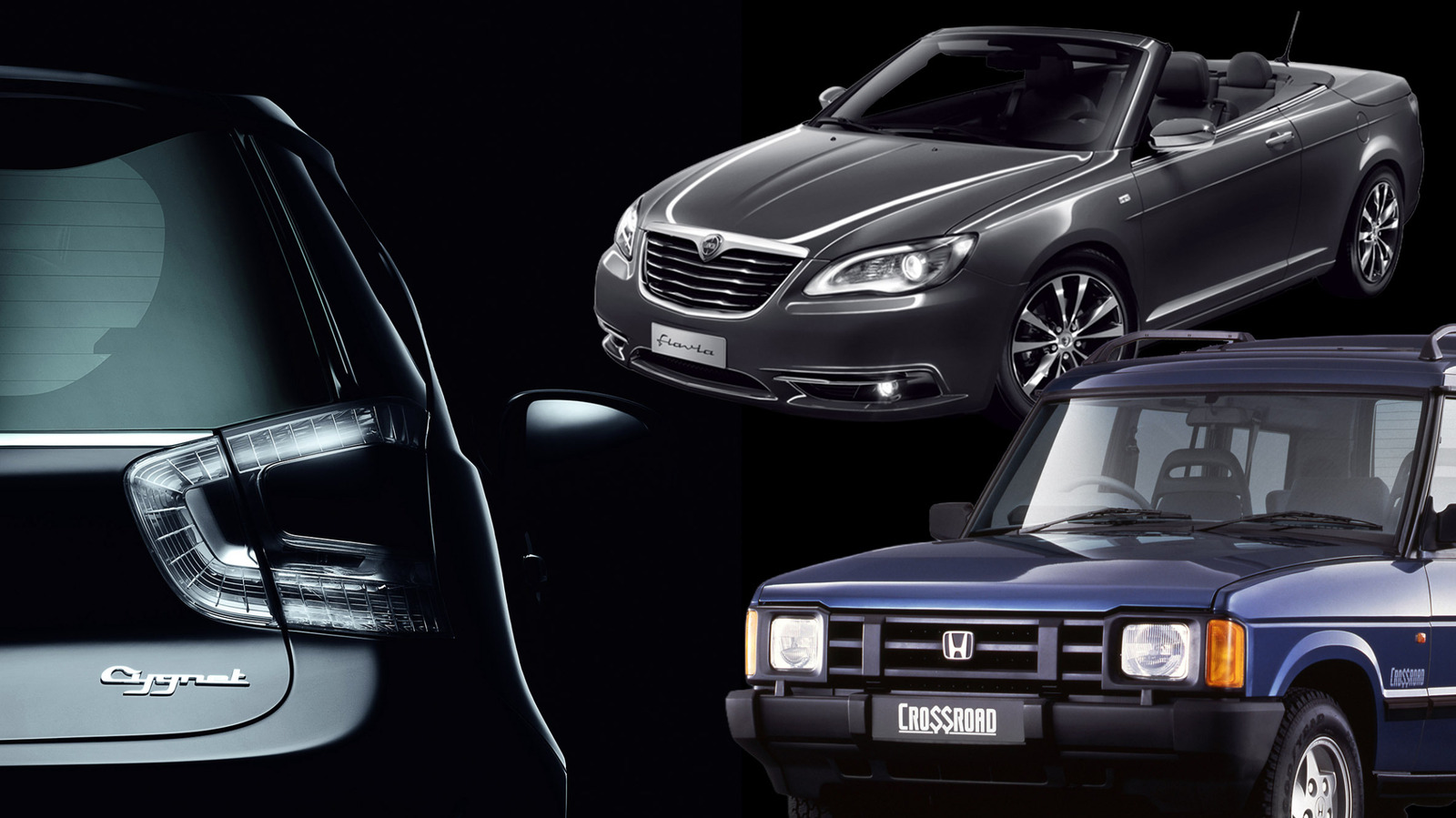
Consider Honda in 1993. The Crossroad remains the only V8-powered Honda ever sold, which sounds like great trivia until you learn it was a Land Rover Discovery Series I.
Honda changed the badges on the grille, tailgate, steering wheel and center caps. The bodywork, interior, V8, full-time four-wheel drive and ladder-frame chassis all came straight from Solihull.
Japanese buyers walked into showrooms expecting Civics, Accords and the NSX. They found a British 4×4 parked among them, and most of them walked back out.
Kia’s attempt three years later at least had some ambition behind it. The young brand wanted an MX-5 rival but couldn’t afford to build one, so it bought the tooling and license for the Lotus Elan M100.
Here’s the twist. Lotus killed the front-drive Elan in 1995 after the rear-drive Mazda beat it. Kia then took the car that lost to the MX-5 and aimed it straight back at the MX-5.
The Kia Elan, sold in Japan as the Vigato, got new taillights, new wheels, a raised suspension and a Kia-built 1.8-liter engine in place of the Isuzu unit. At ₩27,500,000 it was one of the most expensive cars in Korea. Few people bought one.
Fiat’s stake in Chrysler produced the most cynical entry. Between 2009 and the formation of FCA in 2014, Lancia suddenly gained a Thema that was a Chrysler 300, a Voyager that kept its Chrysler name, and a Flavia Convertible that was a Chrysler 200.
The Flavia name carried decades of Lancia heritage. The car carried a tweaked grille. A sedan was announced and never sold, Europeans rejected the convertible, and it died in 2014 with Lancia closer to extinction than ever.
Then there’s the Aston Martin Cygnet, the 2011 city car that read like an April Fool’s prank and wasn’t.
To be fair, Aston did more work than most here. It added a signature grille, side gills, bespoke taillights, deeper skirts, and an interior of hand-stitched leather and Alcantara. Underneath sat the Toyota iQ’s 1.3-liter four and CVT, untouched, for £30,000, triple the Toyota’s price.
The real motive was regulatory. A tiny Toyota pulled down Aston’s EU fleet emissions average without forcing new engines into its sports cars and GTs. The Cygnet missed its sales targets anyway.
Five cars, three decades, one lesson the industry keeps paying to relearn. Customers will pay a premium for a different car. They won’t pay one for a different badge.
The Cygnet even got a punchline. In 2018, Aston’s Q division built a single Cygnet for one customer with a 430-horsepower Vantage V8, rear-wheel drive, wide fenders and all-new suspension.
It finally drove like an Aston Martin. The estimated bill came to £450,000.
Share this Story