
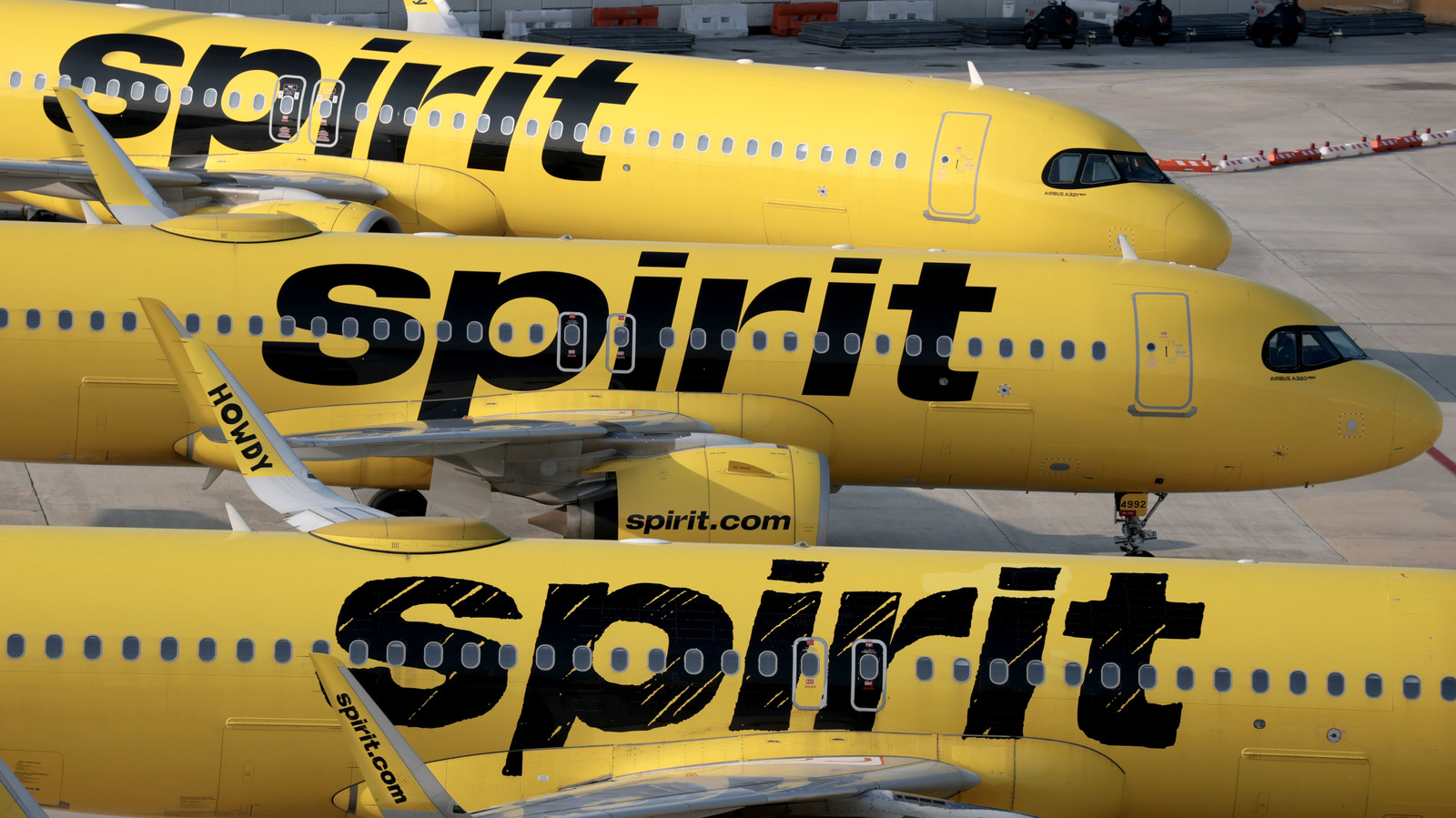


Bob Allen had six hours to find 20 pilots. That was the window Nomadic Aviation Group’s co-founder gave himself after Spirit Airlines collapsed so fast that its Airbus jets were left scattered across the country like abandoned shopping carts. Some were still parked at the gates where passengers walked off and discovered their airline no longer existed.
Spirit’s second bankruptcy last year wasn’t a surprise. The speed of its death was.
Leasing companies had been watching the carrier spiral for months, and Nomadic — the outfit lessors hire to retrieve their multi-million-dollar assets — had been monitoring the situation too. But when Spirit’s lights went out, the airline’s fleet froze in place wherever its final flights happened to land. No Spirit employees remained to taxi aircraft off gates.
Airports needed those gates. And the leasing companies needed their planes back.
This is aircraft repossession, and it bears almost no resemblance to hooking up a sedan in someone’s driveway at 3 a.m.
You can’t just drive up with a flatbed. Airports won’t release a widebody to anyone who flashes a business card. Legal clearance comes first, then fueling, flight plans, crew positioning — all the logistics of running an airline, compressed into a frantic sprint with no airline infrastructure behind it.
An FAA representative and a licensed mechanic must inspect each aircraft and certify it airworthy before the wheels leave the ground.
Time is the enemy. The longer a jet sits, the more maintenance it demands before anyone can legally fly it again. Corrosion creeps in, systems degrade, and every day on the ramp is money burning.
Allen found his pilots. Many of them used to fly for Spirit. There’s a grim symmetry in that — the same crews who flew the airline’s final revenue flights coming back to ferry the carcasses to the desert.
And the desert is exactly where these planes went. Nomadic moved Spirit’s orphaned fleet to storage facilities outside Phoenix and Tucson for the same reason the Air Force parks thousands of retired military aircraft at Davis-Monthan. The dry climate slows deterioration to a crawl — no humidity, no corrosion eating through aluminum while the leasing companies figure out what comes next.
What comes next is the interesting part. Spirit’s fleet doesn’t just evaporate. These are relatively modern Airbus narrowbodies, and airlines around the world are still desperate for capacity.
Many of these jets will be leased to Spirit’s former competitors, a final indignity for a brand that spent two decades trying to prove ultra-low-cost flying could work in America.
Some older airframes won’t get that second life. They’ll be stripped for parts, particularly engines. Pratt & Whitney’s well-documented production shortages have created a bizarre secondary market where a used engine pulled from a scrapped Spirit jet could be the thing that gets a newer aircraft — one sitting engineless at a factory — back into revenue service.
Spirit’s zombie fleet is worth more dead than the airline ever was alive in its final months.
The whole episode reveals something the flying public rarely considers. Airlines don’t own most of their planes. They rent them.
When the rent stops, someone like Bob Allen gets a phone call, rounds up a bunch of newly unemployed pilots, and starts the strangest ferry operation in commercial aviation. They move planes nobody wants to fly to a place nobody wants to visit, so they can eventually become someone else’s fleet.
The desert outside Tucson is patient. It’s been collecting airplanes for decades. Spirit’s contribution to the boneyard is just the latest chapter in a story that repeats every time an airline burns through its last dollar and leaves its hardware behind.





Share this Story