


In 2023, a single hailstorm ripped through Kia’s West Point, Georgia, manufacturing plant and damaged more than 13,000 vehicles sitting in open lots. That was the kind of loss that changes how a company thinks about parking.
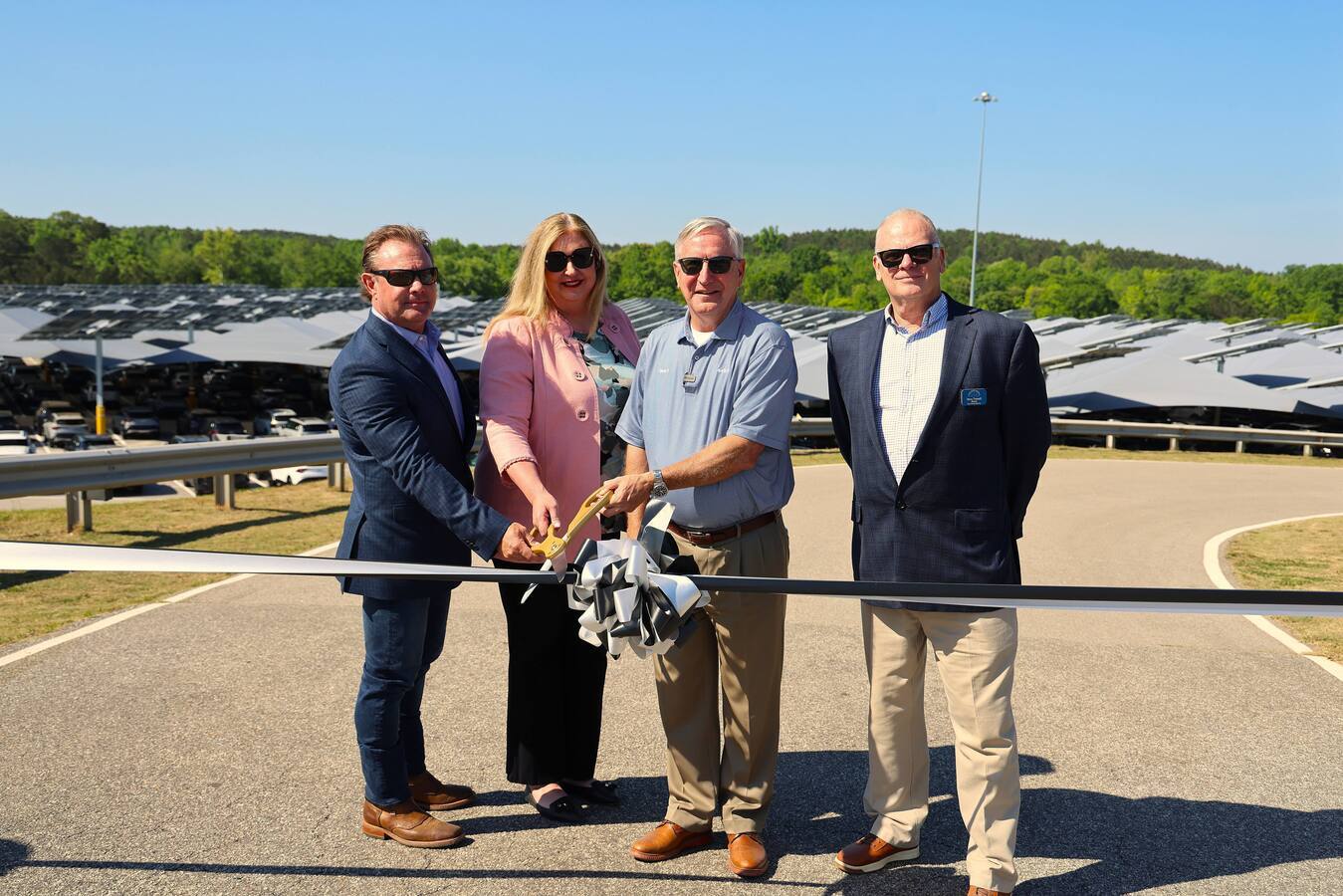
On April 24, Kia Georgia and Vehicle Protection Structures cut the ribbon on the answer: 3.2 million square feet of canopy coverage over the plant’s vehicle storage lots, embedded with 10 megawatts of solar generation capacity. It is one of the largest behind-the-meter solar canopy installations in the southeastern United States.
The math here is elegant and brutal. Kia took the pain of weather-related inventory destruction and converted it into an infrastructure asset that shields finished vehicles while feeding electricity back into the plant’s own operations. The solar panels bolted to those canopy structures were manufactured by Qcells, which happens to be headquartered in Georgia, keeping the supply chain local.
“This project reflects a new standard for how manufacturers can approach risk management,” said Wade White, executive vice president at VPS. Stuart Countess, president and CEO of Kia Georgia, called it a “smart investment” that protects vehicles, supports the workforce, and generates on-site power.
Georgia Power had a hand in the project as well. Cheryl Davis, the utility’s vice president of customer solutions, noted that the collaboration solved a “unique business need” while advancing renewable energy goals. That’s utility-speak for: this deal made sense for everyone’s balance sheet.
The West Point plant builds the Telluride, Sorento, and K5 for the North American market, making it one of Kia’s most critical production hubs outside South Korea. Leaving tens of thousands of freshly assembled vehicles exposed to increasingly violent weather was never a sustainable strategy. Insurance claims, delivery delays, customer dissatisfaction — the downstream costs of that 2023 storm rippled far beyond the dented sheet metal.
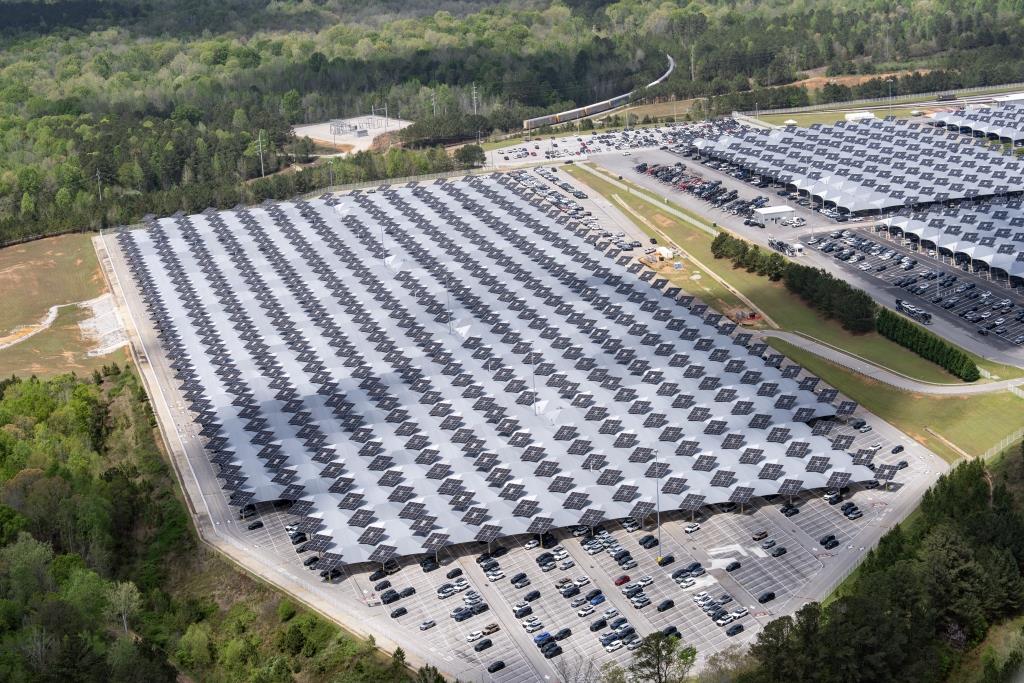
What VPS built is a massive covered parking structure that pays for itself over time through solar generation. The 10-megawatt capacity stays behind the meter, meaning Kia consumes the electricity on-site rather than selling it back to the grid. That displaces purchased power and stabilizes long-term energy costs for a facility that runs around the clock.
Auto manufacturers have been slow to address lot exposure. Dealerships across the South and Midwest lose millions annually to hail damage, and most still rely on insurance rather than infrastructure. Kia’s approach flips that model — spend capital upfront on physical protection, harvest energy from the same structure, and cut both weather risk and operating costs at the same time.
The project took roughly two years from the triggering hailstorm to completion. VPS, a PlayPower brand that has been in the vehicle protection business since 1991, handled the full design-build scope. Scaling a canopy system to 3.2 million square feet — roughly 73 acres of covered space — required coordination across engineering, fabrication, construction, and utility interconnection.
Other automakers with large Southeast footprints, including Hyundai’s new Metaplant in nearby Ellaberry, Georgia, and Rivian’s facility east of Atlanta, will be watching. Climate volatility is not easing up, and the insurance market for industrial property is tightening. A canopy that blocks hail and generates megawatts is a harder sell to ignore after 13,000 cars get pounded in a single afternoon.
Kia turned a disaster into a power plant. That is the kind of problem-solving the industry needs more of.
Share this Story