
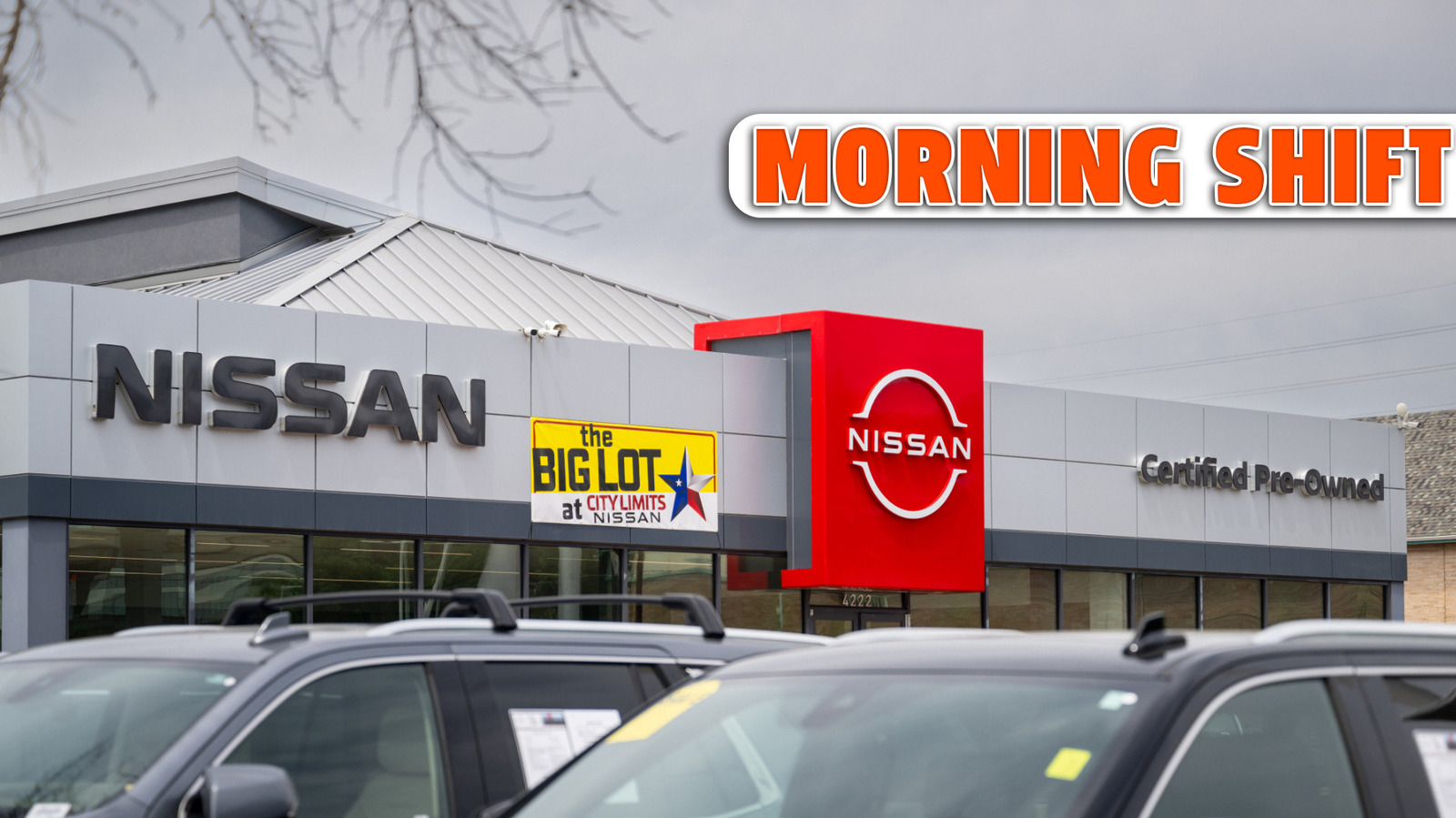


Nissan Motor now expects to lose $3.45 billion for the fiscal year ended March 2026. The company called this an improvement.
That tells you everything about where Japan’s third-largest automaker stands. The revised forecast, announced Monday, trims roughly $630 million off Nissan’s earlier projection of a ¥650 billion net loss. CEO Ivan Espinosa, who took over the restructuring effort after the collapse of the proposed Honda merger, has been slashing costs with surgical aggression — selling the corporate headquarters, cutting thousands of jobs, shuttering manufacturing sites, and shrinking global production capacity.
The problem is that most of the factors behind this “better” number are not repeatable. Nissan credited a reversal of provisions tied to relaxed U.S. emissions regulations, favorable foreign-exchange rates from a weakened yen, and one-time cost reductions. Strip those away, and the underlying business is still bleeding.
Global sales continued to slide even as losses narrowed. That’s a company getting lighter, not stronger. There is a difference between cutting your way to profitability and actually selling cars people want to buy.
Nissan’s product pipeline has been the elephant in the room for years. While Toyota refreshes the RAV4 and Kia wages a price war against Chinese EVs in Europe, Nissan is still trying to figure out what comes next. Its U.S. lineup is aging.
The Ariya hasn’t moved the needle. The Rogue and Altima carry the load, but neither generates the margins or enthusiasm to fund a turnaround alone.
The broader environment isn’t helping. Toyota reported a 5.8 percent decline in global sales for March, weighed down by product cycle timing and rising material costs from the ongoing conflict in Iran. Japanese automakers source roughly 70 percent of their aluminum from the Middle East, and those costs are climbing with no relief in sight.
If Toyota — with its fortress balance sheet and relentless operational discipline — is feeling the squeeze, Nissan has far less margin for error.
Meanwhile, the competitive landscape is shifting underneath all legacy automakers. Kia disclosed it has narrowed its European price gap with Chinese rivals like BYD to 15-20 percent, down from 20-25 percent. That’s an established Korean brand voluntarily compressing its margins to stay relevant.
EV startups like Rivian and Scout Motors are simultaneously attacking the franchise dealer model, threatening the distribution infrastructure that companies like Nissan depend on.
There’s also the parts ecosystem in flux. French supplier Forvia just sold its auto interiors division to Apollo in a $2.1 billion deal, signaling that even tier-one suppliers are retreating from commodity businesses to chase higher-margin technology plays. The entire value chain is restructuring around Nissan while Nissan restructures itself.
Espinosa deserves credit for stopping the hemorrhage. Selling headquarters buildings and closing factories takes nerve, especially in Japan, where corporate identity is tied to physical permanence. But cost-cutting is triage, not treatment.
At some point, Nissan has to give buyers a reason to walk into a showroom — or whatever replaces it.
The yen could strengthen. The emissions provisions won’t reverse again. The next fiscal year won’t have the same accounting tailwinds.
Nissan’s leadership knows this, which is why the restructuring has been so aggressive. They’re buying time. The question is whether they’re buying enough of it.
A $3.45 billion loss dressed up as progress is still a $3.45 billion loss. Nissan isn’t clawing its way toward profit. It’s clawing its way toward a place where profit becomes theoretically possible.
That’s not the same thing, and the next twelve months will make the difference painfully clear.


Share this Story