



Lucid Group produced 4,774 vehicles last quarter at a factory built to handle 90,000 a year. That single number tells you almost everything about where the California EV maker stands heading into the back half of 2026.
On Tuesday, what should have been a routine Q2 earnings call turned into something closer to a public reckoning. New CEO Silvio Napoli and his freshly installed leadership team laid out a $1.4 billion cash flow improvement plan that touches every corner of the business, from headcount to capital spending to the production line itself.
The second shift at the AMP-1 plant in Casa Grande, Arizona, is gone. Capital expenditures are being slashed by roughly $500 million. Operating expenses get trimmed by another $200 million. Two rounds of layoffs this year, first 12% in February, then 18% more in June, have freed up $158 million in annualized savings.
Lucid delivered 3,953 vehicles in Q2. Up 19% year-over-year, sure, but still a rounding error against the plant’s capacity. The company says it deliberately pulled back production to match actual demand and bring inventory under control. CFO Taoufiq Boussaid called it reaching a “normalized inventory level,” which is a polite way of saying they were building cars faster than anyone was buying them.
The Gravity SUV, Lucid’s roomy electric people-mover that was supposed to broaden the brand’s appeal beyond the Air sedan, hasn’t delivered the sales the company projected. Napoli’s team isn’t sugarcoating it. They admitted to inconsistent execution, underinvestment in service, sluggish quality responses and an ownership experience that fell short.
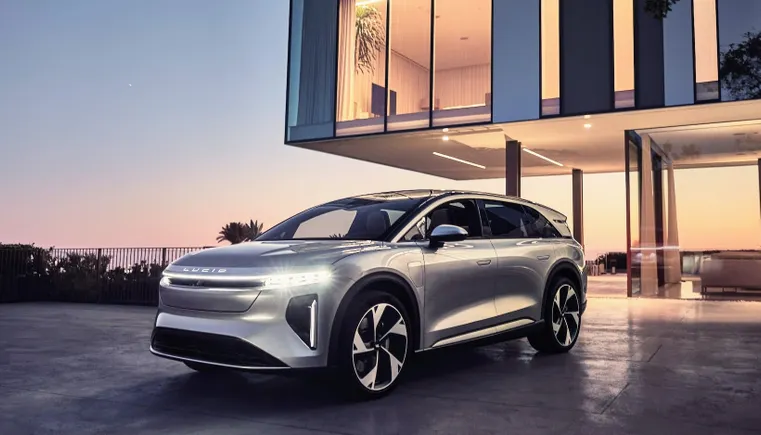
Then there’s the Cosmos delay. Lucid’s midsize model, built on an entirely new platform and originally set for a summer reveal with production before year’s end, has been pushed to the second half of 2027. Prototypes are running crash, cold-weather and durability tests at Lucid’s facility in Coolidge, Arizona, the former Nikola plant. Napoli was blunt about the reasoning: “We will not repeat the mistakes of the past by bringing a product to market before it is ready.”
That line carries weight when you consider the Air’s rocky early ownership period, plagued by software bugs and service gaps that cost the brand goodwill it couldn’t afford to lose.
Lucid closed Q2 with $3.0 billion in total liquidity, enough runway “well into 2027” by management’s own estimate. But with no full-year guidance for 2026, investors are flying partly blind. The company says it will provide 2027 guidance when it reports year-end results.
Not everything is contraction. A sportier Gravity variant will debut at Monterey Car Week in August. The robotaxi program with Uber and Nuro is moving forward, with production-validation Gravity units already being tested in the San Francisco Bay Area and Houston. That deal carries a commitment for at least 35,000 vehicles, with ramp-up set for January.
Napoli also ordered what he called a “brand audit,” conceding that even internally, people at Lucid don’t share a consistent understanding of what the brand stands for. That’s a remarkable admission from a company that has spent years positioning itself as the premium alternative to Tesla.
This entire reset is the first real imprint of a leadership team that barely has its feet under the desk. Napoli’s predecessor resigned in February. The full C-suite overhaul was confirmed July 2.
Midsize production in Saudi Arabia remains the plan, but the timeline keeps stretching. The cash is finite. The factory is vast and mostly quiet. And the new boss is asking everyone to judge him by results that haven’t arrived yet.

Share this Story