
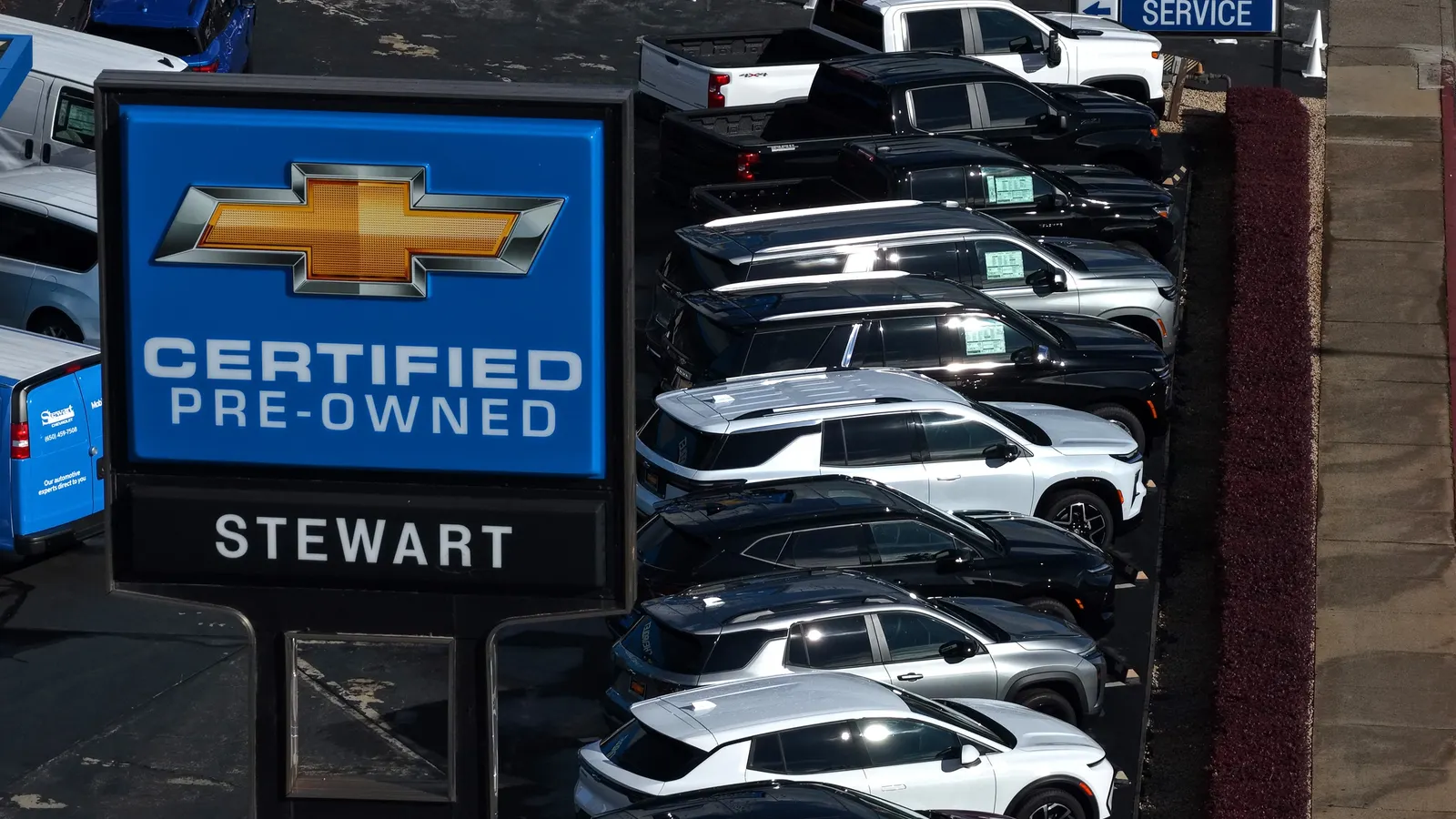


General Motors has absorbed $10.9 billion in EV-related charges since the second half of 2025. CFO Paul Jacobson now says the bleeding is essentially done, and 2027 cash flow should be “substantially better” as a result.
Speaking Wednesday at J.P. Morgan’s U.S. All Stars Conference, Jacobson framed the restructuring as a necessary purge. The $2.3 billion in incremental EV charges GM recorded for the quarter ending June 30 “substantially complete” the material costs of right-sizing its electric vehicle capacity, he said. That phrase, “right-sizing,” is doing a lot of heavy lifting for a company that bet billions on an EV future consumers haven’t fully shown up for.
The broader EV market tells the story Jacobson didn’t dwell on. New EV sales in August hit an estimated 78,895 units, a nearly 47% collapse year-over-year, according to Cox Automotive data from September 15. Used EV sales, meanwhile, climbed 14.7% over the same period.
Buyers want electric cars. They just don’t want to pay new-car prices for them. Ford and Honda have already scrapped or scaled back EV model plans in the past year. GM chose instead to eat the restructuring costs and reset.
Jacobson, who took the CFO role in 2020, pitched GM’s financial discipline as the real story. Free cash flow averaged roughly $3 billion annually during the first half of the last decade. Over the most recent five years, it exceeded $10 billion.
GM’s full-year 2026 guidance pegs adjusted automotive free cash flow between $9.5 billion and $11.5 billion. “I’m an old school CFO,” Jacobson told J.P. Morgan’s Rajat Gupta. “I believe cash is king.”
He called the balance sheet “arguably stronger than it’s been in decades” and credited a tighter vehicle portfolio and disciplined capital allocation. The automaker has poured over $6 billion into U.S. manufacturing in just the past year, a figure that reads as both investment and insurance policy.
That insurance matters because Jacobson isn’t pretending the economy is bulletproof. He called cash flow “the number one insulating layer against a downturn” and said maintaining positive free cash flow through a recession is his ultimate goal. His analogy was revealing: “Much like a final exam in college or university, you’re ready for it, right? Nobody wants to take the final, but you find a point at a time that you’re ready for it.”
The question GM hasn’t fully answered is what comes after the restructuring math clears. The company is still building EVs. It still needs buyers for them.
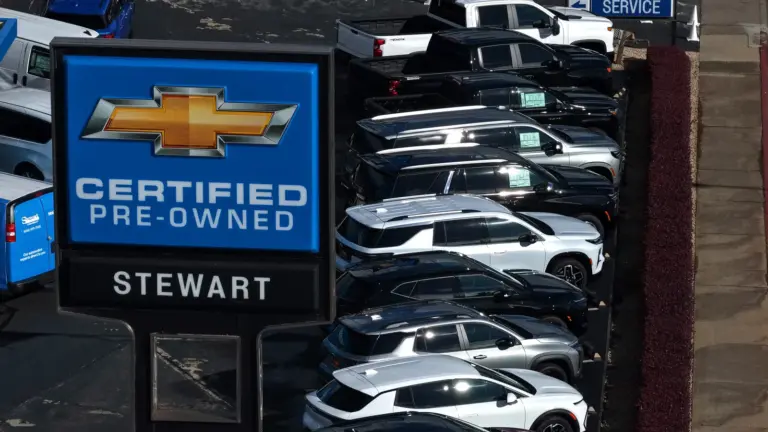
The consumer who might have stretched for a new Equinox EV two years ago is now browsing the used lot, where a growing supply of off-lease and traded-in electric vehicles is starting to stack up at friendlier price points.
Jacobson said GM is “already working on the vehicles that are going to be dazzling customers 3, 4, 5, 6 years and beyond.” That’s a long horizon for a market where demand shifts quarter to quarter and tariff pressures keep reshaping cost structures.
GM has spent nearly $11 billion learning what right-sized EV ambition looks like. Whether 2027 actually delivers the cash flow payoff Jacobson promises depends on whether the cars GM builds next match the customers who are actually willing to buy them.
Share this Story