
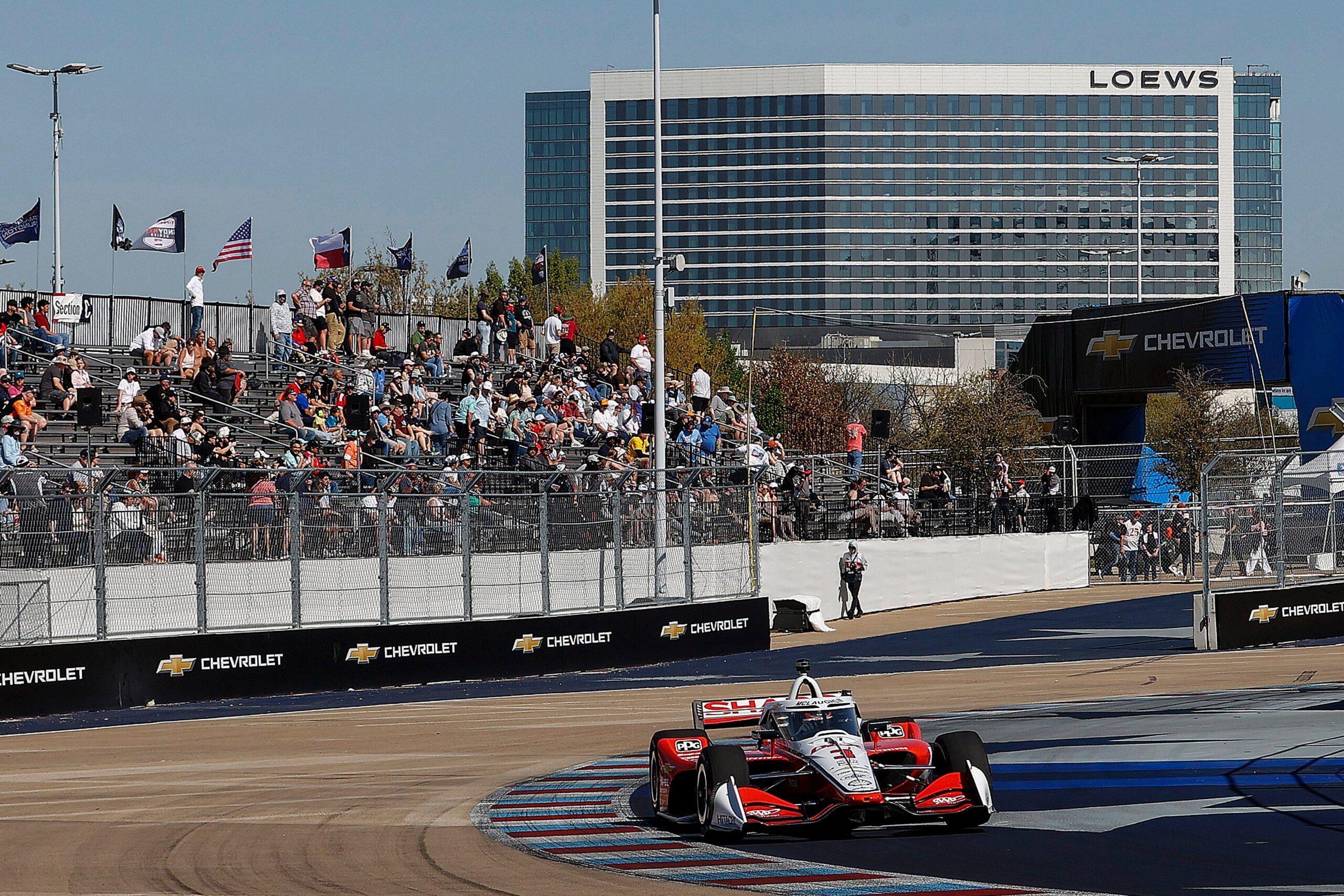


A catering crew wandering across a live racetrack is not the kind of first impression Arlington’s new street circuit was hoping to make.
During the release of cars for Practice Two at IndyCar’s inaugural event on the 2.73-mile circuit through Arlington’s sports district, broadcast cameras and race officials spotted workers from the event’s catering operation still crossing the hot track. Cars were already rolling. The red flag came out immediately.
The radio transmission from race control left no room for interpretation. “Okay, everybody, this was a serious breach of security to have people crossing the track while we were in session,” officials told teams. “So we’re going to send safety around the course to check everything we have here. That’s how serious this was.”
Stewards swept the entire circuit, checking entry points and corner stations for any additional unauthorized personnel before allowing a restart. The delay was not brief.
New street courses always carry teething problems. Surface issues, barrier gaps, drainage quirks — those are expected. Having untrained event staff amble across the racing surface while open-wheel cars capable of 170 mph are being unleashed is a different category of failure entirely. It is an operational breakdown, a lapse in the most fundamental element of running a race: making sure nobody who isn’t supposed to be on the track is on the track.
Street circuits are harder to lock down than permanent facilities. There are more access points, more temporary infrastructure, and more event personnel who may not understand that a “hot track” means the difference between life and death. That’s precisely why the security protocols exist. Someone didn’t enforce them.
When practice finally resumed, the session delivered its own chaos. Will Power clipped Scott Dixon in turn four, putting Dixon into the barrier with a punctured tire and creating a bottleneck that brought out the yellow flag. The Arlington course was already proving itself unkind.
At the top of the time sheets, Andretti’s Kyle Kirkwood and Chip Ganassi’s Alex Palou emerged fastest, setting the pace ahead of qualifying later in the afternoon. Both drivers managed to string together clean laps despite the abbreviated and disrupted session.
IndyCar has been aggressively expanding its street circuit portfolio, and Arlington — built around the city’s massive sports district — represents a marquee addition to the calendar. The series needs these events to work. Cities are investing heavily. Sponsors are watching.
And the optics of the very first competitive session being halted because a caterer was dodging race cars are, to put it mildly, not great.
Nobody was hurt. That fact deserves emphasis because the alternative is unthinkable. An IndyCar making contact with a pedestrian at any speed would be catastrophic for the person and for the series. The margin between an embarrassing anecdote and a genuine tragedy was measured in seconds.
IndyCar’s response was appropriate — shutting everything down, sweeping the course, making it clear over the radio that this was taken seriously. The question now is what systemic fix follows. A stern radio message is not a corrective action plan. Track marshals, access credentials, physical barriers at crossing points, and strict timing protocols for non-racing personnel need to be airtight before a single engine fires for race day.
Arlington’s street course will get its chance to shine. The layout is promising, the setting is dramatic, and the racing could be spectacular. But the first headline out of Texas had nothing to do with any of that. It was about a catering crew that nearly became the most dangerous obstacle on the track.

Share this Story