
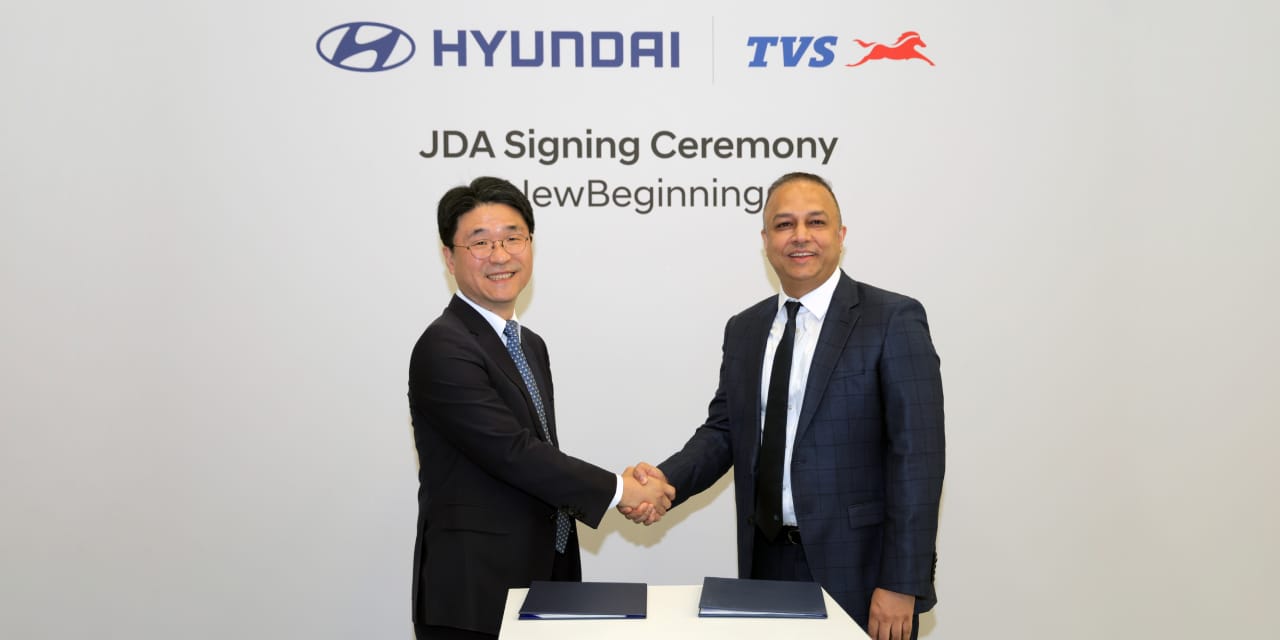


Hyundai Motor Company just signed a Joint Development Agreement with TVS Motor Company to build electric three-wheelers for India. Not crossovers. Not sedans. Three-wheelers — the auto-rickshaws that move millions of people through Indian cities every day.
The deal, formalized on April 20, pairs Hyundai’s global engineering and design muscle with TVS Motor’s deep roots in Indian two- and three-wheeler manufacturing. The target is India’s last-mile mobility market, the largest three-wheeler market on the planet.
This isn’t a concept sketch on a napkin. The two companies already showed an E3W concept at the Bharat Mobility Global Expo in January 2025. That vehicle featured adaptive ground clearance for monsoon flooding, thermal management for tropical heat, and flexible interiors that can switch between passenger transport, goods delivery, and emergency services. Now they’re moving from concept to production engineering, testing, and certification.
Hyundai leads design and co-development. TVS handles manufacturing in India, local sales, and future exports. Major components will be sourced and built domestically — a calculated move to cut costs, speed up after-sales support, and stay on the right side of India’s increasingly aggressive local-content push.
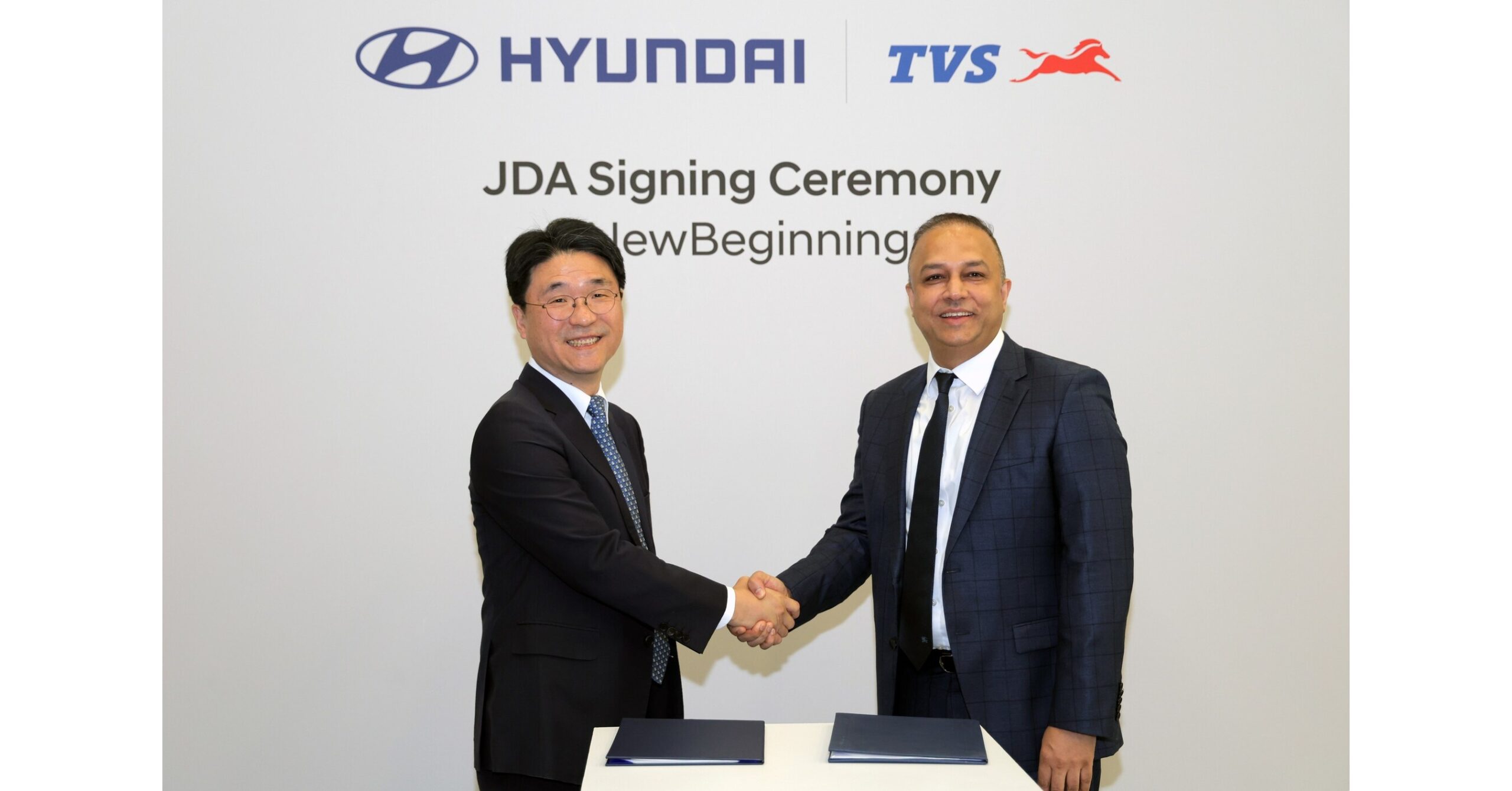
South Korea’s trade minister, Jung-Kwan Kim, and the chairman of the Federation of Korean Industries, Jin Roy Ryu, were present at the signing. That level of political endorsement signals Seoul sees this as more than a corporate handshake. It’s industrial diplomacy.
For Hyundai, the logic is clear if unconventional. The company already operates one of India’s largest car assembly plants and listed Hyundai Motor India on the Bombay Stock Exchange in 2024. But the passenger car market, while growing, doesn’t touch the 50-plus million Indians who depend on three-wheelers for daily transport and commerce.
Electrifying that fleet is a different kind of opportunity — high volume, low margin, enormous social reach.
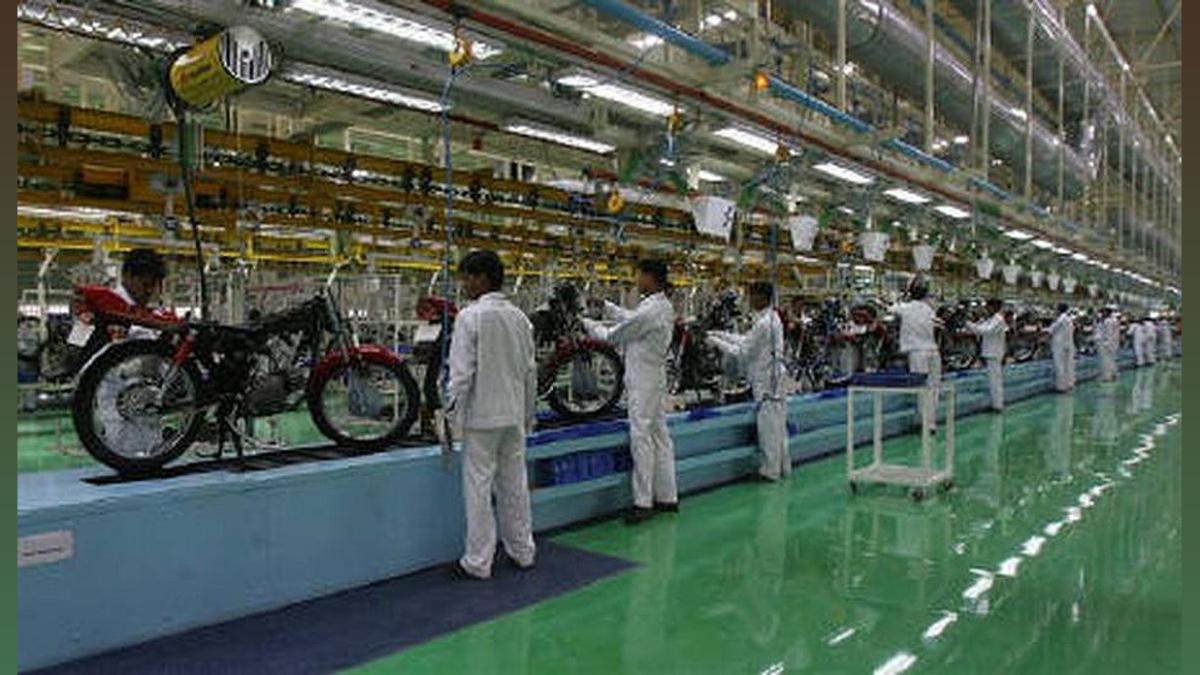
TVS brings credibility Hyundai simply cannot build on its own. The Chennai-based company has been making two- and three-wheelers since the 1970s and has pushed hard into electric platforms with its iQube scooter line. Its dealer and service network stretches into rural India in ways no four-wheeler brand can match.
K.N. Radhakrishnan, TVS’s CEO, was at the signing, underscoring that this has board-level commitment on both sides.
The E3W segment is not uncontested. Mahindra Electric, Piaggio, and a swarm of domestic startups are already fighting for share. Bajaj Auto’s RE electric rickshaw has brand recognition that runs decades deep. Hyundai-TVS will need to hit price points that make financing feasible for individual owner-operators, many of whom earn less than $10 a day.
But the partnership’s real weapon is scale ambition. The JDA explicitly mentions “additional markets” beyond India — Southeast Asia, Africa, Latin America, anywhere the auto-rickshaw or tuk-tuk is an economic lifeline. If the Indian product works, the export playbook is already written.
Hyundai’s senior vice president Joongsun Ko framed it as “broader access to safer and more sustainable transportation.” TVS’s Sharad Mishra talked about “setting new benchmarks in technology, quality, and customer experience.” Strip the corporate polish and the bet is straightforward: the future of urban mobility in the developing world isn’t a $40,000 EV. It’s a $5,000 electric three-wheeler that can survive a monsoon and carry six passengers through a Delhi traffic jam.
No production timeline has been announced, but the pace from concept reveal to JDA signing — roughly 15 months — suggests neither side is interested in waiting. Dedicated teams from both companies are already working to push through development and regulatory approvals.
Share this Story