


Audi’s smallest electric car can now keep your lights on during a blackout. It still can’t sell a single kilowatt-hour back to the utility.
On November 12, Audi detailed bidirectional charging for the A2 E-Tron, laying out three modes. Two work today. The third, the one that could make owners money, is stuck behind regulators, tariffs and infrastructure that Audi does not control.
Start with what owners actually get. Vehicle-to-Load turns the car into a portable power source for job site tools, a campsite fridge or anything else that needs a plug when the nearest outlet is miles away.
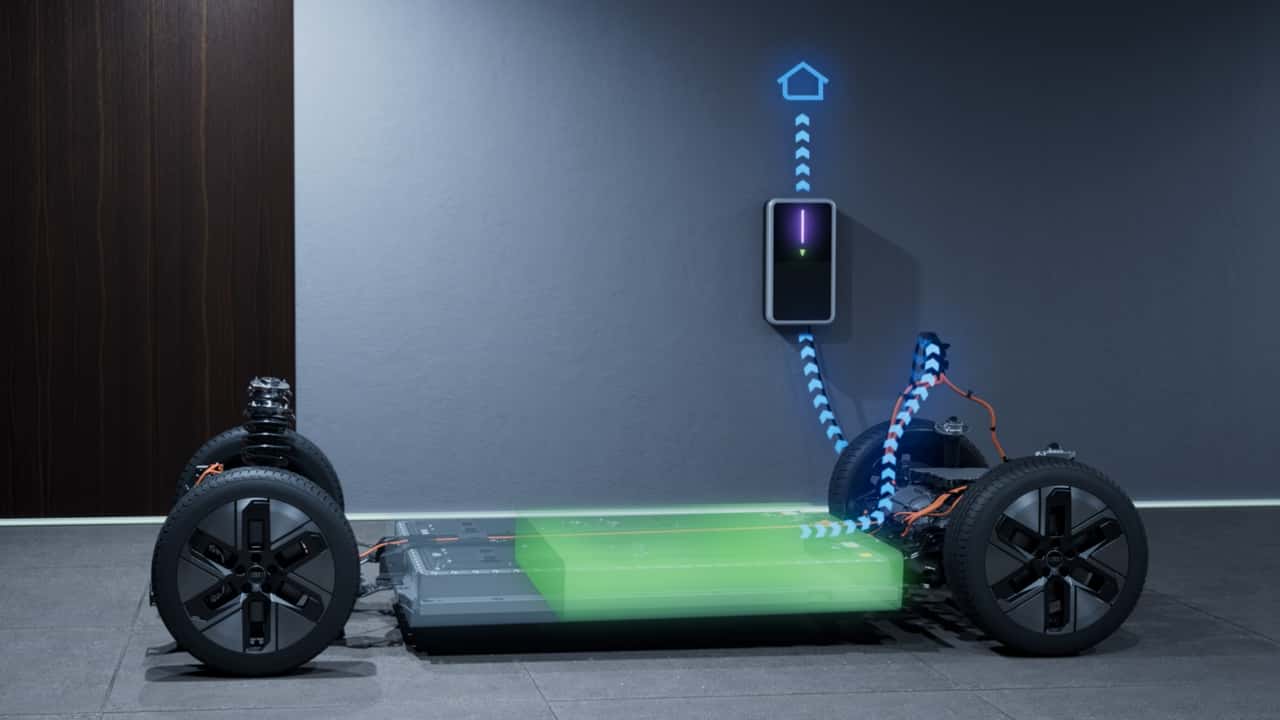
Vehicle-to-Home goes further, feeding stored battery energy into the house itself. That is the outage scenario, and it’s the one that makes a compact hatchback start to look like household infrastructure.
There is a catch, and it lives in the garage. V2H requires a compatible bidirectional DC wallbox. The ordinary home charger most EV owners already have on the wall won’t do the job.
Audi also fences off the battery. Energy exchange happens only between 20 and 80 percent state of charge.
Outside that window, the car stops trading energy with the house. That protects the pack and leaves enough charge in reserve to actually drive somewhere.
That leaves Vehicle-to-Grid, the mode that would let owners push power back to the utility. Audi says it depends on regulation, charging infrastructure, home installation and the right electricity tariff all lining up.
Four conditions. Audi sets none of them. The hardware is already in the car, waiting.
The more interesting call is launching this on the entry model rather than a flagship. Bidirectional features usually debut at the top of a lineup and trickle down. Here, the cheapest Audi EV goes first, which suggests the company expects the capability to spread across the range rather than stay a premium perk.
The hardware backs up the pitch. The A2 E-Tron offers three batteries: 52 kWh and 61 kWh packs using lithium iron phosphate chemistry, and an 84 kWh pack built on nickel-manganese-cobalt cells.
The phosphate packs use a cell-to-pack layout, skipping the module stage to fit more energy into the same space. That matters more when the battery has to power a house as well as a commute.
DC fast charging peaks between 100 and 183 kW depending on the pack. Audi quotes 10 to 80 percent in 24 minutes for the 52 kWh battery, 26 minutes for the 61 kWh and 29 minutes for the 84 kWh, under its own test conditions.
A new unit called OCDC 2.0 merges the onboard charger and DC/DC converter into a single component. Audi paired it with a revised algorithm written for the flatter voltage curve of phosphate cells, whose state of charge is notoriously hard to read.
Thermal management runs continuously during both charging and discharging. It tracks temperature and current alongside the battery management controller, which estimates charge level and aging.
A battery serving a house works harder than one serving only a drivetrain. That is part of the reason Audi insists on the dedicated wallbox.
Audi has previously claimed up to 401 miles of range from the largest battery. For a compact EV, that is a deep reserve to borrow from when the power goes out.
So the A2 E-Tron arrives ready to back up a home and run a campsite. Whether it ever earns its owner money depends on rulemakers and utilities, and Audi hasn’t said when that might happen.




Share this Story