
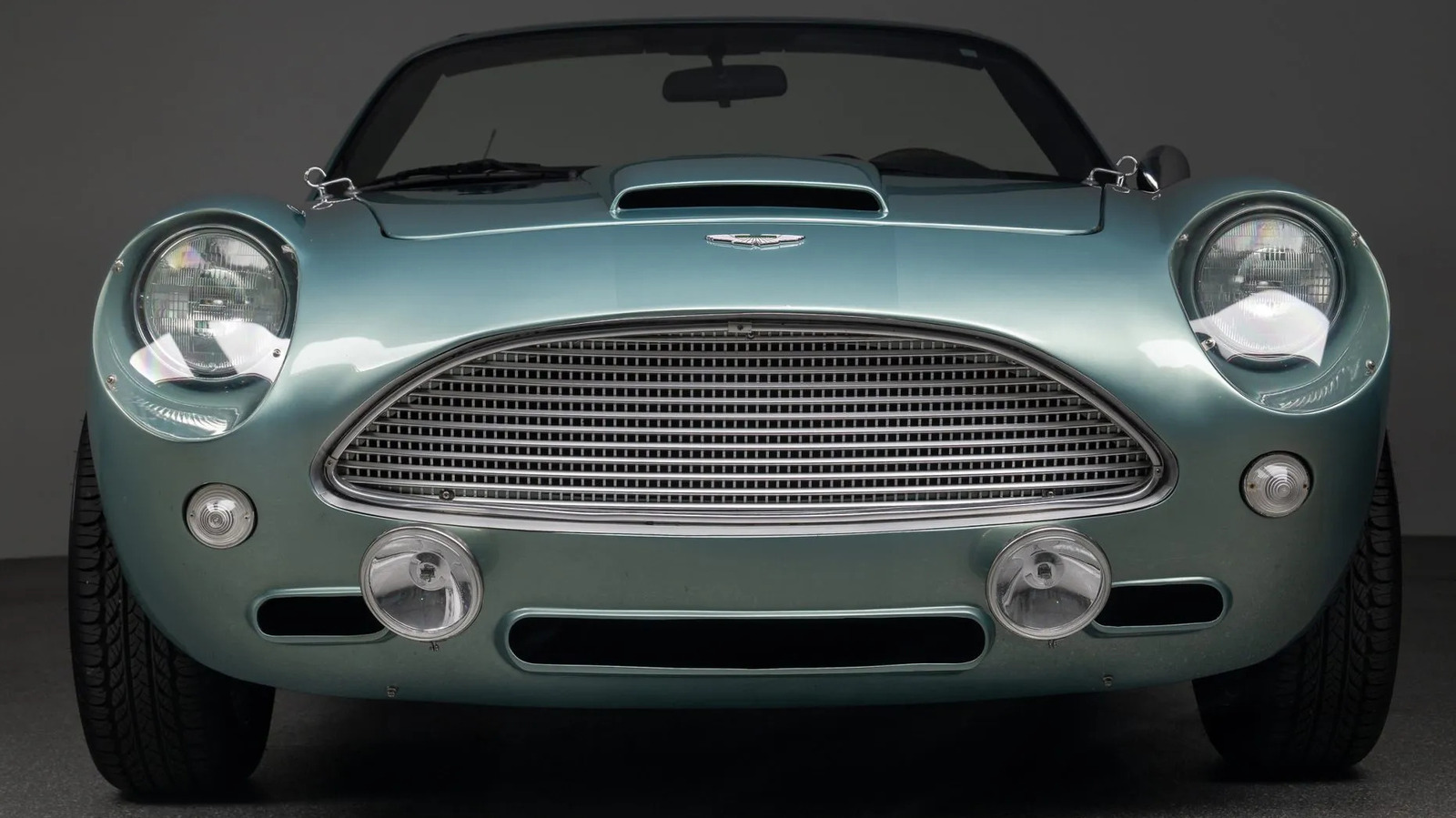


Bidding had reached $23,500. The auction had hours left to run. Then Aston Martin’s lawyers showed up and shut the whole thing down.
A rebodied 2007 Mazda MX-5 Miata wearing custom Zagato-style fiberglass bodywork and Aston Martin badges was pulled from Bring a Trailer on April 28, the same day the auction was supposed to close. The platform cited “a trademark claim regarding the Aston Martin badging and description of this car” and wiped the listing from the internet entirely.
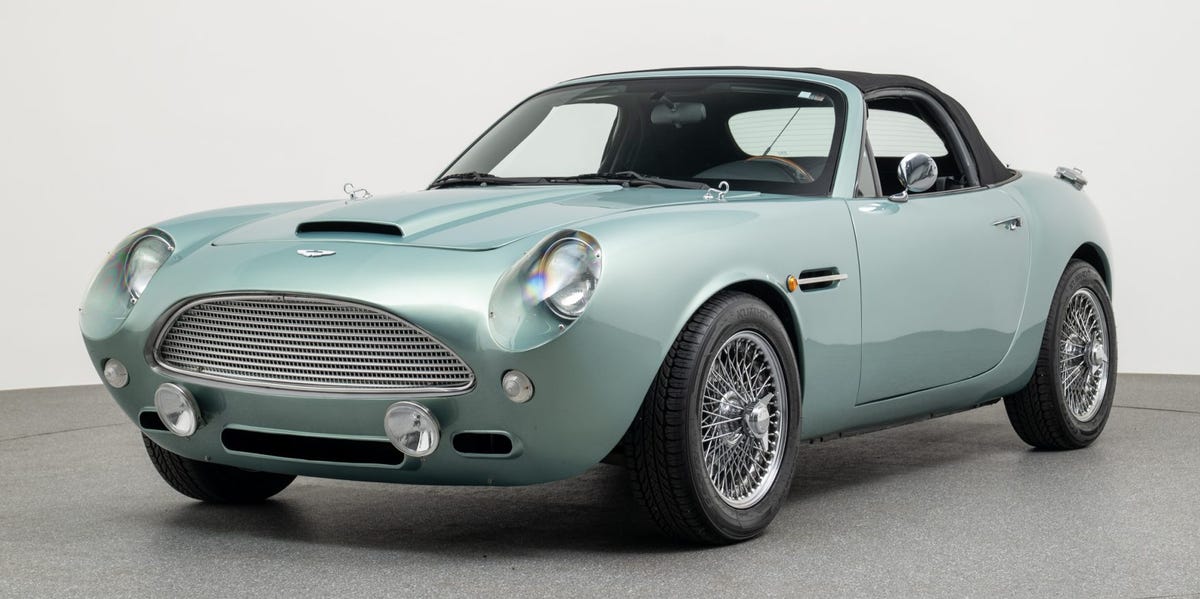
The car itself is a strange and oddly charming creation. Built by Simpson Design, a tiny Washington State coachbuilder, it drapes hand-shaped fiberglass over the NC Miata’s bones to evoke the impossibly rare DB4 GT Zagato, a car Aston Martin built just 19 of in the 1960s. Light green paint, 16-inch knock-off wire wheels, a wood-rimmed Nardi steering wheel with an Aston Martin horn button, beige vinyl buckets, and woodgrain trim complete the fantasy.
Underneath all that costuming sits the Miata’s stock 2.0-liter four-cylinder making 166 horsepower, mated to a six-speed automatic. The odometer reads 26,000 miles. You could take it to any Mazda dealer for an oil change.
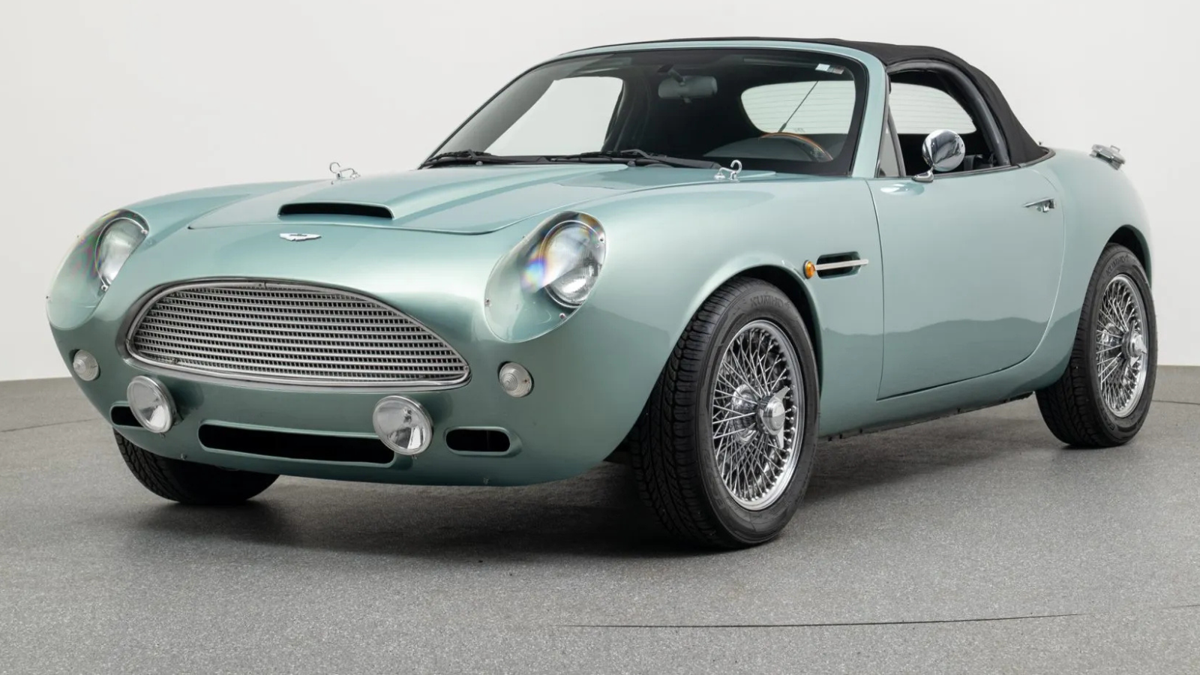
Nobody was fooled. The listing title read “26k-Mile, Aston Martin-Style 2007 Mazda MX-5 Miata Sport By Simpson Design.” The description made clear it was a Miata. The NC platform is substantially shorter than a real DB4 GT Zagato, and the lack of a rear window is an immediate tell.
This was never a forgery. It was a tribute, and a reasonably well-executed one at that. But the seller made one critical mistake: slapping Aston Martin’s trademarked winged logo on the bodywork.
That’s the line, and crossing it invited exactly the response it got.
Jim Simpson, the car’s designer, appeared in the comments section before the listing vanished, distancing himself from the badges. “At Simpson Design we have cautioned clients about adding badges to their cars,” the account wrote, noting that the company has “never engaged in” trademark infringement and has warned buyers that aftermarket badging could cause problems at resale. The seller confirmed they’d added the logos themselves “just for fun” using adhesive backing, and that removal would be trivial.
Bring a Trailer left the door open for a second act, saying it would “remain in contact with the seller and with Aston Martin’s representation in an effort to see if the car can be relisted at a later date with a revised description and in a way that satisfies the trademark requirements.” In other words: peel off the wings, rewrite the copy, try again.
The restomod and tribute-car industry has been navigating this minefield for years. Companies like Singer and Gunther Werks build Porsche-based machines costing six and seven figures while carefully avoiding Stuttgart’s trademarks. The magic word is “reimagined.” The forbidden act is sticking someone else’s logo on your product without a license.
This Miata-based Aston is a $23,000 curiosity, not a million-dollar restomod. Aston Martin almost certainly isn’t worried about lost sales. A brand that just launched the $770,000 Valiant isn’t threatened by a fiberglass-clad Mazda with an automatic transmission.
But trademarks must be defended or they risk being diluted, and corporate legal departments don’t distinguish between existential threats and quirky hobby cars.
The little green roadster will probably resurface, badge-free and with carefully scrubbed language. It’ll still turn heads. It’ll still confuse people at Cars and Coffee. It just won’t pretend to be something it never was, which, frankly, it shouldn’t have been doing in the first place.

Share this Story