
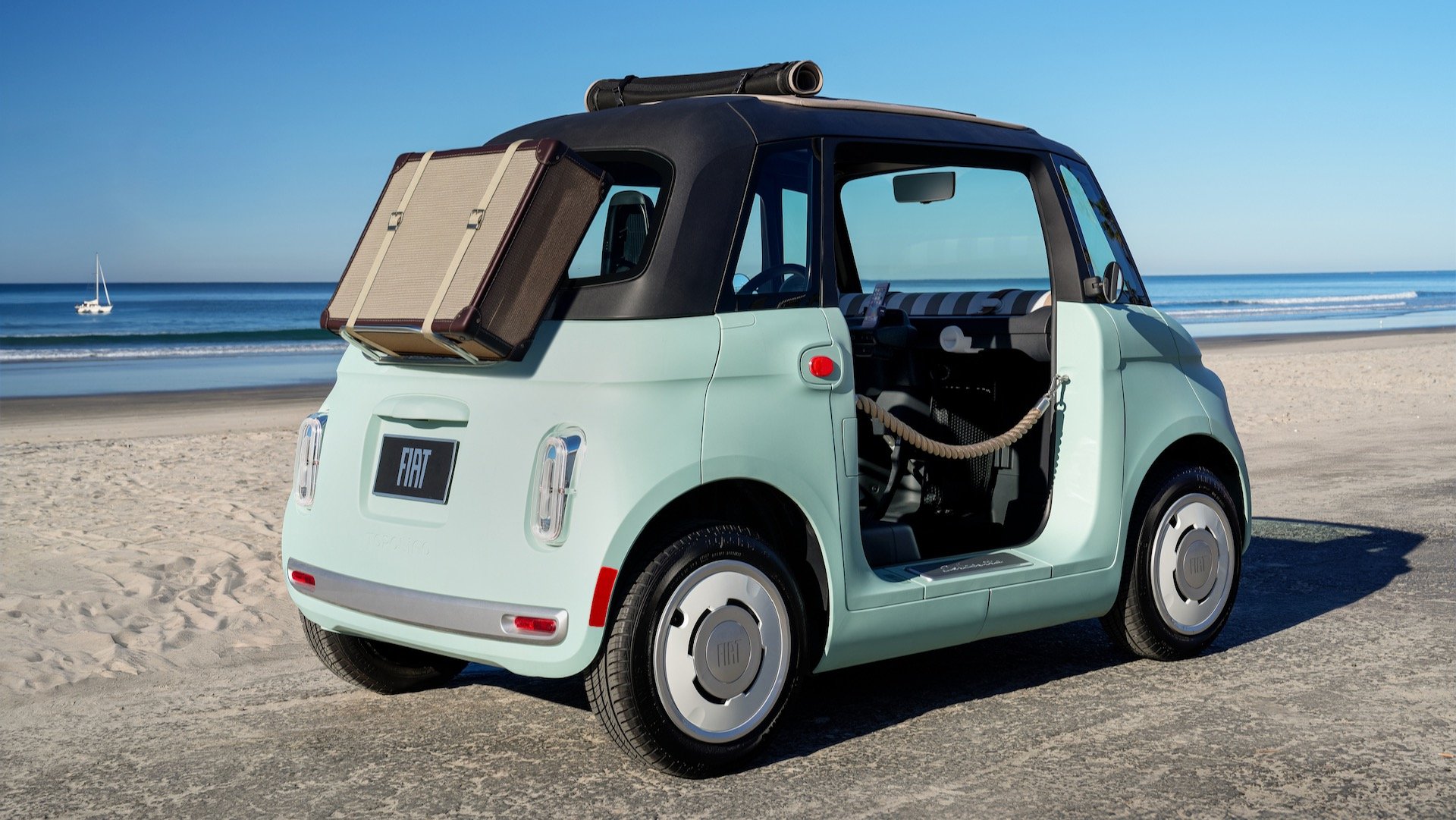


Fiat CEO Olivier Francois told Autocar that an Abarth performance variant of the Topolino is “a dream” the company is actively pursuing. “We’re working on it and it may come,” Francois said. “It would be a total hit.”
The Topolino, for anyone who hasn’t been paying attention, is a two-seat electric quadricycle with 46 miles of range and a top speed of 25 mph. It is not, by any legal definition in Europe, a car. In some countries, 14-year-olds can drive it without a license. And Fiat wants to give it the Abarth treatment.
Let that settle for a moment. Abarth, the storied tuning house that turned humble Fiats into giant-killers on rally stages and racetracks across Europe, is being floated as the badge to slap on something that would lose a drag race to a golf cart. The brand that gave us the 124 Spider rally car and the deranged little 695 might now lend its scorpion crest to a vehicle that needs a dealer-installed kit just to hit 25 mph in America.
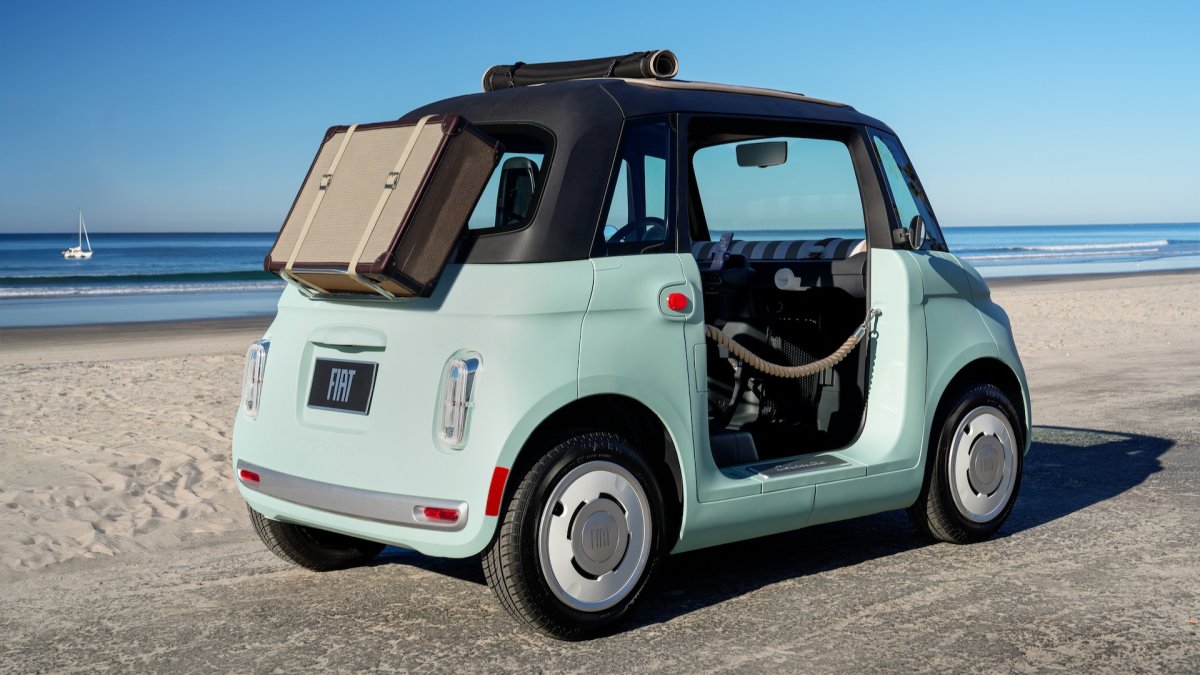
The regulatory box the Topolino lives in makes a genuine performance upgrade nearly impossible. European quadricycle rules cap both output and top speed. In the U.S., any modification pushing it past 25 mph would knock it out of the low-speed vehicle category entirely, potentially making it illegal on public roads in most states.
So what would a Topolino Abarth actually be? Fiat has already previewed the answer with the Italian-market Topolino Sport, which adds racing stripes and changes absolutely nothing mechanically. Expect more of the same — cosmetic aggression on a machine that couldn’t fight its way out of a parking garage.
The real motive here isn’t performance. It’s demographics. Gaetano Thorel, Fiat’s European boss, told Autocar that the average Topolino buyer is in their mid-40s. Fiat wants teenagers.
The problem is that 16- and 17-year-old Italians are asking their parents for French-built Ligier quadricycles because they look sportier. Thorel specifically called out Rome as “the city of microcars” and framed Abarth branding as the lure to pull young buyers away from the competition.
This is brand equity being used as a marketing tool for adolescents, which is either savvy business or a slow dilution of everything Abarth once stood for. Probably both.
The Topolino itself arrives in North America at $14,980 including destination, a price that feels steep for something with less range than most e-bikes and a speed limit your average jogger could challenge on a good day. It will only be street legal in states with low-speed vehicle exemptions, and even that requires the aforementioned speed-boost kit, which won’t be available until the end of summer 2026.
None of this diminishes the Topolino’s charm. It is genuinely adorable, a miniature throwback that generates more smiles per mile than anything else Stellantis currently builds. Journalists who have driven it tend to come back grinning. There is a real market for urban runabouts that don’t pretend to be anything more than what they are.
But bolting an Abarth badge onto one crosses a line from charming into absurd. Abarth without performance is just a logo. And a logo on a quadricycle is a costume, not a conversion. Fiat is betting that teenagers in Rome won’t know the difference. They might be right. That’s the part that stings.


Share this Story