
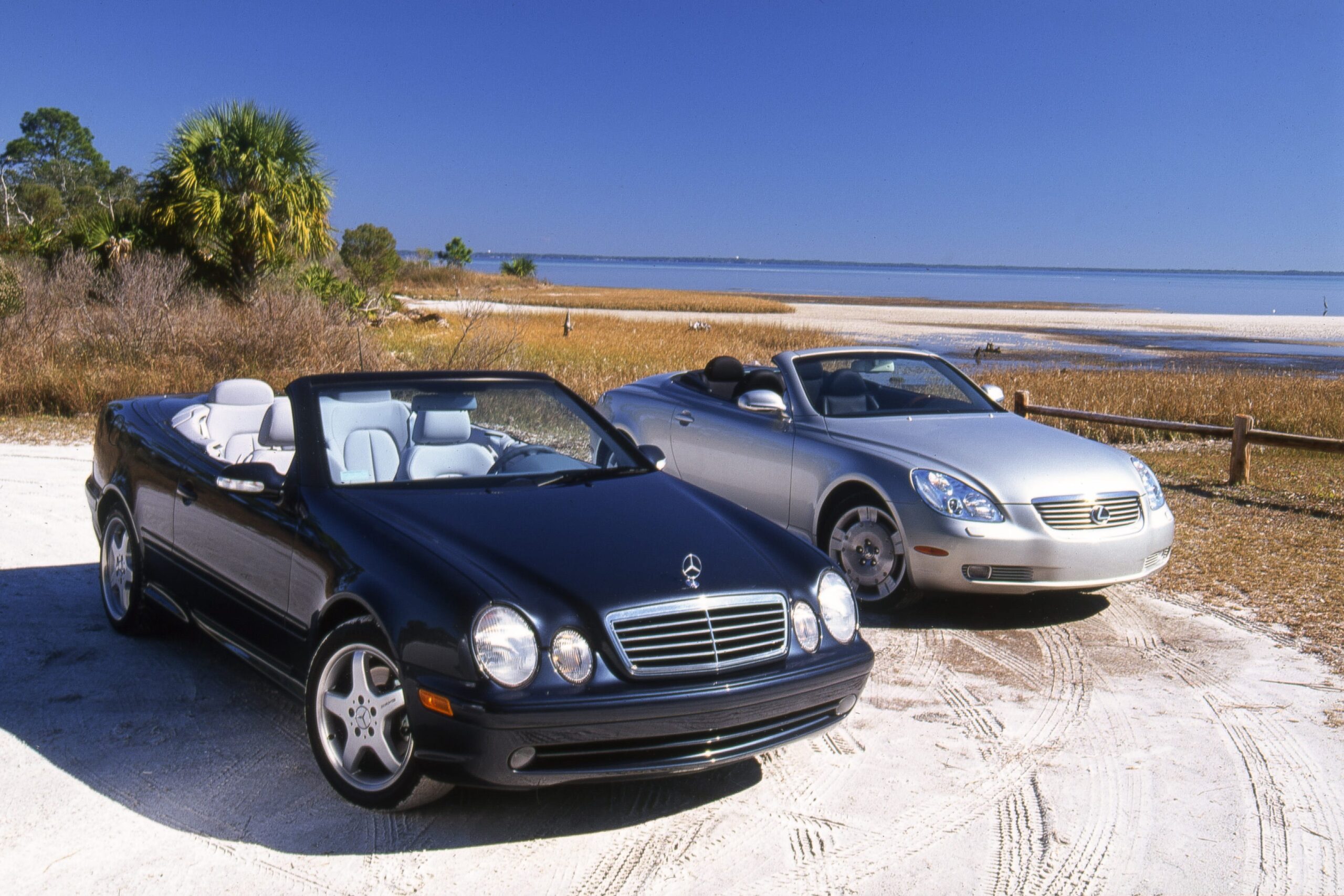


Twenty-three years ago, Car and Driver loaded a Lexus SC430 and a Mercedes-Benz CLK430 convertible onto an epic 1,640-mile Florida road trip and came back with a verdict that still stings Toyota’s luxury division. The two cars cost nearly the same dollar — $61,661 for the Lexus, $61,398 for the Benz — and matched up so closely on paper that the comparison seemed destined to end in a draw.
It didn’t.
The SC430 won almost every measurable contest. It hit 60 mph in 6.6 seconds to the CLK’s 6.7. It pulled harder on the skidpad and stopped shorter.
Its 4.3-liter V-8, blessed with Toyota’s VVT-i variable valve timing, made 300 horsepower and 325 pound-feet of torque — a 25-horse and 30 pound-foot advantage over the Mercedes mill. The Lexus packed a retractable hardtop, a navigation system, an in-dash CD changer, and an interior trimmed in walnut and leather that made the CLK’s cabin look like a monk’s quarters.
None of it mattered.
Car and Driver’s crew gave the win to the Mercedes-Benz, and their reasoning cuts to a philosophical divide that still defines the Lexus brand’s struggle against German rivals. The SC430 was a better-equipped car. The CLK430 was a better driver’s car.
On the road course at Moroso Motorsports Park near West Palm Beach, the gap between the two stopped being academic. The Lexus wallowed through corners with what the editors called “lifeboat body roll and resolute understeer.” Its front seats, gorgeous as they were, offered almost zero lateral support, forcing drivers to brace themselves against the steering wheel when g-forces arrived from unexpected angles. One tester asked in the logbook whether the SC430 was “the next Riviera” — a devastating comparison to Buick’s aging personal luxury coupe.
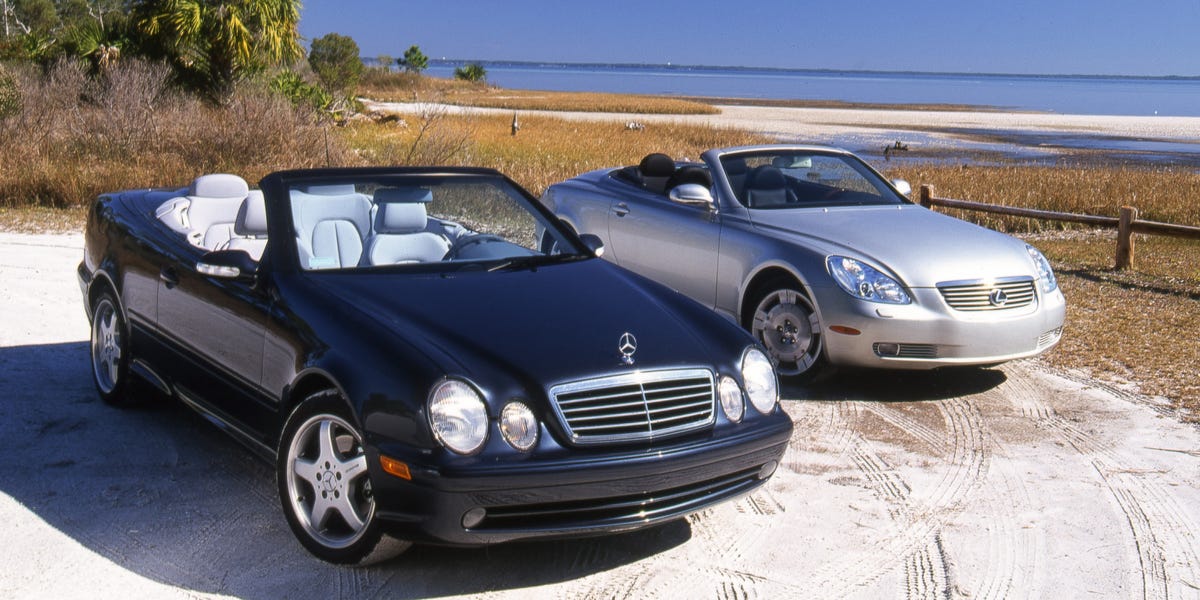
The CLK430, built on a modified C-class platform by coachbuilder Karmann, was the stiffer structure despite being the older design. The Lexus shuddered over rough pavement; the Mercedes shrugged it off. At Moroso, the Benz would rotate on corner entry and slide across apexes, even with its ESP stability control fighting the driver. The SC430 simply refused to play.
The Mercedes had real problems of its own. Its brakes caught fire after just a few laps at Moroso. Its steering column only telescoped — no tilt — making a comfortable driving position elusive. Its rear window was a mail slot. And its interior, dressed in black bird’s-eye maple, looked austere next to the Lexus’s lavish appointments.
But the CLK possessed what the editors called “a measure of Germanic sporting character” that the Lexus completely lacked. That was enough.
This comparison crystallized a tension that would haunt Lexus for two decades. Toyota’s luxury division could build a quieter car, a more feature-rich car, a more technologically ambitious car. But the company could not — or would not — engineer the kind of chassis engagement that enthusiasts crave.
The SC430’s folding hardtop was a party trick that still draws crowds, and its build quality was impeccable. The market didn’t entirely agree with C/D, either. The SC430 sold reasonably well during its nine-year production run, finding buyers who valued exactly the sybaritic comfort the testers dismissed.
The CLK convertible eventually gave way to the E-Class coupe platform, and that particular generation of Mercedes has largely faded from collective memory. What endures is the tension embedded in this test: the car that wins the spreadsheet versus the car that wins the road.
Lexus kept building beautiful objects. Mercedes kept building machines that talked back to their drivers. In 2002, on the flat, boring highways of Florida, that conversation was the only one that counted.

Share this Story