


Formula 1 processes eight terabytes of data every race weekend. That number alone should tell you something about the gap between what fans see on screen and the industrial-scale operation required to put it there.
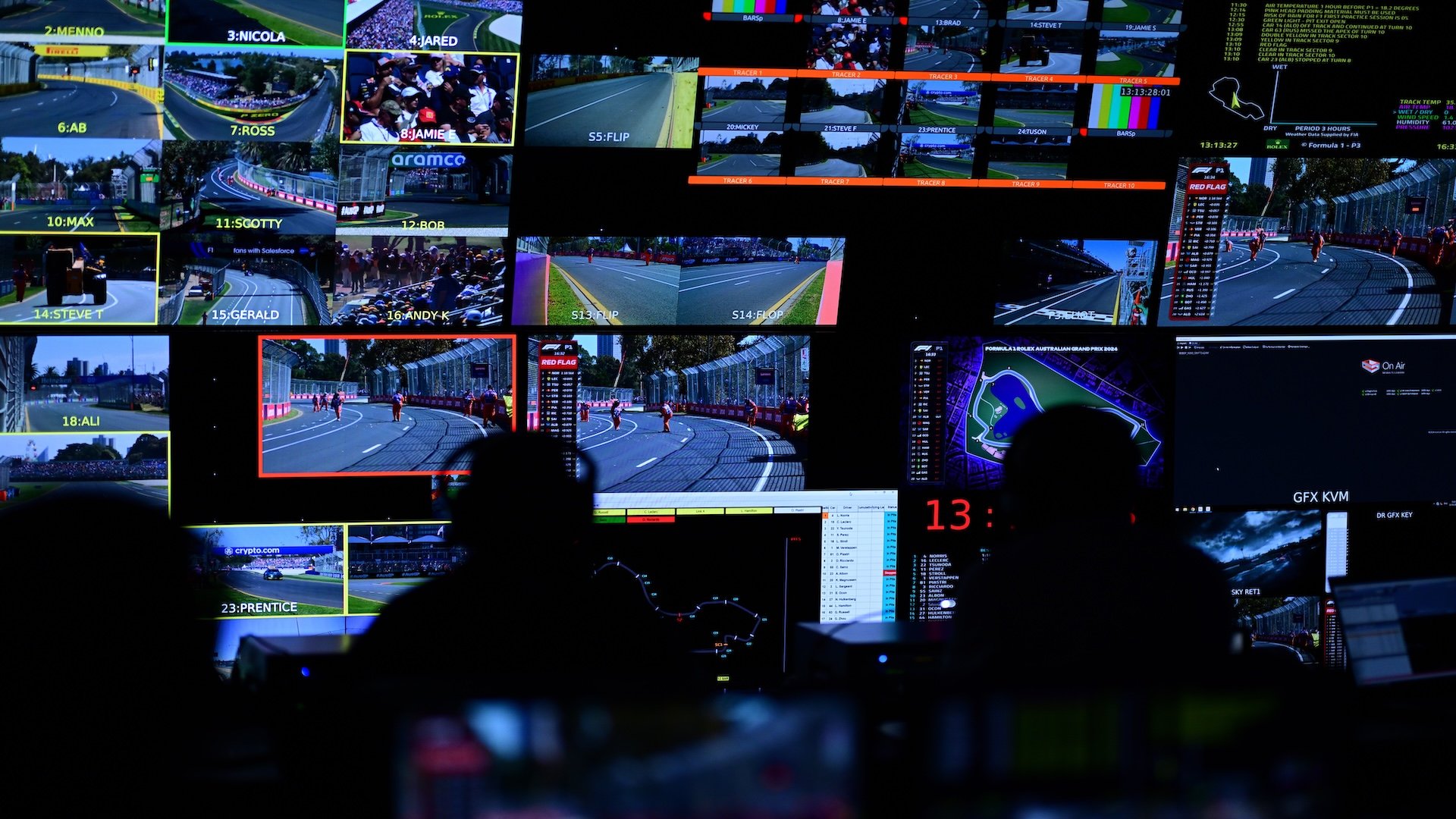
At the Canadian Grand Prix, The Drive’s Jerry Perez got a rare look inside F1’s Event Technical Center, the mobile nerve center that travels to all 24 races and handles everything from broadcast production to real-time car telemetry. What he found was a 4,000-square-foot tent that functions like a hybrid between an air traffic control tower and a classified government facility.
Security is tight. The lights stay low to manage heat from the servers. Sliding doors separate teams into isolated compartments, and by Sunday night, every last piece of it is packed up and shipped to the next continent.
The ETC houses 750 pieces of equipment running 40 custom software systems. Over a single weekend, it processes up to 400,000 timing transponder events and generates roughly 400 gigabytes of data per session. It runs on 512 CPU cores with 8.2 terabytes of RAM and 100 terabytes of flash storage.
Those aren’t data center numbers. They’re traveling circus numbers, except this circus rebuilds itself in a different country every two weeks.
Here is the part that quietly amazed even a veteran observer: there is only one set of ETC equipment. Two tent structures exist so the shells can leapfrog to back-to-back venues, but the guts — the servers, the networking gear, the monitors — ship as a single kit. DHL moves it, and if something goes wrong in transit, there is no backup sitting in a warehouse.
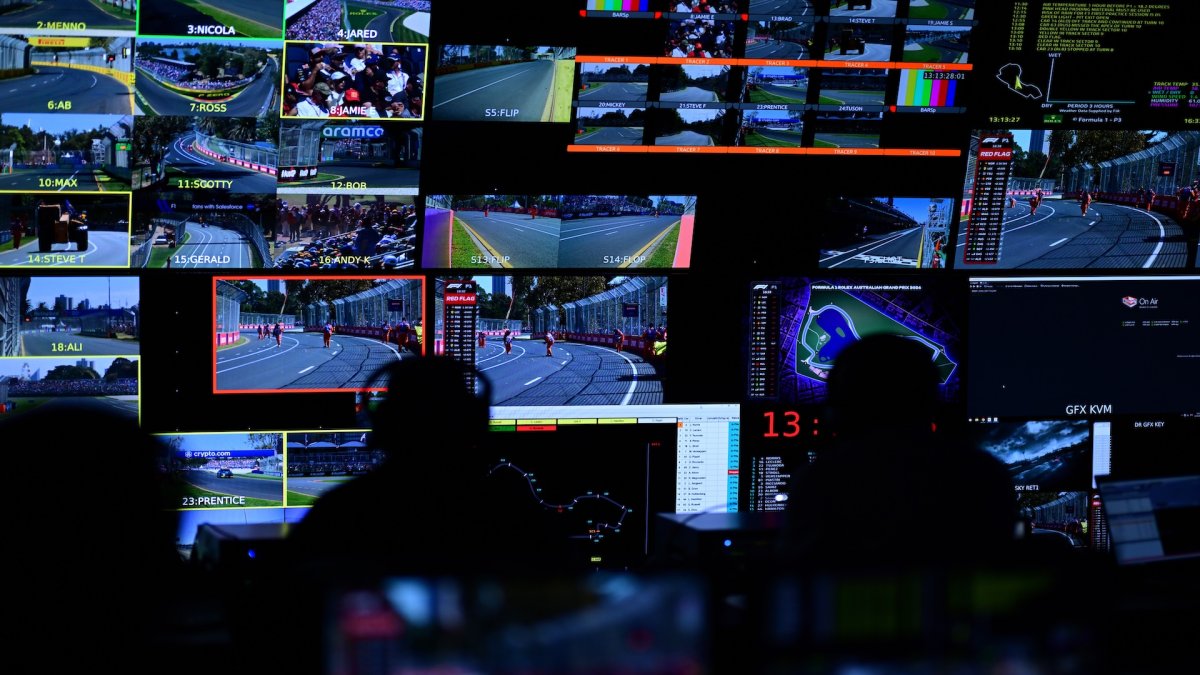
Except there sort of is. The ETC’s permanent counterpart, the Media and Technology Centre at Biggin Hill in the U.K., can assume full control if the traveling setup fails. Together they transfer over 650 terabytes of data per event, with bandwidth spiking to 8.5 Gbps at race start. When failures have occurred — and they have — viewers never noticed.
Thirty-two miles of wiring gets laid before a single car turns a wheel. Sensors are drilled a foot into the tarmac beneath each grid slot, then paved over so they’re invisible on camera. These detect if a car moves even a millimeter during the start sequence.
Each car carries over 300 sensors generating 1.1 million data points per second. Multiply that by 22 cars and you begin to understand why Lenovo, F1’s official technology partner, isn’t just another logo on a barrier. The company’s infrastructure reduced data delivery latency to teams by 0.3 seconds, even at the most geographically remote races.
“0.3 seconds might seem like a small margin, but it can make a decisive difference in a sport measured in thousandths of a second,” said Chris Roberts, F1’s Director of IT. That latency improvement matters because the data flowing from car to pit wall drives strategy calls in real time — tire changes, fuel management, penalty avoidance. Monaco this season proved the point when pit lane speeding penalties came down based on that very telemetry.
The M&TC in Biggin Hill runs 180 bespoke software systems comprising more than four million lines of code. It handles remote color correction for every broadcast camera and distributes the global TV feed to over 180 territories. This is the facility that 820 million worldwide viewers depend on without ever knowing it exists.
F1 has always sold itself as the pinnacle of motorsport engineering. The cars justify that claim on track. But the broadcast and data operation running silently behind it — rebuilt from scratch at every venue, shipped across oceans on a weekly cadence, redundant enough to fail without anyone noticing — may be the more impressive machine.






Share this Story