
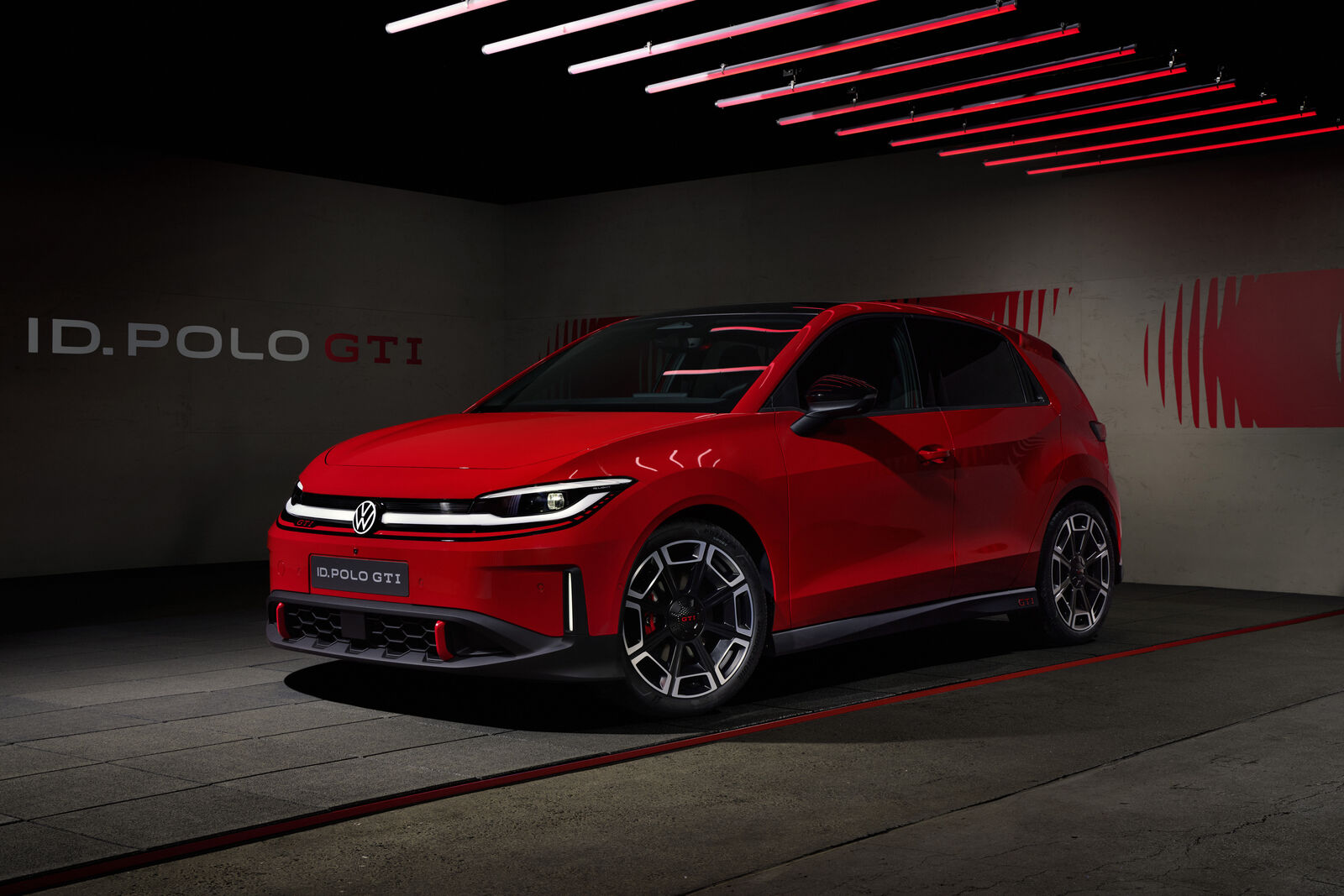


Volkswagen unveiled the ID. Polo GTI at the Nürburgring 24-hour race on Friday, marking the first time in the GTI badge’s 50-year history that it has been bolted onto a fully electric car. Whether that badge still means what it used to is the question VW is betting nearly €39,000 on.
The numbers: 166 kW (226 PS), 290 Newton-metres of torque, 0-100 km/h in 6.8 seconds, front-wheel drive, electronically controlled front differential lock. The 52 kWh NMC battery delivers a claimed WLTP range of 424 kilometers and charges from 10 to 80 percent in about 24 minutes at a DC fast charger rated up to 105 kW.
Pre-sales open in Germany this autumn. VW is calling this a “near-production concept vehicle,” which in Wolfsburg parlance means it’s done but they haven’t signed off on every supplier contract yet.
The powertrain is designated APP290, the same front-mounted motor architecture underpinning the standard ID. Polo. That’s a deliberate choice. VW wants the GTI faithful to see the parallel to 1976, when the original Golf GTI sent its power through the front wheels and changed the industry’s understanding of what a small car could do.
A dedicated GTI driving profile, activated via a button on the steering wheel, sharpens throttle response, stiffens the adaptive DCC suspension, weights up the progressive steering, and flips the cockpit displays to a sport-specific color scheme. One press, everything changes. It’s the kind of integrated thinking that hot hatch buyers expect in 2025, and VW clearly studied what competitors like the Cupra Born VZ and Hyundai Ioniq 5 N have done with driver modes.
The design language tries to thread a needle between electric-era minimalism and GTI heritage. The iconic red pinstripe stretches across the front, a honeycomb grille pattern fills the lower intake, and the C-pillar deliberately echoes the original Golf. Inside, it’s red-on-black everything — tartan-inspired seat fabric, red topstitching on the sport steering wheel, a 12 o’clock marker on the rim, and premium sport seats with integrated headrests bearing red GTI emblems.
Standard equipment is generous: 19-inch alloy wheels, IQ.LIGHT LED matrix headlights, the electronic diff lock, and DCC adaptive damping. Luggage capacity is 1,240 litres with the rear seats folded.
At just under €39,000, VW is pricing the ID. Polo GTI in uncomfortable territory. The current combustion Golf GTI starts around €44,000 in Germany, which means VW is positioning the electric small car as a value play compared to the gas-powered hatchback one class above. That pricing acknowledges reality: an electric GTI has to justify itself not against other EVs, but against the Golf GTI sitting in the same showroom.
The 6.8-second sprint time won’t set any records. A Cupra Born VZ does it in about the same time. The Hyundai Ioniq 5 N lives in a different performance universe entirely.
But VW isn’t chasing lap times here. They’re chasing the feeling — that indefinable GTI-ness that has sold millions of cars since the mid-seventies.
Whether an electric front-driver on a 52 kWh battery can deliver that feeling remains to be proven on real roads, not in press releases read aloud at racetracks. The original GTI succeeded because it was light, simple, and cheap. The ID. Polo GTI is none of those things.
It weighs more, costs more, and relies on sophisticated electronics to replicate sensations that the 1976 car delivered mechanically. Fifty years is a long time to keep a legend alive. VW is gambling that three red letters still carry enough weight to make buyers overlook the fundamental transformation underneath them.
Share this Story