
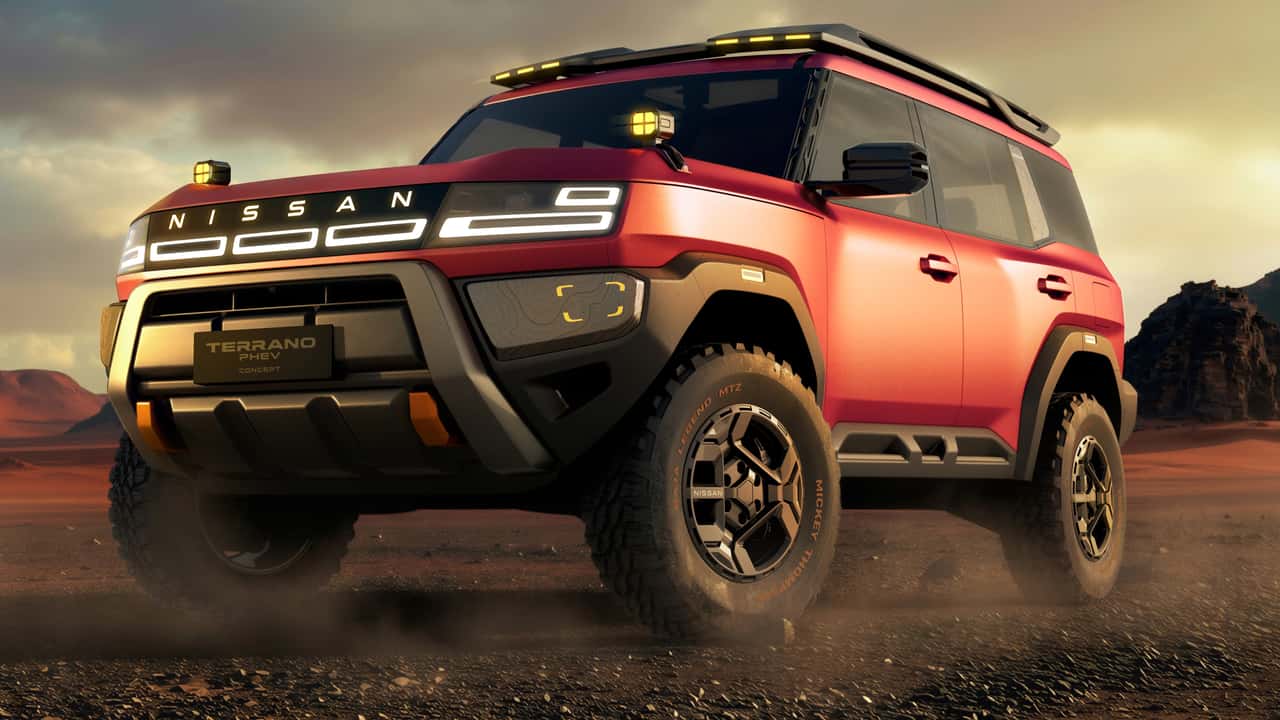


The Terrano nameplate is back from the dead, and this time it runs on electrons and gasoline. Nissan unveiled the Terrano PHEV concept at the 2026 Beijing Auto Show, a boxy, ladder-frame-style off-roader that the company says will hit production within a year. That’s an unusually short runway for something still carrying the “concept” label.
That’s because this is barely a concept at all. Strip away the fancy light cubes and the trick roof-mounted illumination, and what you’re looking at is a production-ready truck wearing a thin disguise. Nissan CEO Ivan Espinosa confirmed as much, stating it will become a real product, assembled in China through Nissan’s joint venture with Dongfeng.
The powertrain details haven’t been officially confirmed, but every breadcrumb points to the Frontier Pro PHEV’s hardware. That means a turbocharged 1.5-liter gas engine paired with dual electric motors, producing a combined 402 to 408 horsepower and a massive 590 pound-feet of torque. A 33-kWh battery delivers roughly 84 miles of electric-only range under China’s generous CLTC cycle, though real-world numbers in Western testing would be substantially lower.
If the Frontier Pro connection holds, expect a five-link rear suspension, intelligent all-wheel drive with automatic torque vectoring, and an electromechanical rear differential lock. That’s serious off-road kit, not the cosmetic adventure-styling that plagues half the crossovers on sale today.
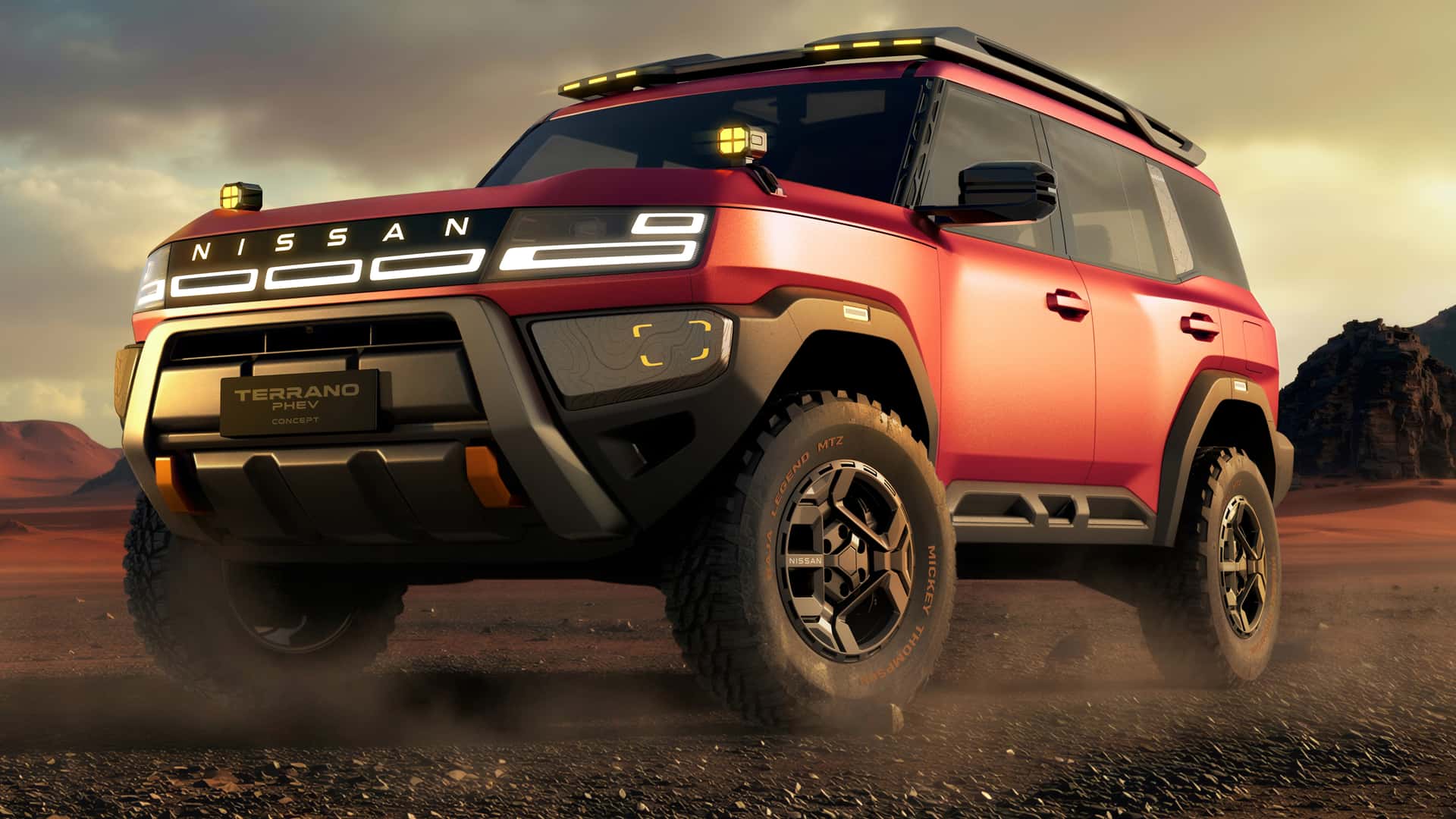
And the Terrano looks the part. Squared-off wheel arches, skid plates, meaty all-terrain tires, shaved bumper corners for better approach and departure angles, a side-mounted ladder, and a full-size spare hanging off the tailgate. This is a vehicle that at least pretends to get dirty, and the mechanical underpinnings suggest it can back up the posture.
Nissan hasn’t shown the interior yet, but the Frontier Pro’s cabin offers a reasonable preview. Think panoramic roof, 10-inch digital gauge cluster, and a 14.6-inch infotainment screen. Heated, ventilated, and massaging front seats could be part of the package.
The catch, for American buyers at least, is geography. Nissan says the Terrano will launch first in China with “selected global markets” to follow. North America and Europe are almost certainly not on that list, since the company is already bringing the Xterra back stateside, and slotting two body-on-frame SUVs below the Armada would create internal friction Nissan can’t afford right now.
This is a company in triage mode. Nissan is axing 11 underperforming models globally while fast-tracking new products — the electric Juke, Rogue E-Power, a reborn Skyline sedan, the next GT-R, the Xterra, and now this. The Terrano fits neatly into a strategy built on Dongfeng’s manufacturing muscle: lower costs, faster development, and access to the world’s largest auto market, where rugged adventure-styled PHEVs from domestic brands like Jetour are eating everyone’s lunch.
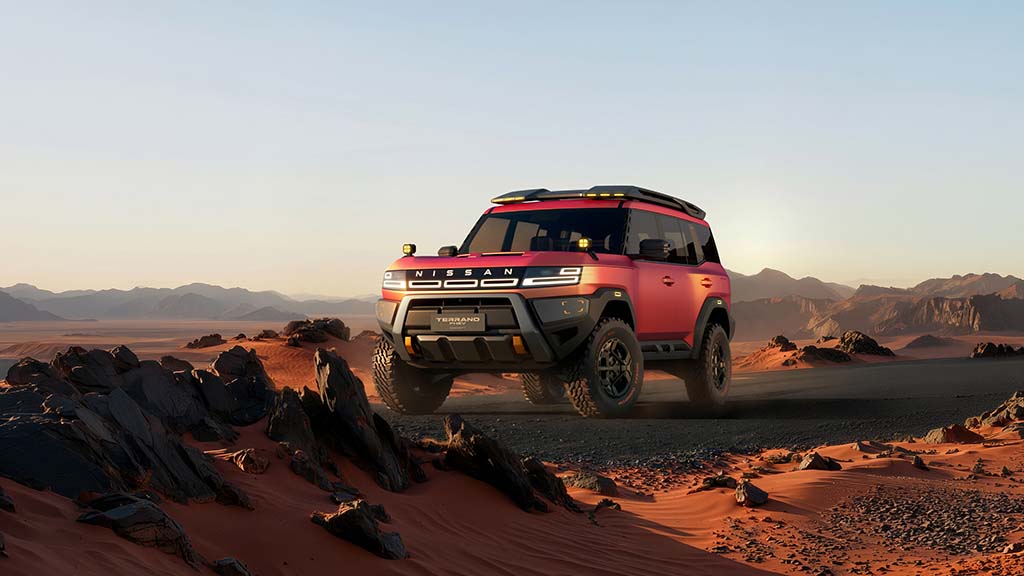
The original Terrano was a compact, no-nonsense SUV that thrived in the era before crossovers consumed everything. This new version appears larger — somewhere between the old Terrano and the full-size Armada — and far more ambitious on the tech front. A plug-in hybrid body-on-frame SUV with genuine off-road credentials would have been a fantasy a decade ago.
Whether the Terrano can actually compete against China’s relentless domestic players is another question entirely. Nissan’s market share there has been in freefall, and a single model — no matter how promising — doesn’t reverse years of decline. But it’s a signal that Nissan hasn’t given up on the fight. The bones look right, the powertrain looks competitive, and the nameplate still carries weight with anyone old enough to remember when SUVs were built to go somewhere other than Whole Foods.

Share this Story