
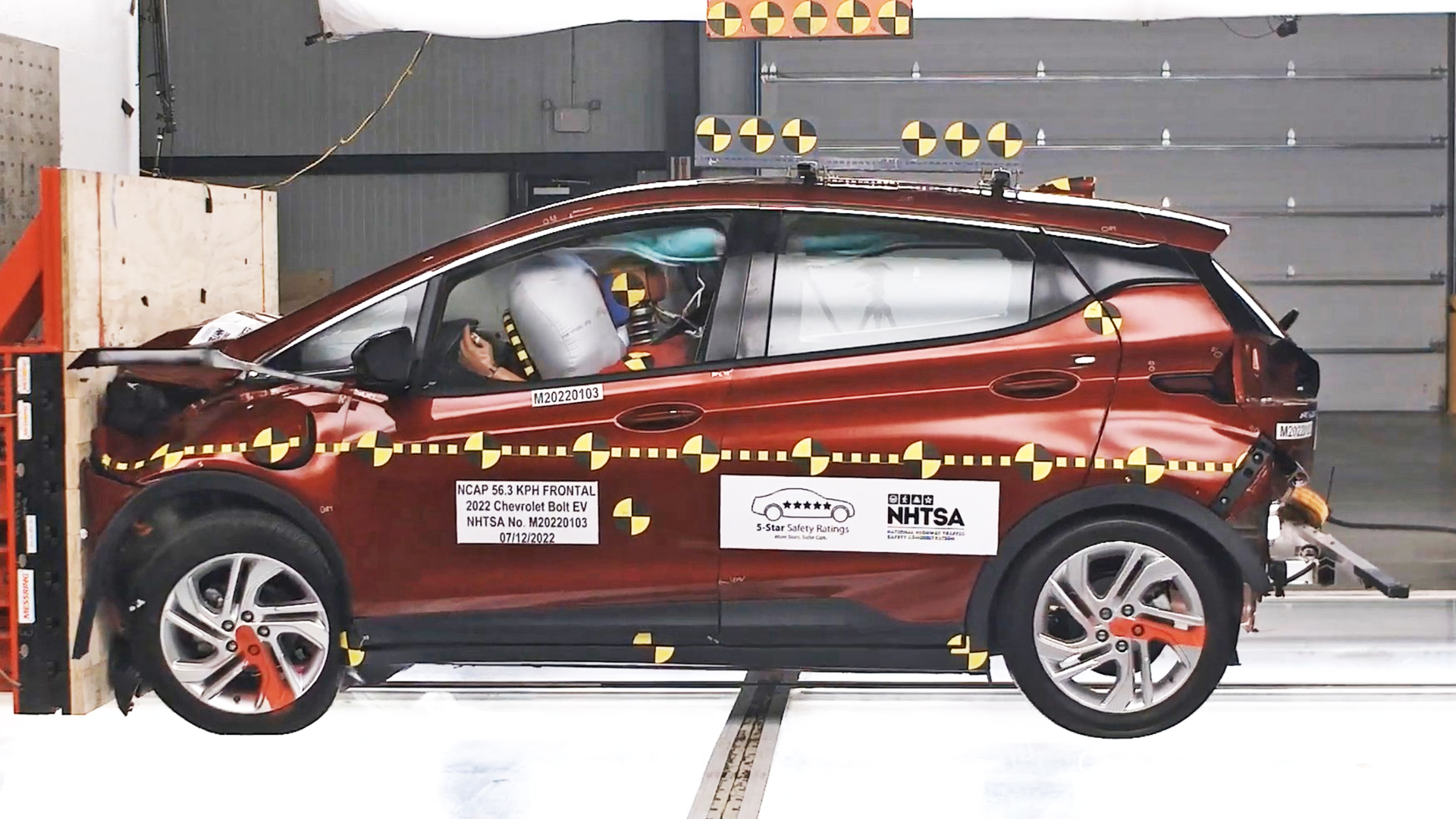


General Motors saved roughly two dozen pre-production Chevrolet Bolt EVs from destruction by running almost all of its crash testing in a computer. That decision was one of the critical moves that let GM revive a car it had already killed.
The 2027 Bolt EV has one of the stranger backstories in recent memory. GM axed the affordable electric car after 2023, then reversed course and announced it was coming back. That meant relocating the assembly line from Michigan to Kansas, scrambling for prototype parts, and somehow compressing a development timeline that normally stretches for years.
Bolt chief engineer Jeremy Short told The Drive that virtual crash testing was the unexpected linchpin. We’ve greatly reduced the number of cars we run into walls,” he said.
The technology itself isn’t new. Automakers have used crash simulations for years, layering commercially available software with proprietary tools calibrated against real-world component tests. What’s different here is the degree of trust GM placed in the digital results. Engineers skipped nearly all physical crash tests, running real cars into barriers only for the final regulatory sign-off required by NHTSA.
That confidence didn’t come cheap. The simulations use complete 3D models of the vehicle down to every bracket and weld, assigning mechanical properties to each material. Short called the system “astonishingly good.” Engineers could change a single weld location, swap a bracket size, vary impact speed, and re-run the test without touching sheet metal.
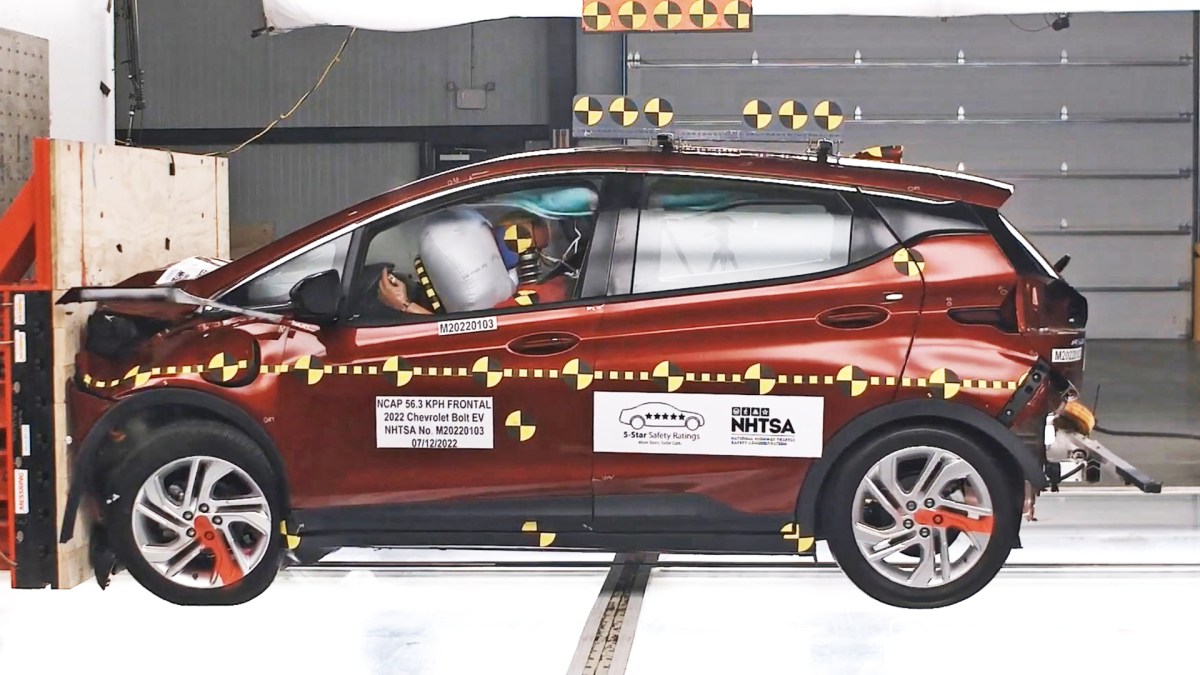
That kind of iteration in the physical world would eat months and millions. The resurrected Bolt shares much of its DNA with the discontinued version, but enough changed to require a full suite of new crash tests. New federal regulations kicked in after the previous Bolt was last tested.
Interior modifications had to be validated against airbag deployment patterns. Short described the changes to the front structure as “drastic.”
While engineers were redesigning that front end, GM was simultaneously tearing down the Michigan assembly line and rebuilding it in Kansas. Prototype bodies were scarce. Physically crashing two dozen of them was borderline impossible given the supply constraints, never mind the cost.
Virtual testing didn’t just fill a gap. It became the preferred method. Short was blunt: “If you gave me a conventional program, I would absolutely go a virtual route because it’s simply better.”
The numbers matter more than the visuals, Short noted. Force data on specific body points and simulated crash dummies determine pass or fail, not how dramatic the crumple looks on screen. He pointed out that appearances deceive in both directions: “It’s sometimes like the worst-looking crash is better and sometimes the one that looks like a nothingburger is actually the one where we have to make changes.”
GM declined to share screenshots or video from the Bolt’s actual simulations. But 15-year-old public demonstrations of similar technology already showed remarkable fidelity between virtual and physical results. The current tools are a generation beyond that.
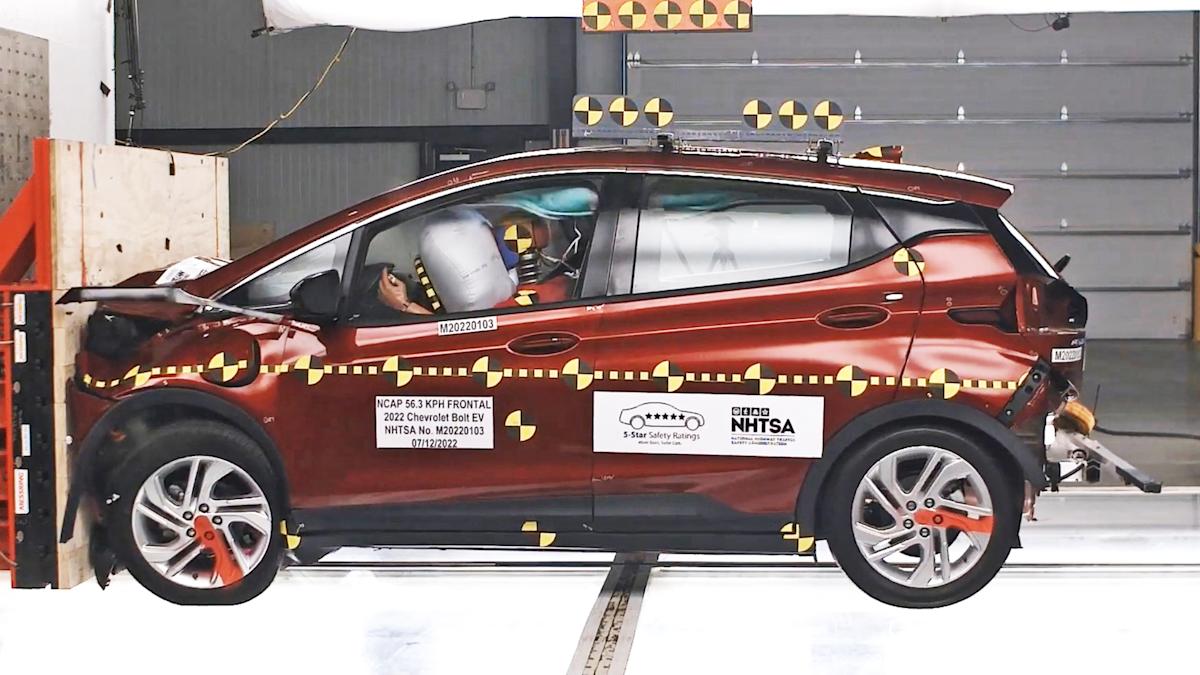
The broader picture here is a company that painted itself into a corner with an abrupt product cancellation, then had to engineer its way out under constraints that would have stalled a conventional program. Virtual crash testing didn’t just save time and money on the Bolt. It proved to GM’s own engineers that the old way — building expensive prototypes specifically to destroy them — may be headed for retirement.
Whether the 2027 Bolt sells is another question entirely. But getting it to market this fast, from a standing restart, with a relocated factory and almost no physical crash cars? That’s an engineering story worth paying attention to, regardless of what the sticker price says.


Share this Story