
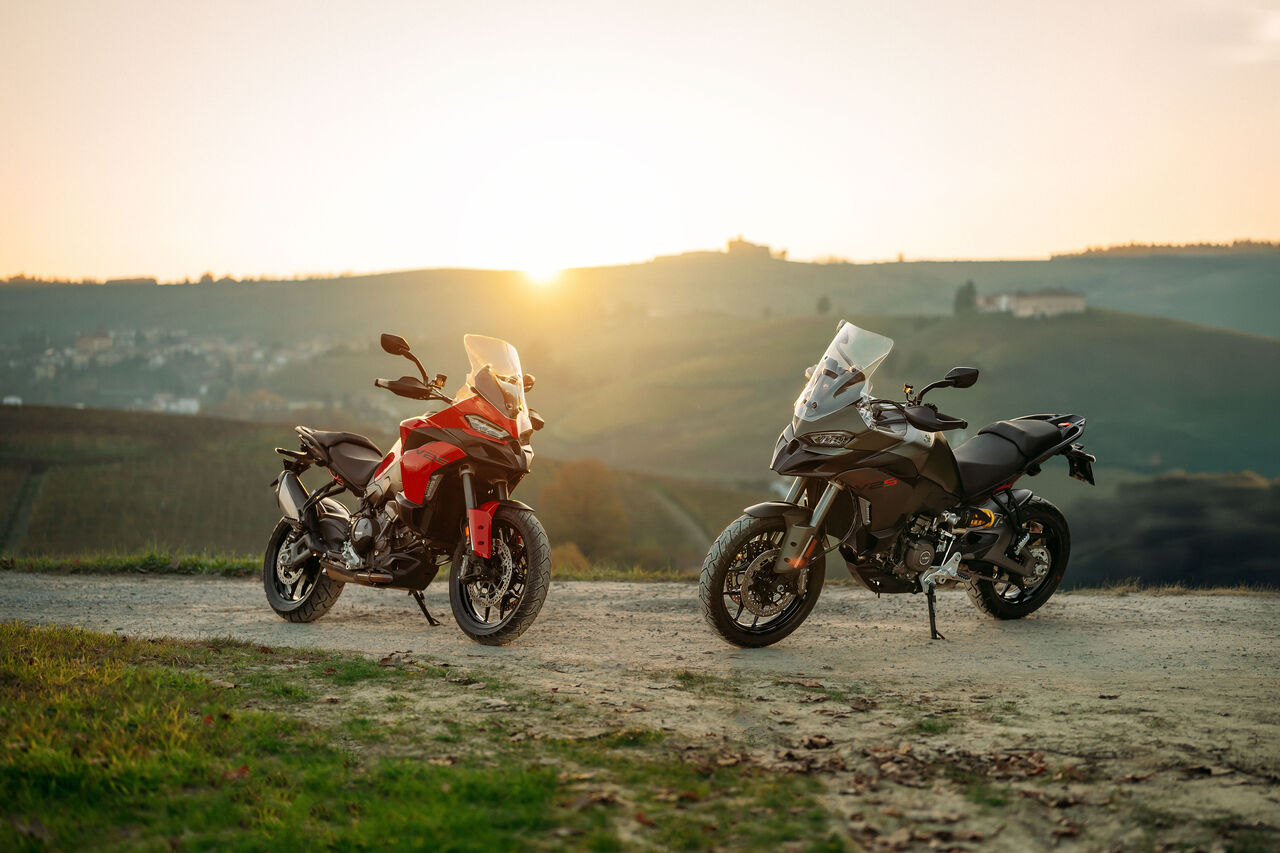


Ducati delivered 925 million euros in revenue for 2025, down 7.8% from the prior year. Operating profit fell far harder — 43%, from 91 million euros to 52 million. The Bologna company wants you to read those numbers as resilience. The numbers themselves tell a rougher story.
The company shipped 50,895 motorcycles last year, a decline of 3,600 units from 2024. That’s a 6.6% drop in volume, but the profit erosion ran at more than six times that rate. Margins compressed from 9.1% to 5.6%, nearly halved in a single fiscal year.
CEO Claudio Domenicali framed the results as proof of durability in a hostile environment. “Our product quality and technological capabilities helped limit the impact relative to others,” he said. CFO Henning Jens pointed to double-digit contraction in core markets and noted Ducati actually gained market share while staying in the black.
Both statements may be true. But gaining share in a shrinking pool while watching your operating margin get cut nearly in half is not the kind of victory that ages well if conditions don’t improve.
The culprits Ducati identified are real and worth understanding. U.S. tariffs hit the company where it hurts most — America is Ducati’s primary market. Unfavorable exchange rates, particularly the weakening dollar and yen against the euro, compounded the damage on every unit sold outside Europe. And the mandatory Euro 5+ emissions transition pulled three critical models — Monster, Hypermotard, and DesertX — out of showrooms for much of the year while they awaited updated powertrains.
That regulatory gap is not a small thing. The Monster alone has historically been one of Ducati’s strongest volume sellers. Losing it and two other popular models from the lineup while absorbing tariff costs and currency headwinds created a triple squeeze on revenue. All three bikes returned to the range in early 2026 powered by a new V2 engine, which should provide relief — assuming demand holds.
Ducati, owned by Volkswagen Group through Audi, is leaning hard into its premium positioning and exclusivity narrative. It launched Ducati Factory Made, a customization program that lets buyers configure options directly on the Borgo Panigale production line. The intent is clear: push average transaction prices higher and insulate the brand from volume swings.
The motorsport portfolio remains a genuine bright spot. Ducati enters 2026 as reigning MotoGP World Champion for the fourth consecutive year and claimed its 21st Superbike Manufacturers’ Title in 2025. It’s expanding into AMA Supercross and the MX2 World Championship, broadening its racing footprint into off-road disciplines where it has historically been absent.
Racing success sells motorcycles. But it doesn’t fix tariff exposure or currency math.
Ducati turns 100 this year, and the company is planning World Ducati Week in July at Misano as a centerpiece celebration. A centenary with a fully renewed model range and four straight premier-class championships is a strong hand to play.
The question hovering over Borgo Panigale is whether the external pressures of 2025 were a one-year anomaly or the beginning of a new normal. U.S. trade policy remains volatile. The euro shows no signs of weakening meaningfully against the dollar. And the premium motorcycle segment, still cooling from its post-pandemic sugar high, is finding its natural floor.
Ducati stayed profitable. That matters. But a 5.6% operating margin at a premium brand with average selling prices well north of $15,000 leaves almost no room for another bad year. The runway between profitability and trouble just got considerably shorter.

Share this Story