


Ford CEO Jim Farley stood on Threads last month and declared the company isn’t retreating from electric vehicles — it’s “democratizing them.” Bold words from an automaker that hemorrhaged billions on its EV division. But the Universal Electric Vehicle platform now taking shape in Louisville may be the most credible proof yet that Ford actually means it.
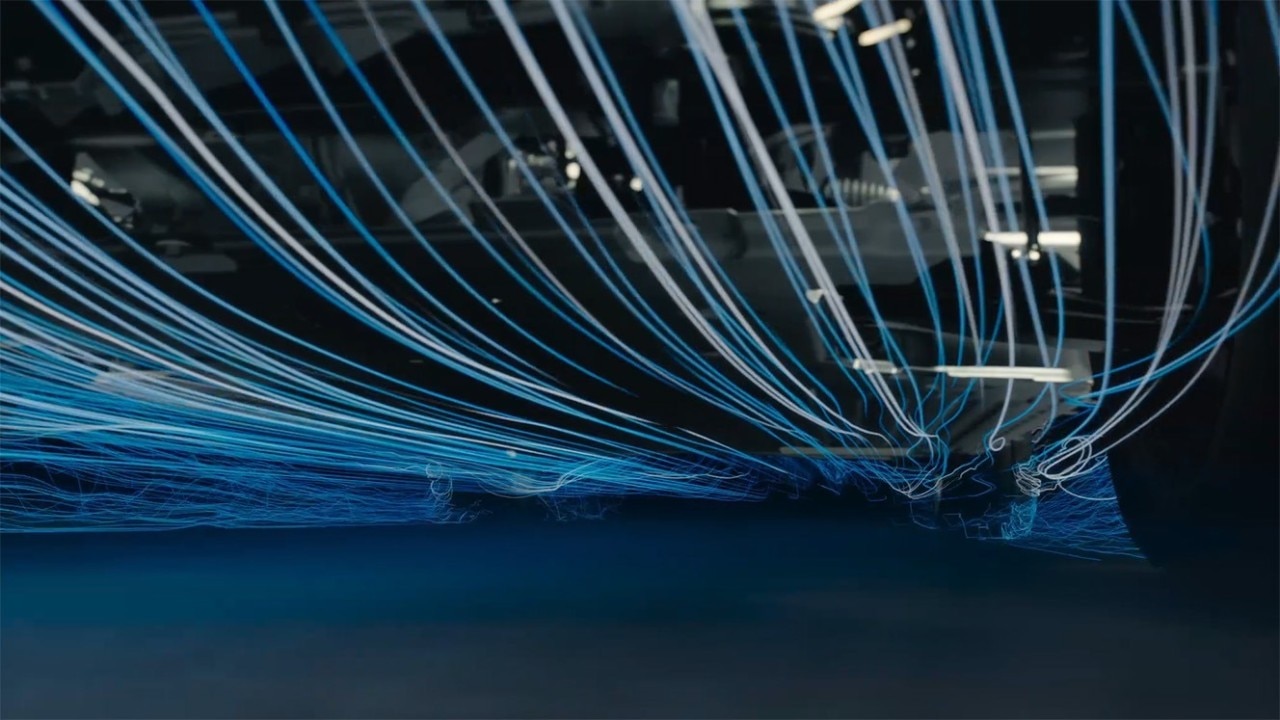
The core idea is deceptively simple: chase physics, not battery size. Ford has adopted what it internally calls a “bounty culture,” where engineers earn recognition for wringing efficiency gains from every subsystem — aerodynamics, power management, motor design, weight reduction. Each incremental improvement means the battery can shrink without sacrificing range.
A smaller battery means lower cost. Lower cost means a $30,000 electric truck might actually happen.
That price point is the whole game. Ford has publicly committed to delivering a mid-size electric pickup on the UEV platform in 2027, starting around $30,000. To get there, the team led by Alan Clarke — a Tesla veteran now serving as Ford’s Executive Director of Advanced EV Development — is rethinking the truck from the ground up.
The numbers tell the story. Ford’s aluminum unicastings will condense over 146 parts into just two. Fewer parts means faster assembly, fewer quality defects, simpler inventory, and a radically lighter bill of materials.
The company’s Louisville Assembly Plant will use what Ford calls an “assembly tree method,” a production approach designed specifically around these massive single-piece castings.
Formula 1 expertise is in the mix too. Ford’s racing partnership is feeding real aerodynamic and thermal management knowledge into the UEV platform. It’s the kind of marginal-gains thinking that shaves drag coefficients by hundredths and recaptures energy other systems waste.
Meanwhile, independent battery testing has surfaced promising results. A VTT technical report on the platform’s Donut battery cells showed a full charge in under ten minutes. That’s not a press release claim — it’s a third-party lab finding that, if it holds in production, would eliminate the single biggest objection most truck buyers have about going electric.
Clarke has been making the interview rounds, appearing on State of Charge and Motor Trend’s InEVitable podcast, and his confidence has been noted by the enthusiast community. One Ford EV Clubs member put it plainly: “I have little doubt that the UEV will be a generation better than the Mach-E, but will it be better than its competitors in 2027?”
That’s the question. Rivian’s R2 is coming. Scout’s Harvester targets a similar buyer. Chinese brands are circling, already selling aggressively in Canada where limited tariff exemptions let a trickle through.
GM remains opaque about what comes after Ultium. Tesla, by most accounts, has shifted its institutional focus toward robotics and autonomy, potentially leaving a vacuum in the North American EV truck segment.
Ford sees that vacuum. Farley called UEV “one of the most audacious and important projects in Ford Motor Company’s history.” Hundreds of prototypes have already been built.
Engineers have spent years sculpting the truck’s face, optimizing every surface for airflow, and eliminating parts that don’t earn their keep. The company’s mantra — “the best part is no part, but the second-best part is one that serves multiple functions” — reads like a manufacturing koan, but it’s really a cost discipline.
The $30,000 target is what separates this from every other legacy automaker’s EV pivot. GM’s Equinox EV was supposed to start around that number; it didn’t. Hyundai and Kia keep creeping prices upward.
Ford is betting that engineering efficiency — not subsidies, not marketing gymnastics — can deliver an electric truck ordinary Americans can actually afford. The bounty hunters in Louisville have about a year to prove Farley right.



Share this Story