
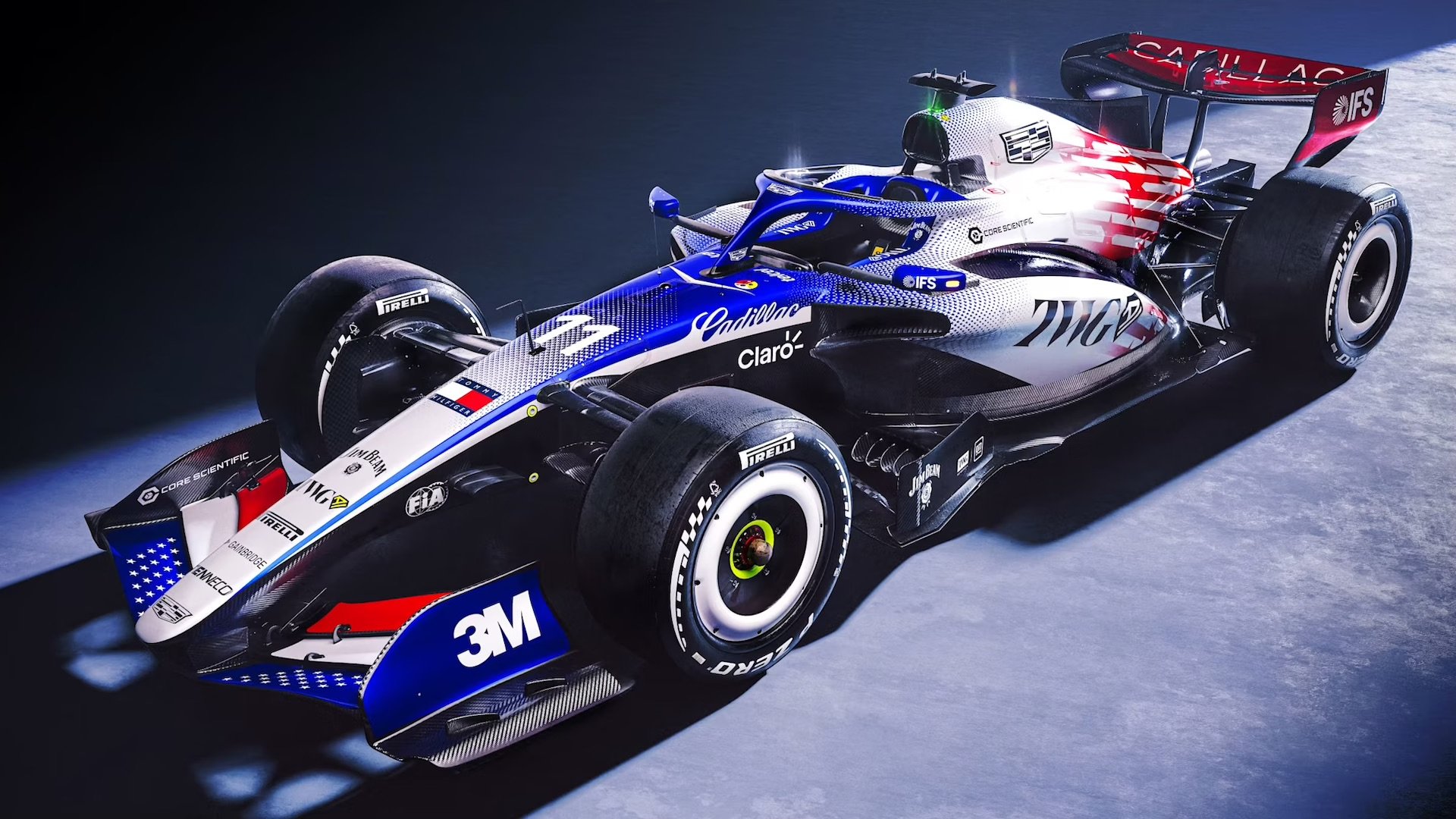


Cadillac’s Formula 1 team ran a “Stars and Stripes” livery at Silverstone. In England. On the Fourth of July weekend.
That car was one of four special liveries the American newcomer has rolled out in its debut season. A star-clad design came first in Miami, followed by the British GP scheme, a Texas theme for Austin, and a shimmering “look beneath the surface” design for Las Vegas. Sergio Perez and Valtteri Bottas have spent the year driving a rotating gallery.
The person behind that look is Cassidy Towriss, the team’s chief brand advisor. Her reference points don’t come from the pit lane. They come from the fashion house.
Speaking to The Drive, Towriss said she studied brands that do their best work in black and white, naming Chanel. She pulls ideas from magazines, social feeds and the internet at large.
“There definitely is a creative pull from fashion, but I’m also making sure that our style remains refined American,” she said.
Refined is the word that matters. For plenty of fans, American racing identity means bald eagles and fireworks. Cadillac is betting on the opposite.
“I never want us to be loud or gaudy or cliché,” Towriss said. “I really think that we found our stride with this really chic black and white, and that you can make an impact with [fewer colors].”
That’s a pointed stance for one of only two U.S.-based teams on the grid, and the only one that openly wears its passport.
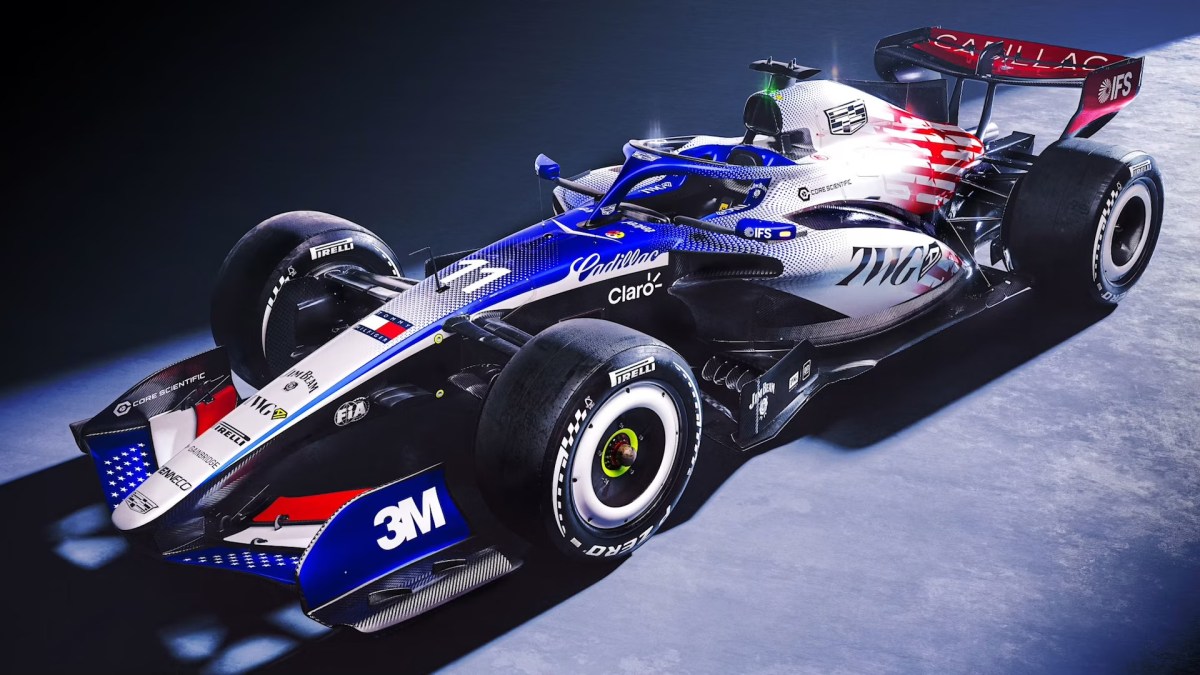
The approach goes beyond the cars. Towriss has pushed team kit toward inclusive, fashion-forward pieces people will actually wear away from the circuit. Racing merch has long meant sponsor-plastered tees aimed squarely at men.
Then there’s the rulebook. With just 20 cars on the grid, each 200-mph machine is among the most exclusive billboards on earth, and the FIA polices every square inch.
Both cars must be virtually identical, with allowances for driver names, numbers and some personal sponsors. At least 55 percent of the surface must be painted or stickered. One-off designs face no numerical cap, but the car must look “substantially the same” at each event.
Compare that with IndyCar, where Cadillac F1’s leadership also operates through Andretti Global. There, a sponsor willing to pay can put a different-looking car on track every weekend. F1 allows no such costume changes.
So the play, according to Towriss, is restraint. Year one is about getting recognized, and recognition fades when the look wanders too far from the core.
“It’s all about staying rooted in our colors and not departing from that as we work to build brand recognition in this first year in F1,” she said.
The sport’s governing body, she says, is less of an obstacle than outsiders might assume. “The FIA are very open to the commercialization of what these liveries mean and to embracing the lifestyle side of the sport,” Towriss said. “But you know, they’ll also let you know if you’ve overdone it.”
She laughed when she said it. Every team chasing attention on the grid should hear the warning inside the joke.
General Motors, she said, matched the team’s obsession with detail on every scheme. For a manufacturer entering a series where image sells almost as hard as lap time, that’s no small thing.
Cadillac now heads through Vegas and into the final Middle East rounds of its first season. The black-and-white foundation is set. Next year’s brief is already open.

Share this Story