
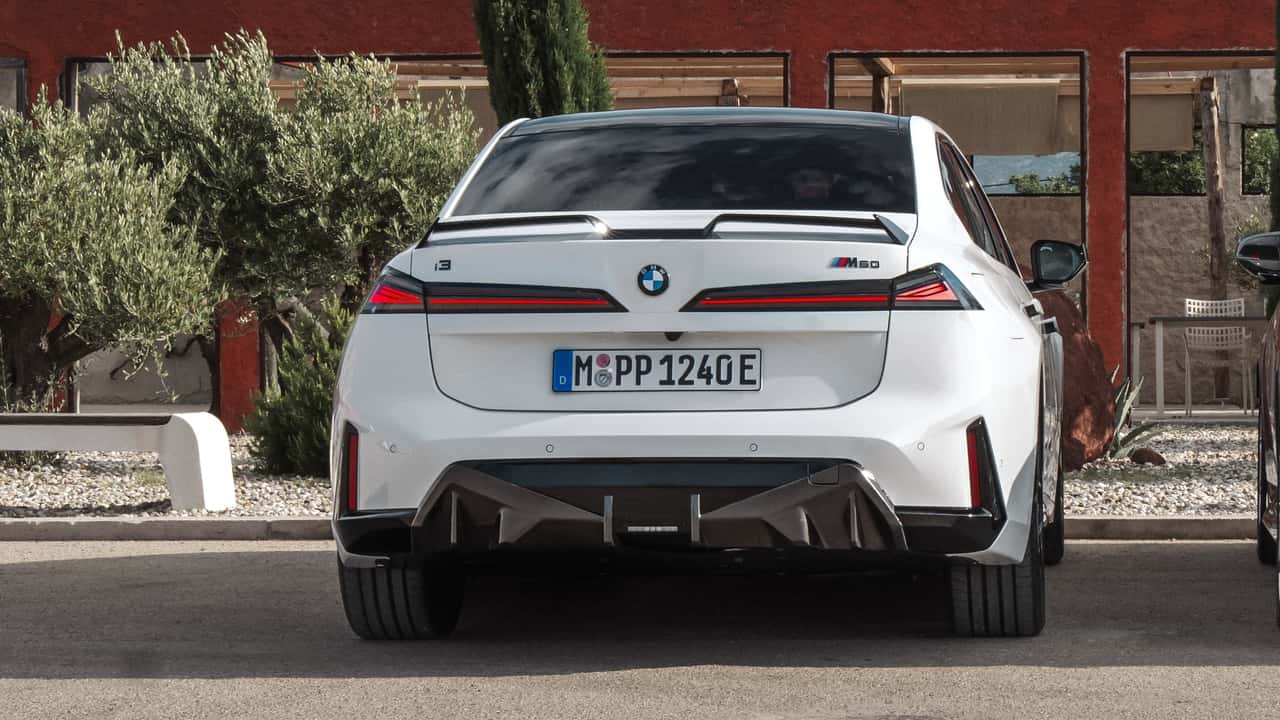


“We at BMW thought: well, that’s a funny gimmick.” That was Christian Heiss, BMW senior driving dynamics engineer, describing Munich’s first reaction to the simulated gear changes on Hyundai’s Ioniq 5 N.
He said it while launching a car that will have them.
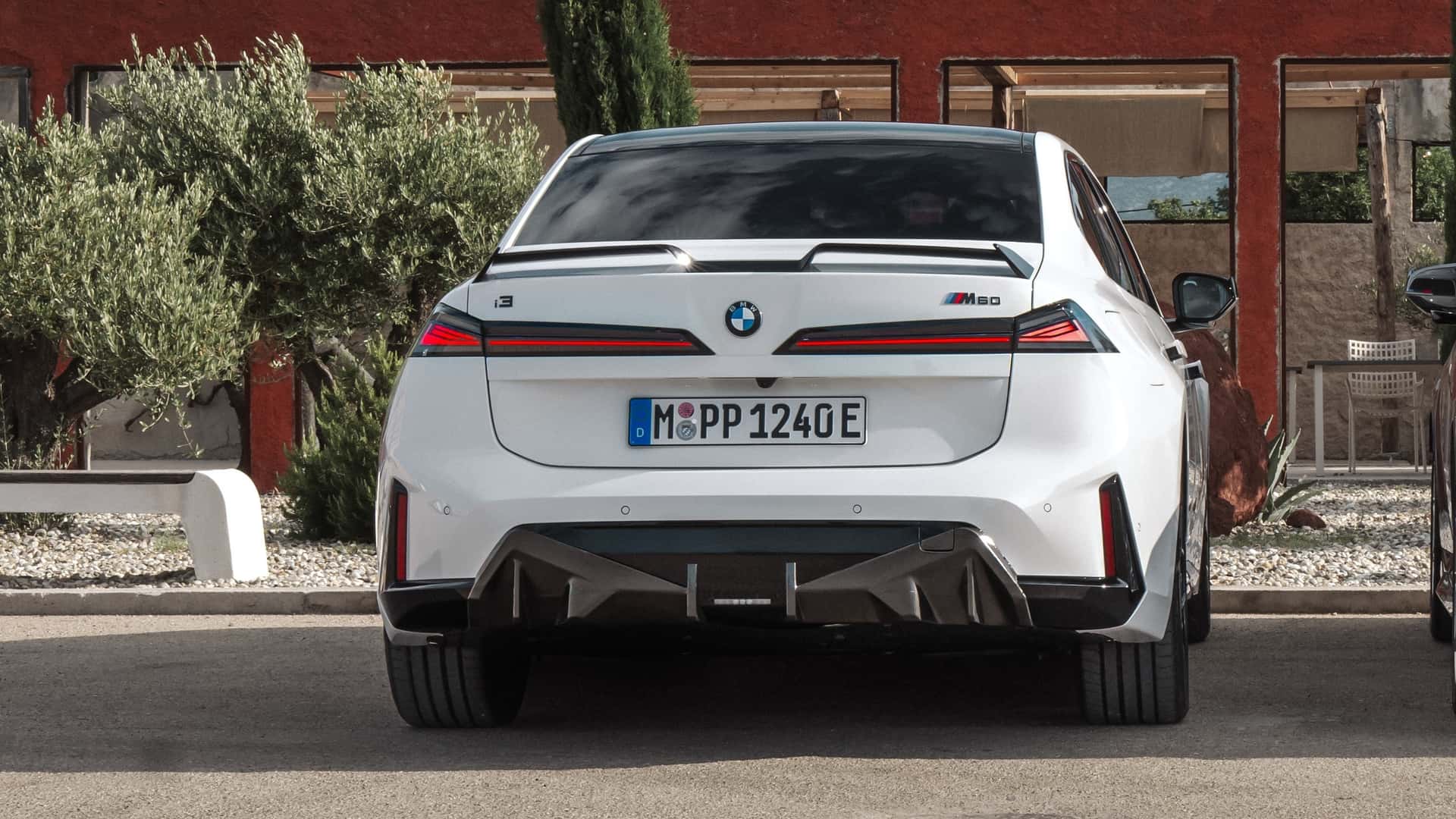
The electric i3 M60 xDrive gets simulated shifting next year. BMW won’t call them gears. It calls them “Stages.”
The giveaway came in September. BMW’s official interior images of the i3 M60 showed red-accented paddles behind the steering wheel, and the M division stayed silent about what they did.
Now we know. Heiss laid out the original objection plainly to Australian outlet Carsales: “We’re in an electric world; why copy things out of the combustion engine?”
That was the company line. Then the chassis engineers pushed back.
“From the driving dynamics side, we pointed out that there are some advantages to having this kind of paddle shift, in terms of drivability and feedback from the car,” Heiss said. “It’s an improvement on certain kinds of drives, and especially on track.”
So BMW M did its homework. It tested the Ioniq 5 N alongside other performance EVs to see what worked and what didn’t, and the verdict was good enough to greenlight a program.
M head of development Alexander Karajlovic told PistonHeads the logic comes down to feedback. Conventional ratios help a driver judge speed into a corner. A single-speed EV takes that cue away.
He chose his words carefully. “We’ve ended up with something close to a gearbox simulation, but we don’t call it a gearbox simulation,” Karajlovic said. “It’s thought [out] a bit differently, but everyone hoping for a gear shift simulation will be happy with this.”
Close to a gearbox simulation. Not called a gearbox simulation. Ioniq 5 N owners will recognize the concept.
BMW’s claimed difference is torque. Hyundai’s N e-Shift limits output depending on the selected ratio, mimicking how a real gearbox behaves. BMW says the i3 M60 will deliver the same torque in every Stage.
That makes the BMW system pure sensation with no performance penalty. It also makes it, by definition, less of a simulation than the one Heiss once laughed at.
A synthetic soundtrack will come along for the ride. BMW hasn’t said how many Stages the system offers.
The hardware underneath is serious. The dual-motor i3 M60 is expected to match the iX3 M60’s 603 horsepower and 645 lb-ft.
The heavier SUV hits 62 mph in 3.9 seconds and tops out at 149 mph, so the lighter, slipperier sedan has room to beat both figures. The iX3 M60 carries a WLTP range rating of 468 miles.
Heiss confirmed the feature stays exclusive to M Performance models. Regular i3 buyers won’t get paddles that pretend.
The fully electric M3 arrives in 2027 with a confirmed quad-motor layout. It would be a surprise if it launched without Stages.
BMW isn’t the only German brand warming to the idea. Mercedes-AMG has confirmed simulated shifts and artificial engine sound for its upcoming electric performance cars.
Hyundai went first, took the ridicule, and is now watching the German establishment fall in line behind it.
The real question is execution. Owners have long called the Ioniq 5 N’s fake soundtrack its weakest link, and BMW has promised enthusiasts they’ll be “hopefully even more than happy.”
Munich gets to prove that on a racetrack next year.



Share this Story