
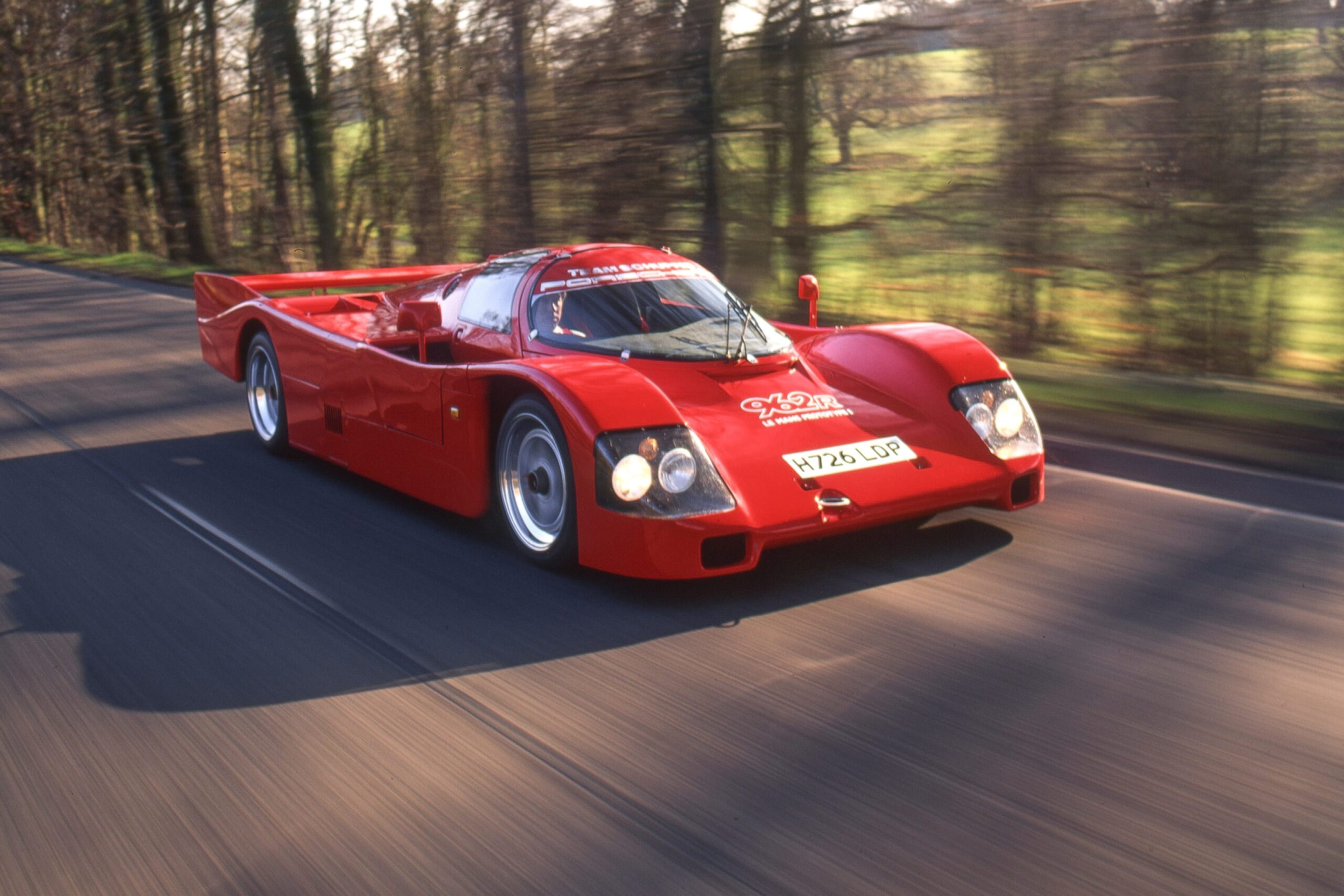


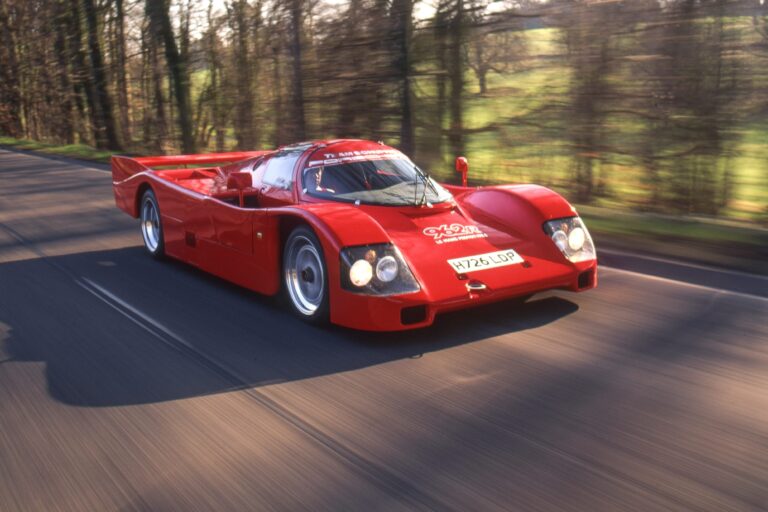
The price was $1,620,000, and only seventeen buyers in America would get the chance to pay it. In the summer of 1991, Vern Schuppan was offering something the factories kept talking about and never delivering: a Porsche 962, twice a Le Mans winner, wearing license plates.
Schuppan had the credentials to attempt it. He won Le Mans in 1983, took third at the 1981 Indianapolis 500, and spent time in Formula 1.
While Jaguar, McLaren and Bugatti were still promising supercars, the 47-year-old Australian already had a long-tail 962 licensed and certified for the road.
That car, chassis 962/123, was no replica. It started in IMSA with the Primus team, was rebuilt by Schuppan on a British aluminum honeycomb chassis, and ran Le Mans in 1988 with Brian Redman, Jean-Pierre Jarier and Eje Elgh. It finished tenth, raced at Fuji, then sat at the back of the shop.
Its new owner, Japanese real-estate executive and Schuppan sponsor Hiroyuki Miyake, wanted a Le Mans car with the minimum changes needed to make it legal. The minimum turned out to be a lot.
The 2.6-liter twin-turbo flat-six needed two catalytic converters, Bosch Motronic management and, eventually, three mufflers. Two big electric fans went under the sponsons to stop it cooking in traffic. With no opening windows, a Sanden air conditioner got wedged below the passenger door.
Emissions turned out to be the easy part. The engine kept all 680 horsepower.
Everything else stayed stubbornly race car. The clutch is a single-plate competition unit that is either in or out, and first gear can take two hands.
The steering needs one and a half turns lock to lock. It’s so light that an unschooled driver will overcorrect.
On concrete motorway ridges, the suspension sends shock waves through the hull. Inside, you hear no exhaust, only camshafts, valve gear and belt drives clattering behind your head. Schuppan considered sound insulation and dropped it, because the customer wanted Le Mans.
Car and Driver’s Ray Hutton reached about 120 mph and reported it felt barely different from 60. A 962 only finds its stride around 150.
Running 14.5 psi of a possible 34.8, on the shorter axle ratio, it was geared for roughly 170 mph. Le Mans gearing promised at least 215.
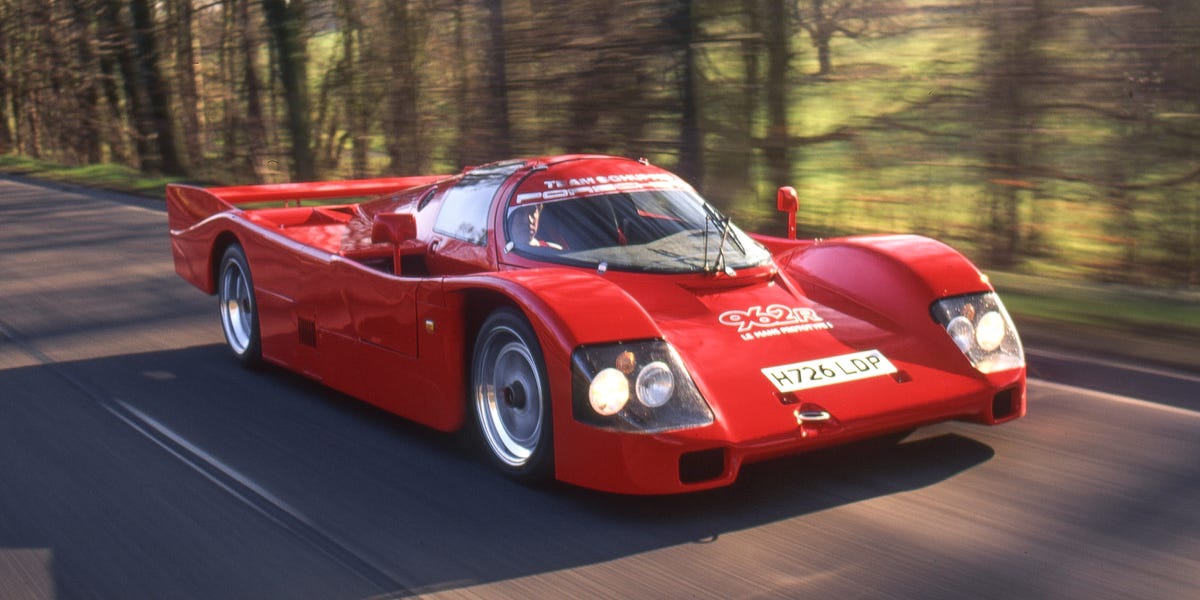
The business plan was bolder than the car. Japan’s Art Sport Division, run by Toshio Terada, commissioned 50 road-going 962CRs at around 220 million yen each.
Those cars would get Schuppan’s own carbon-fiber monocoque and carbon and Kevlar bodywork. Power came from a calmer 3.4-liter air-cooled IMSA engine with twin turbos and about 600 horsepower, prepared by Alwin Springer’s Andial in the U.S.
Miyake’s enthusiasm spawned two more orders for Le Mans replicas. Schuppan planned five, at the same price as the better-trimmed GT.
Engineers projected 0 to 60 mph in 3.8 seconds and 0 to 125 in 8.5. Schuppan talked about owners driving to the circuit, bolting on slicks and racing, and floated a Daytona 24 Hours entry.
The factory in High Wycombe employed some 35 people, with former Holden prototype chief Ray Borrett as vice president. The target was one car a month, with first deliveries in October.
Porsche had walked away from its own road 962. Mercedes looked unlikely to build the C112.
So a small shop west of London, bankrolled from Tokyo, was taking on the XJ220 and McLaren F1 for the title of fastest street-legal car in the world. It did so with a backup camera that showed a fuzzy picture and a turning circle nobody bothered to measure.
Share this Story