
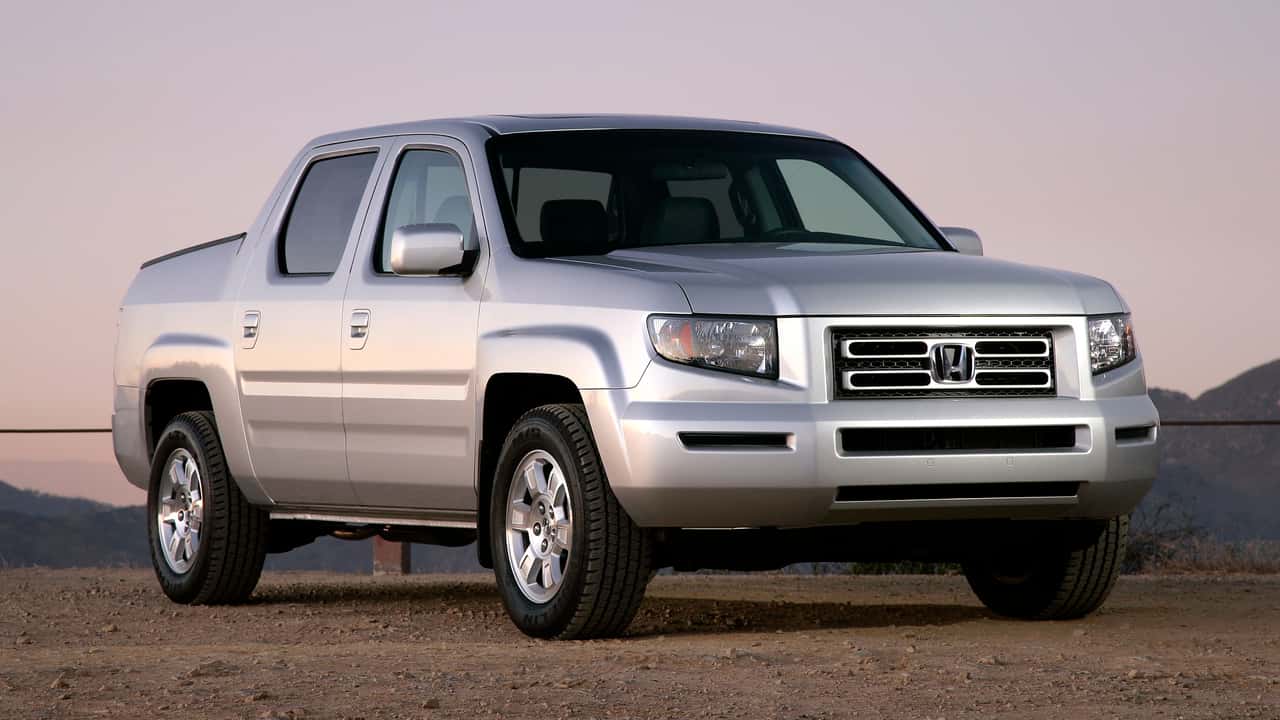


Don Herner was sketching trucks nobody asked him to draw. The retired Honda exterior design lead says the Ridgeline started as a side project in the early 2000s, no executive brief, no formal assignment. Just a designer with free time and a blank page inside Honda’s studio.
What came out of that freedom was a vehicle Honda internally called the “Advanced Capabilities Vehicle,” a name that tells you everything about what the Ridgeline was and what it wasn’t.
“I do not want to call it a truck because it was not really designed to be a truck, but everybody thinks it is,” Herner told Road & Track. Two decades of “fake truck” jokes suddenly have an official origin story. The man who drew the thing says the critics were half right all along.
Honda’s target was SUV interior space, not bed-load bragging rights. Herner described benchmarking the Toyota Tacoma and a Ford competitor, then beating both on legroom and couple distance. The company nailed down interior packaging before finalizing exterior sheet metal, a process that mirrors how you build a crossover, not a pickup.
The platform underneath confirmed the priority. Honda bolted the Ridgeline together on a heavily modified unibody architecture shared with the Odyssey minivan. It was the largest production vehicle Honda had ever attempted, so big the assembly plant itself needed modifications to handle it.
Herner’s team originally sketched 32 to 35-inch wheels and tires, the kind of rubber that sells a truck on a dealer lot. Honda’s engineers killed that idea fast. The 3.5-liter V6 made 255 horsepower and 252 pound-feet through a five-speed automatic, and there was no transmission in Honda’s inventory robust enough to spin oversized rubber without sacrificing torque at the ground.
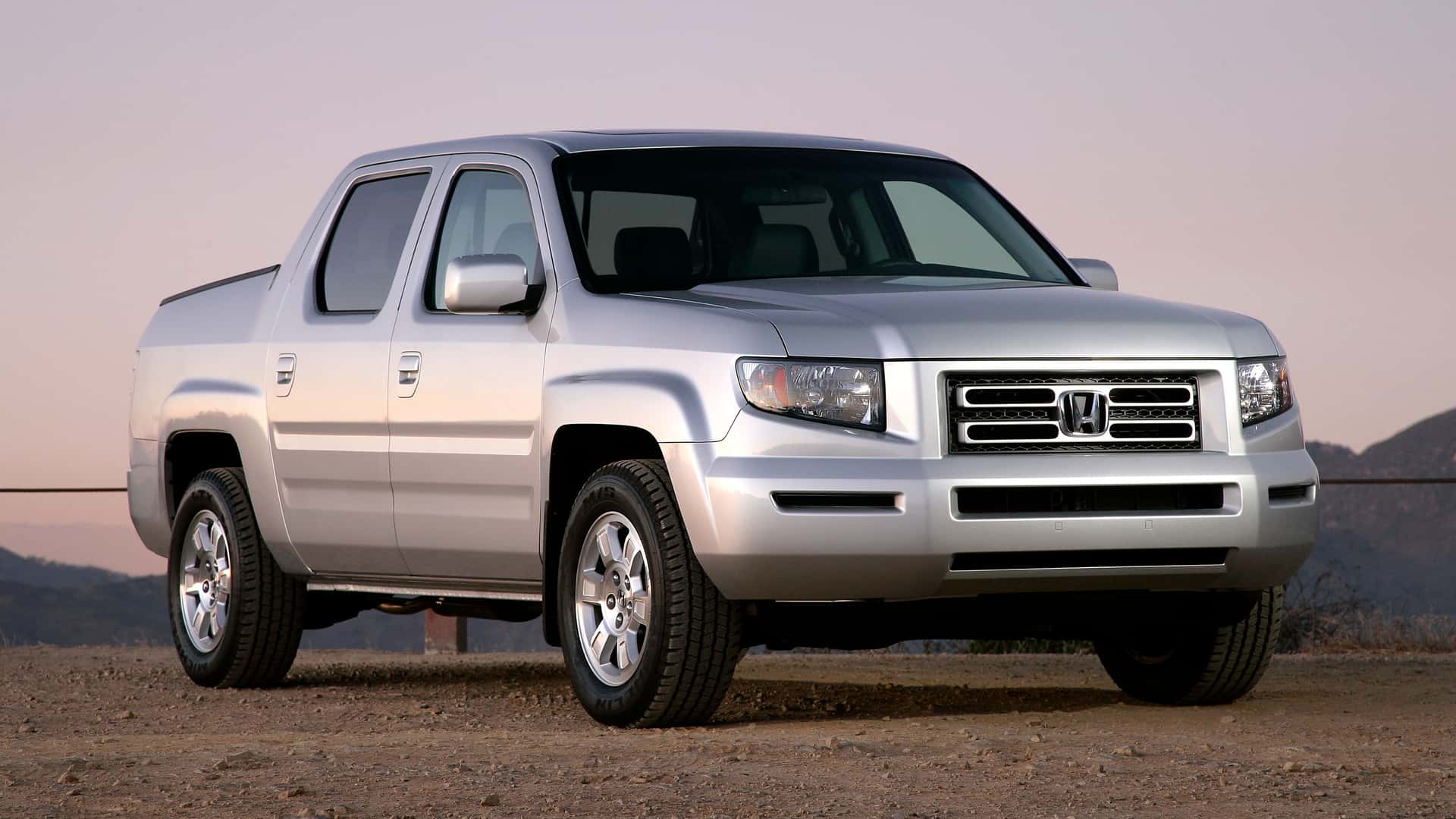
Smaller wheels stayed. Engineering won over aesthetics.
The composite bed drew the loudest criticism. A published max bed load of 1,100 pounds gave rivals and their owners easy ammunition for years. Herner pushed back, saying Honda overloaded the bed through computer-aided engineering testing and that it was built to be “super, super robust.” Total payload hit roughly 1,500 pounds, with 5,000 pounds of towing capacity, numbers that quietly covered what most midsize truck buyers actually need.
What the Ridgeline offered instead of raw capacity was cleverness. A dual-action tailgate. Lockable underbed storage. Fold-up rear seats. Features that took years for competitors to copy or match.
Honda was solving problems that traditional truck engineers either ignored or didn’t consider problems at all.
The company even explored co-branding the first Ridgeline with Nike’s All Condition Gear outdoor line, a move that would have positioned the truck squarely as a lifestyle product rather than a work tool. The partnership never happened, but the impulse behind it said plenty about how Honda saw the vehicle’s buyer.
Honda kept the unibody layout for the second generation, updated the styling to look more conventionally truck-like, and carried over the utility features that defined the original. The current model sells steadily if unspectacularly, a niche within a niche.
A third-generation Ridgeline is officially in development. Honda has confirmed it will arrive within two years, with production of the current truck pausing later in 2026. The question facing Honda’s designers this time is whether they lean further into what made the Ridgeline different or keep drifting toward the traditional truck template the original was specifically built to reject.
Herner’s sketches from twenty years ago answered that question one way. Whether Honda’s current leadership agrees is still an open file.
Share this Story