
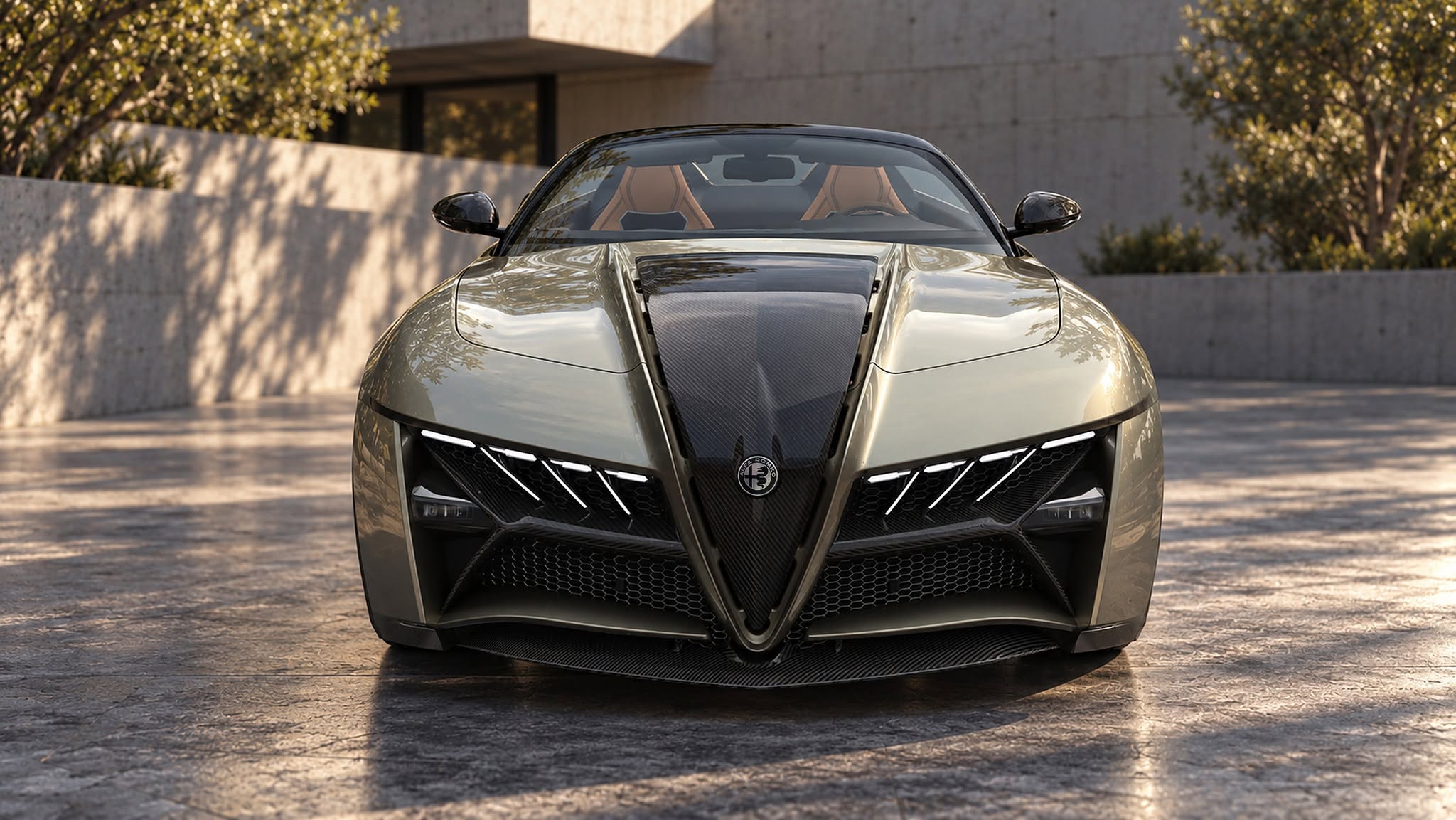


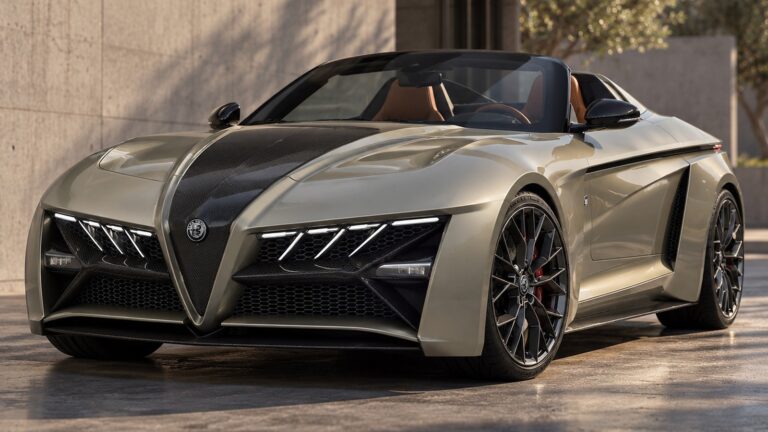
A small Italian coachbuilder just threw down a challenge to any Alfa Romeo enthusiast with deep enough pockets. Castagna Milano has published renderings of a two-door convertible based on the Giulia Quadrifoglio, and the shop says it will build the thing as a one-off if someone writes the check.
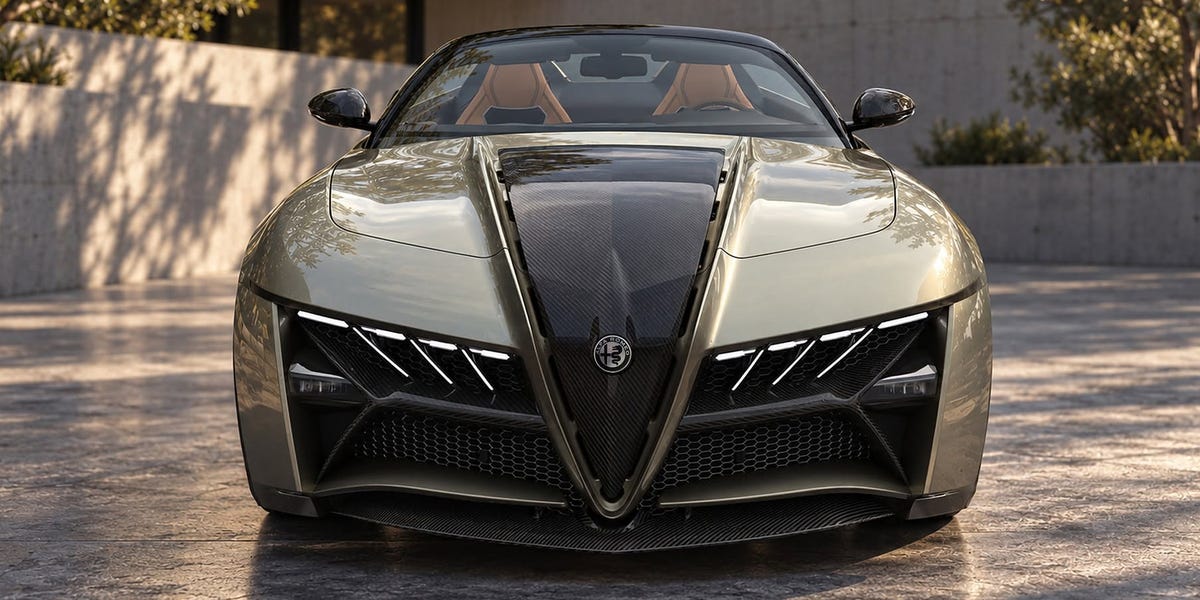
The car looks nothing like the sedan it claims as a donor. Where the Giulia has always traded on flowing curves and understated elegance, this proposal is all hard edges and aggression. Fang-shaped LED headlights drop vertically from recessed housings packed with cooling vents.
A carbon-fiber panel stretches from a narrowed version of Alfa’s trademark triangular grille up and over the hood. The rear gets stacked exhaust outlets flanking a diffuser and an active spoiler.
Wider front and rear tracks give the car a planted, muscular stance. The beltline is literally carved into the bodywork, wrapping around to the tail where it frames razor-thin taillights. Castagna Milano says the entire body would be formed from carbon fiber, with the cabin dressed in wood trim and two types of leather.
Here is where the numbers get interesting. The coachbuilder claims a curb weight of 3130 pounds, roughly 700 pounds lighter than the standard Quadrifoglio sedan. That is a massive reduction, and with the stock twin-turbo 2.9-liter V-6 producing 505 horsepower, the power-to-weight ratio would land squarely in supercar territory.
How Castagna plans to shed that weight while converting a sedan into a structurally sound open-top car is a question the renderings do not answer.
The seats have been repositioned 13 inches rearward to stretch the hood and create what the coachbuilder calls more eye-catching proportions. It is a classic trick from the old-school carrozzeria playbook, prioritizing visual drama over practical packaging.
Castagna Milano is not the first shop to take a scalpel to the Giulia. Zagato built its own two-door interpretation back in 2022, the Giulia SWB Zagato, but that car stayed within Alfa’s traditional design language. Soft curves, rounded surfaces, a respectful nod to the brand’s heritage.
Castagna’s approach is the opposite. It strips away the elegance and replaces it with something closer to a concept car you might see on a rotating platform in Milan, all angles and theater.
The Giulia itself has been on the market largely unchanged since 2016, and it still turns heads. That longevity speaks to how well Alfa’s design team nailed the original. Whether a radical reinterpretation improves on it or simply uses it as a convenient platform is a matter of taste and budget.
Castagna Milano has history on its side. The firm dates back to 1849 and has built custom bodies on everything from horse-drawn carriages to Maseratis. But the modern coachbuilding business is brutal.
Engineering a structurally rigid convertible from a unibody sedan, clothing it entirely in carbon fiber, and making it road-legal requires far more than a compelling set of illustrations.
No price has been disclosed. No timeline has been set. No customer has been announced. For now, this Alfa Romeo roadster exists only as pixels on a screen and ambition in a Milan workshop. The question is whether anyone out there trusts those pixels enough to fund the metal.
Share this Story