
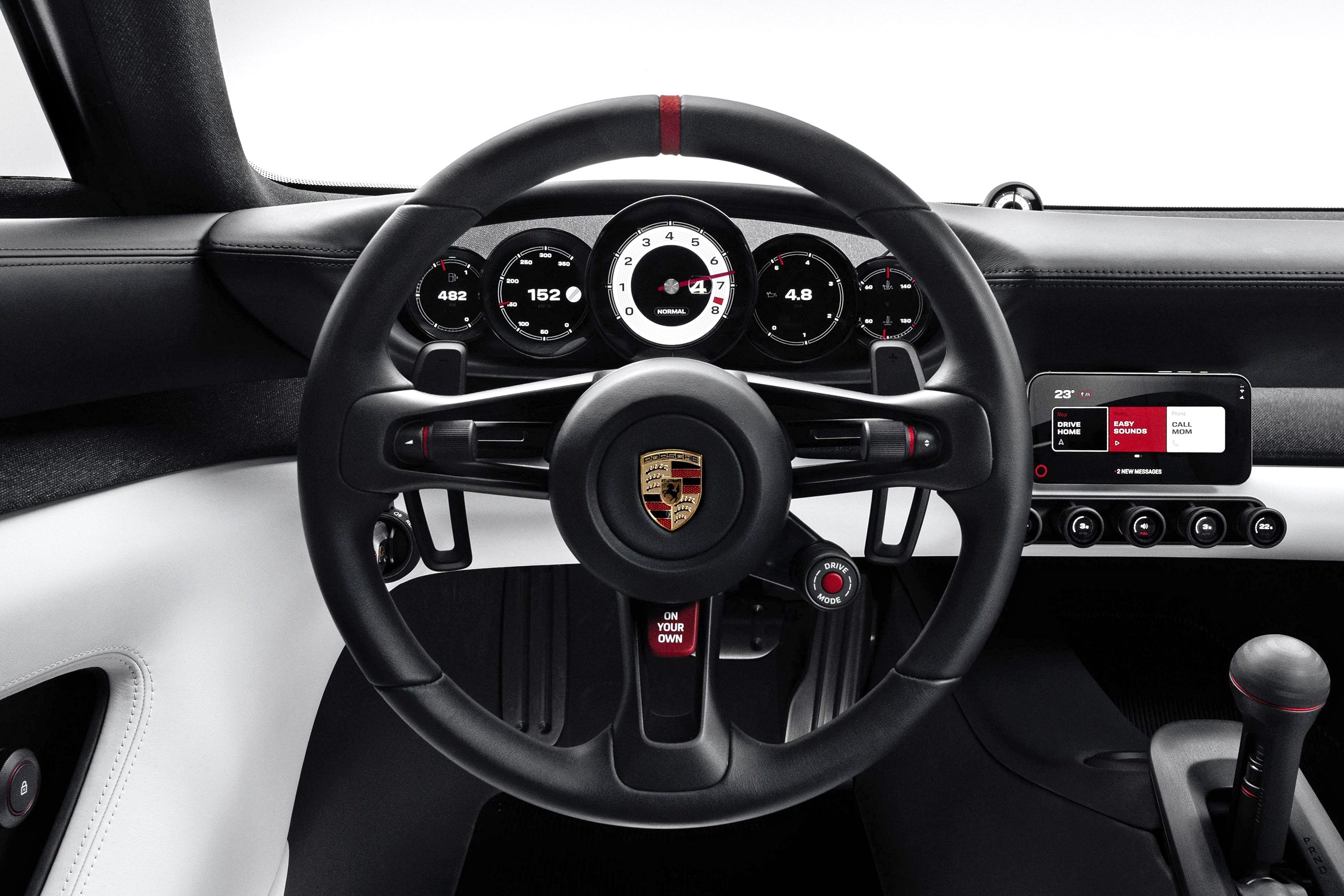


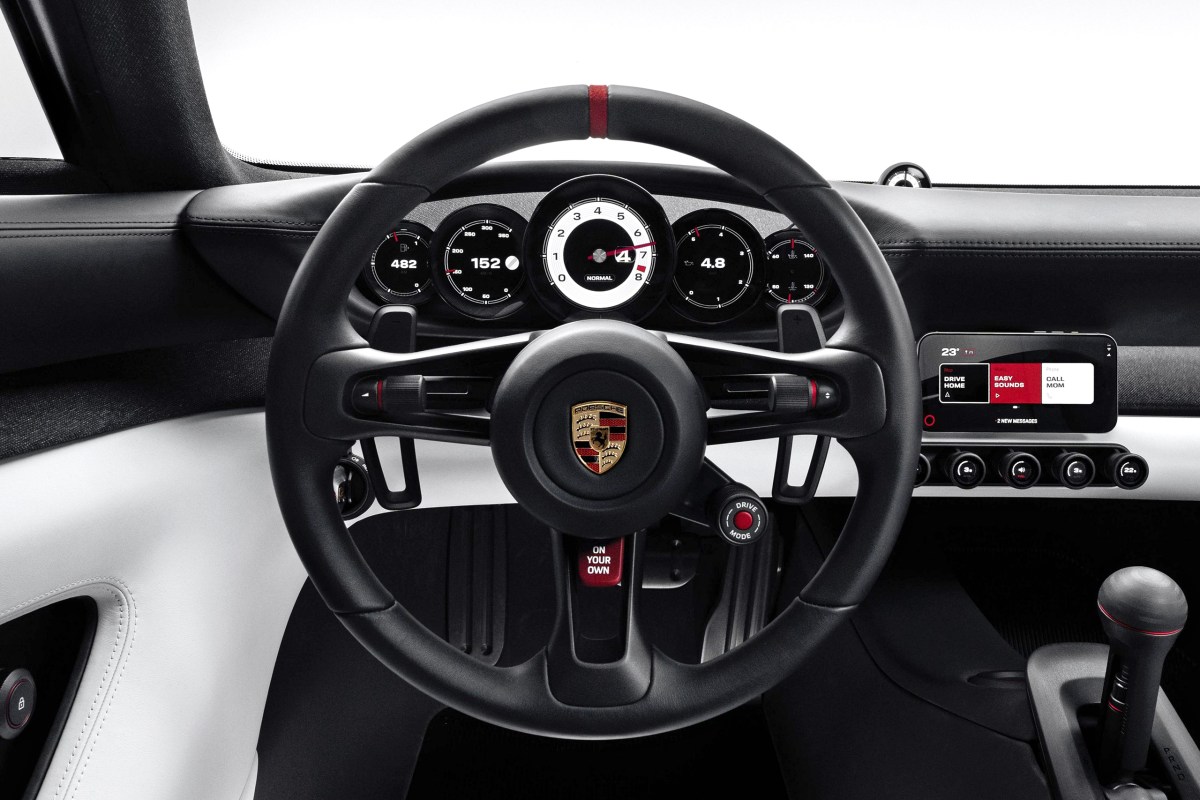
Porsche just revealed a mid-engine supercar concept with no built-in infotainment screen. The Mission S, previewing the brand’s future flagship, instead asks drivers to dock a smartphone if they want navigation or media. For a car that will likely cost north of half a million dollars, that’s either bold minimalism or an expensive omission.
The centerpiece of the interior is a cluster of five independent circular gauges. The central tachometer uses a physical needle sweeping over a circular screen, a hybrid approach that doesn’t exist in any current Porsche production model. A small magnified section of the glass enlarges the gear readout, a clever nod to vintage instrumentation.
In certain drive modes, the tach telescopes toward the driver, physically separating itself from the flanking gauges. Porsche calls it a “symbiosis of analogue and digital controls.” The rest of the industry might call it a correction.
Screens in cars were once a marker of prestige. Then they metastasized. Touchscreens replaced buttons, digital clusters replaced needles, and interiors started looking like consumer electronics showrooms.
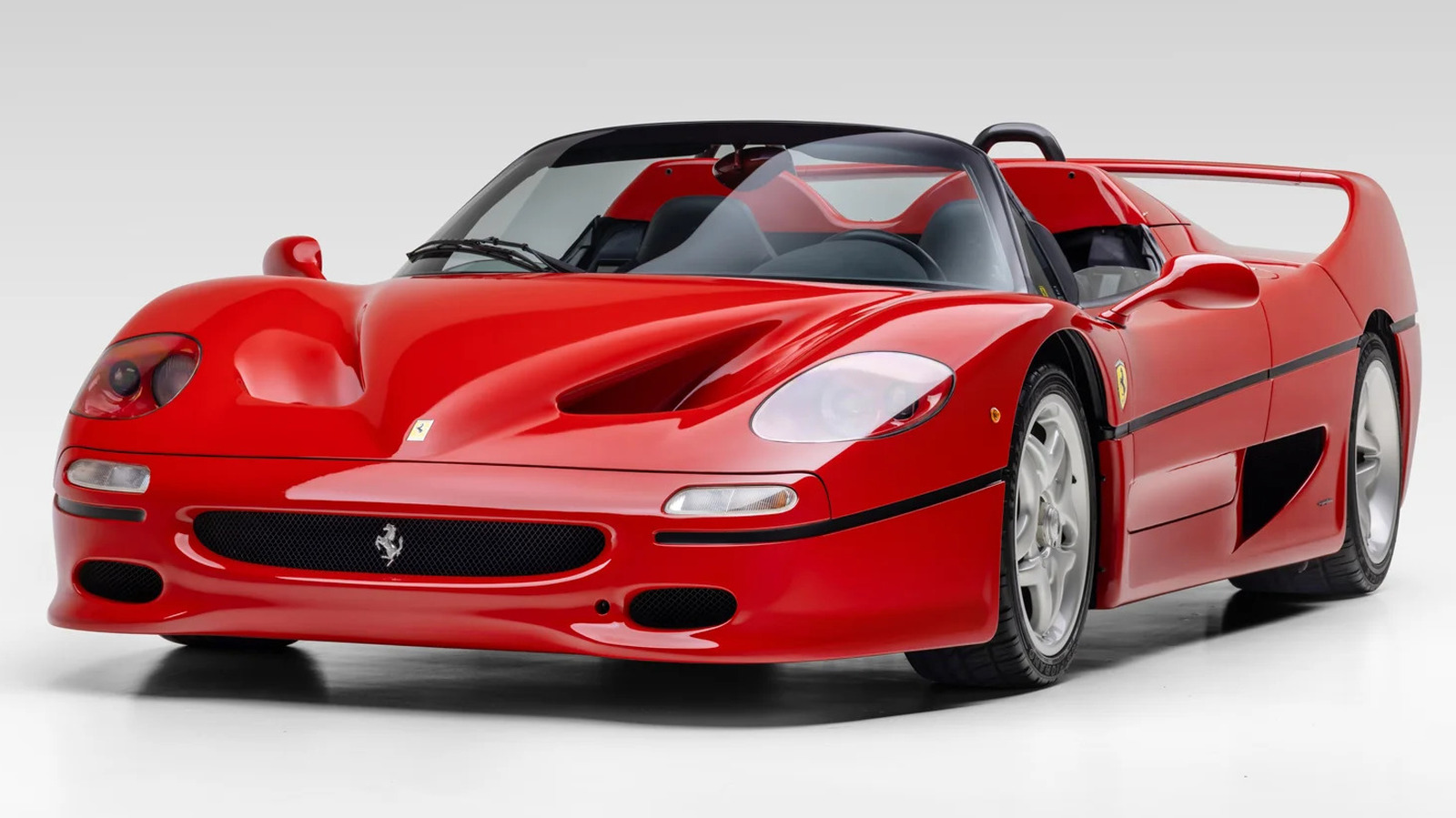
Now the pendulum is swinging back, and the supercar segment is leading the retreat. Bugatti got there first with the Tourbillon, whose dashboard houses a mechanical instrument cluster inspired by Swiss horology. Ferrari followed with the Luce, whose interior blends physical craftsmanship with digital surfaces in ways its polarizing exterior never could.
Even Alfa Romeo’s recent Cuorerosso concept tucks its central screen beneath a mirrored console panel, effectively hiding it when not in use. Mate Rimac, the man who builds hypercars powered by cutting-edge EV technology, has said the supercar market has entered its “Swiss watch phase.” When the guy who built the Nevera starts talking about the value of mechanical artistry, the cultural shift is real.
Building these hybrid gauges is harder than it looks. The panel beneath that physical needle almost certainly needs to be OLED to deliver true blacks without light bleed, though Porsche hasn’t confirmed the display technology. Jean, owner of Usual Suspects Garage, a shop specializing in German performance cars, has been developing aftermarket digital gauges for classic BMWs and says display quality has been the single hardest variable to get right.
Whether this philosophy trickles down to more accessible Porsches remains an open question. Instrument clusters went partially digital before going fully digital the first time around, and the shift happened largely because screens got cheaper than physical hardware. Reversing that equation, making analog components feel premium enough to justify their cost, only pencils out at the top of the market.
There’s a practical tension the Mission S doesn’t fully resolve. Asking someone who just spent supercar money to pull out a phone and mount it on the dash for basic infotainment feels like an aesthetic choice masquerading as a functional one. A compact, fixed display for essentials like navigation and climate wouldn’t compromise the analog ethos.
Porsche clearly knows that. The company is making a statement, drawing a line in carbon fiber. Whether the production version holds that line or quietly adds a screen somewhere is the question that matters most, and one Porsche isn’t answering yet.

Share this Story