
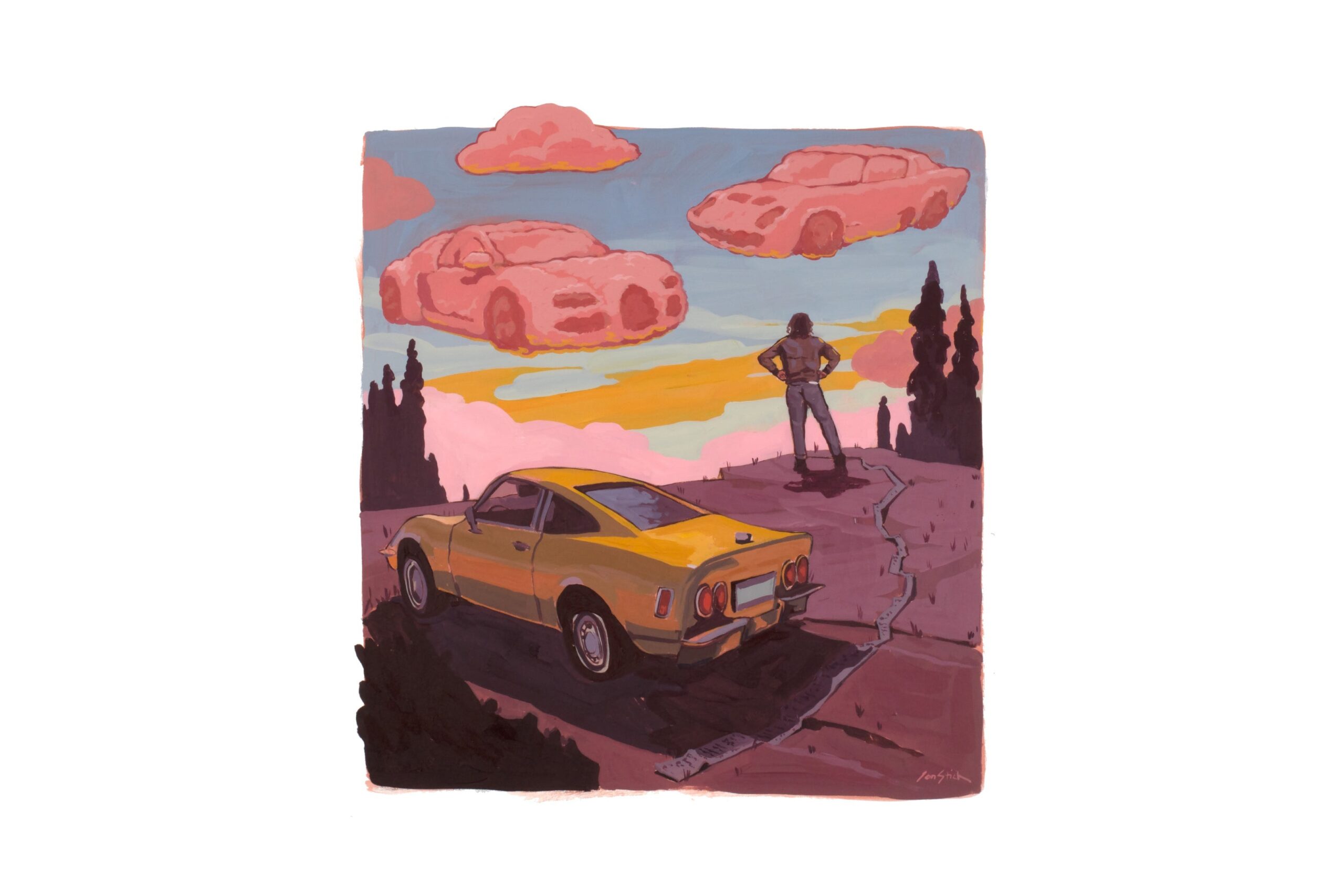


Elana Scherr spent last month behind the wheel of $10 million worth of automobiles. The Car and Driver senior editor, who normally rotates through $100,000 to $200,000 in weekly press cars, found herself piloting a Bugatti Veyron Super Sport and a Lamborghini Miura back to back. Two cars, $6 million combined, and a very nervous right foot pulling into traffic.
The Veyron Super Sport, with its 1200-hp quad-turbo W-16, landed in 2010 at $2.4 million. It was the car that first cracked 250 mph in production form. Sixteen years later, four-digit horsepower can be had for what a Veyron owner might drop on a wheel-and-tire swap.
A Tesla Model S Plaid matches the thrust for a fraction of the cost. But nobody stops and stares at a Plaid the way they do at that rounded, cabochon-shaped Bugatti body.
The used Veyron market runs so hot that Bugatti now offers factory re-spec services. Buy one at auction in the wrong shade? Bugatti will recolor your interior to match your garage. That’s a sentence only a handful of cars in history could justify.
Scherr found the driving experience “weirdly low-key.” No screens. No labyrinth of drive modes. Just a power gauge sitting sullenly in its lower quarter as the car loafed through beachside traffic.
The W-16 delivered smooth, unstressed confidence rather than the jittery electric-assist punch of modern performance cars. Competent. Refined. And not how she’d spend millions.
The Miura got her money. Or would have, in the hypothetical world where automotive journalists have hypothetical multimillions.
Lamborghini’s mid-engined masterpiece from the late 1960s remains one of those unassailable choices in car culture. Scherr compared it to the Rolling Stones or Hitchcock. You name the Miura as your favorite, and nobody challenges you.
The transverse V-12 howls like a wolf pack under a full moon, each upshift sweetening the note. The gated shifter clicks with mechanical precision. The body, penned by Marcello Gandini when he was just 26, still stops people cold, car enthusiast or not.
It also has a tendency to get light in the front end and occasionally catch fire. Nobody’s perfect.
That tension sits at the core of every multimillion-dollar collector car experience. The Veyron is the safer, more composed machine. Engineered to within an inch of its life, a technological tour de force that somehow feels anticlimactic at seven-tenths.
The Miura is dangerous, raw, flawed, and utterly magnetic. One car was built to break records. The other was built to break hearts.
Both sit in a price bracket that renders rational evaluation pointless. You don’t comparison-shop at this level. You fall in love or you don’t. Scherr fell for the Italian, fire risk and all.
Her month of excess ended with a quiet coda. After the Bugatti and the Lamborghini went back to their owners, she still had her own car to drive. An Opel GT, the cheeky little German two-seater that brought her running total to $10,003,000. Three thousand dollars of Detroit-era Opel sitting in the same mental garage as $6 million in European exotica.
Scherr has spent years writing about the gap between price and quality. Expensive cars break. Cheap cars surprise you. The costliest machine isn’t always the one that sticks with you.
Her Opel probably needs a squeegee for its passenger-side window. She doesn’t seem to mind.
Bugatti, meanwhile, is still fielding calls from Veyron owners who want new interior leather. The waitlist, reportedly, is not short.


Share this Story