
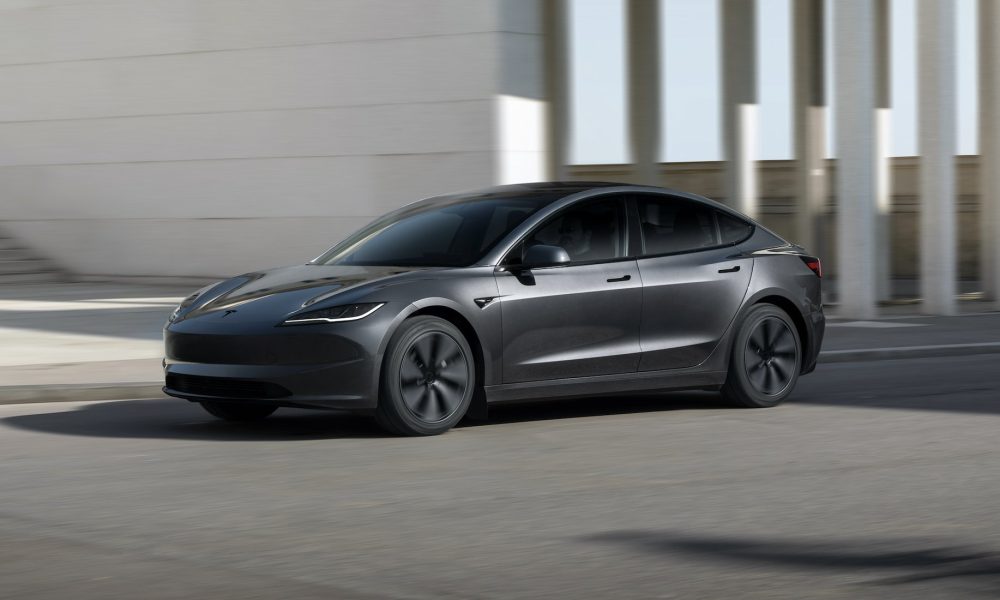


Tesla started selling an upgraded Model 3 in China on October 1 with a bigger touchscreen, vehicle-to-load capability, and a new interior color that replaces the old white option entirely. American buyers got none of it.
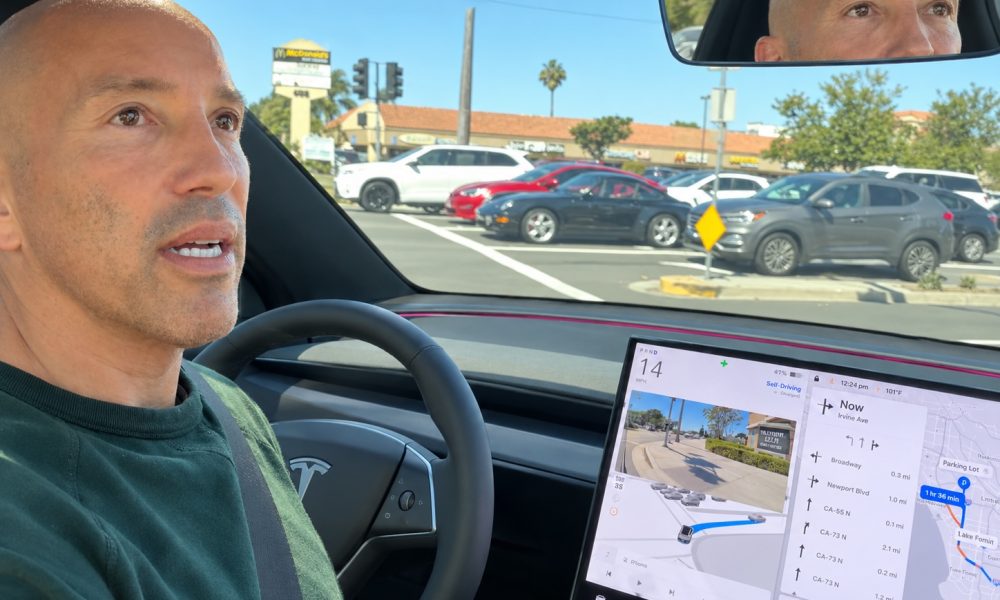
The Chinese Model 3 now sports a 16-inch front display, up from the 15.4-inch screen in the U.S. version. It also gains V2L, which lets owners draw power from the car’s battery to run appliances or tools. And the white interior is gone, replaced across Premium and Performance trims by a color Tesla calls Zen Grey.
A black headliner, already standard on U.S.-built Model Y vehicles, comes standard on the refreshed Chinese Model 3 as well. New 19-inch Dark Nova wheels are included on the Premium trim. The same spec sheet applies to Australia and New Zealand, both fed by Giga Shanghai.
Pricing starts at 235,500 yuan, roughly $35,000, for the rear-wheel-drive variant. The Performance tops out at 339,500 yuan, around $50,600.
None of this is radical. A slightly larger screen, a new wheel design, a color swap. But the pattern tells a story Tesla has been writing for years now.
Shanghai leads. Fremont follows. The company has repeatedly used its Chinese factory as a proving ground for production changes before rolling them stateside.
The black headliner and larger touchscreen have already appeared in certain U.S.-built vehicles, which suggests the parts are in the pipeline. The question is timing. Tesla could push these updates to American trims as a year-end demand lever, or it could wait until early 2027.
Either way, U.S. customers are once again watching from the sidelines while Chinese buyers get the freshest hardware.
The V2L addition is the most substantive change in the bunch. Chinese EV buyers have come to expect bidirectional charging capability. BYD offers it across most of its lineup.
Nio, Xpeng, and Li Auto have made it standard or near-standard on recent models. Tesla was conspicuously late to the party. Getting V2L into the Model 3 closes a competitive gap that Chinese rivals had been exploiting in marketing for over a year.
Whether V2L arrives on U.S. Model 3s is another question. Tesla has not confirmed it, and the company’s approach to bidirectional power in North America has been cautious, mostly limited to Powerwall integration and Cybertruck’s 240-volt outlet. Regulatory and utility-interconnection hurdles in the U.S. are more complex than in China, which may partly explain the lag.
The decision to kill the white interior globally is worth watching. Tesla introduced Zen Grey on Model Y earlier this year, and now it is the only lighter option for Model 3 buyers in Shanghai-supplied markets. White had been a Tesla signature since the Model 3 first launched.
Dropping it signals that Tesla views interior differentiation as a tool for keeping the lineup feeling current without touching the sheet metal.
Giga Shanghai produced over 950,000 vehicles in 2025 and remains Tesla’s highest-volume plant. Its role as the company’s export hub for right-hand-drive markets and as a testbed for production tweaks gives it outsize influence on the global product cadence. When Shanghai moves, it is usually a preview, not an experiment.
U.S. Model 3 buyers checking their configurators this morning will find the same options they had yesterday. How long that remains the case depends on whether Tesla needs a sales boost before December, or whether it is content to let Shanghai run ahead a little longer.
Share this Story