
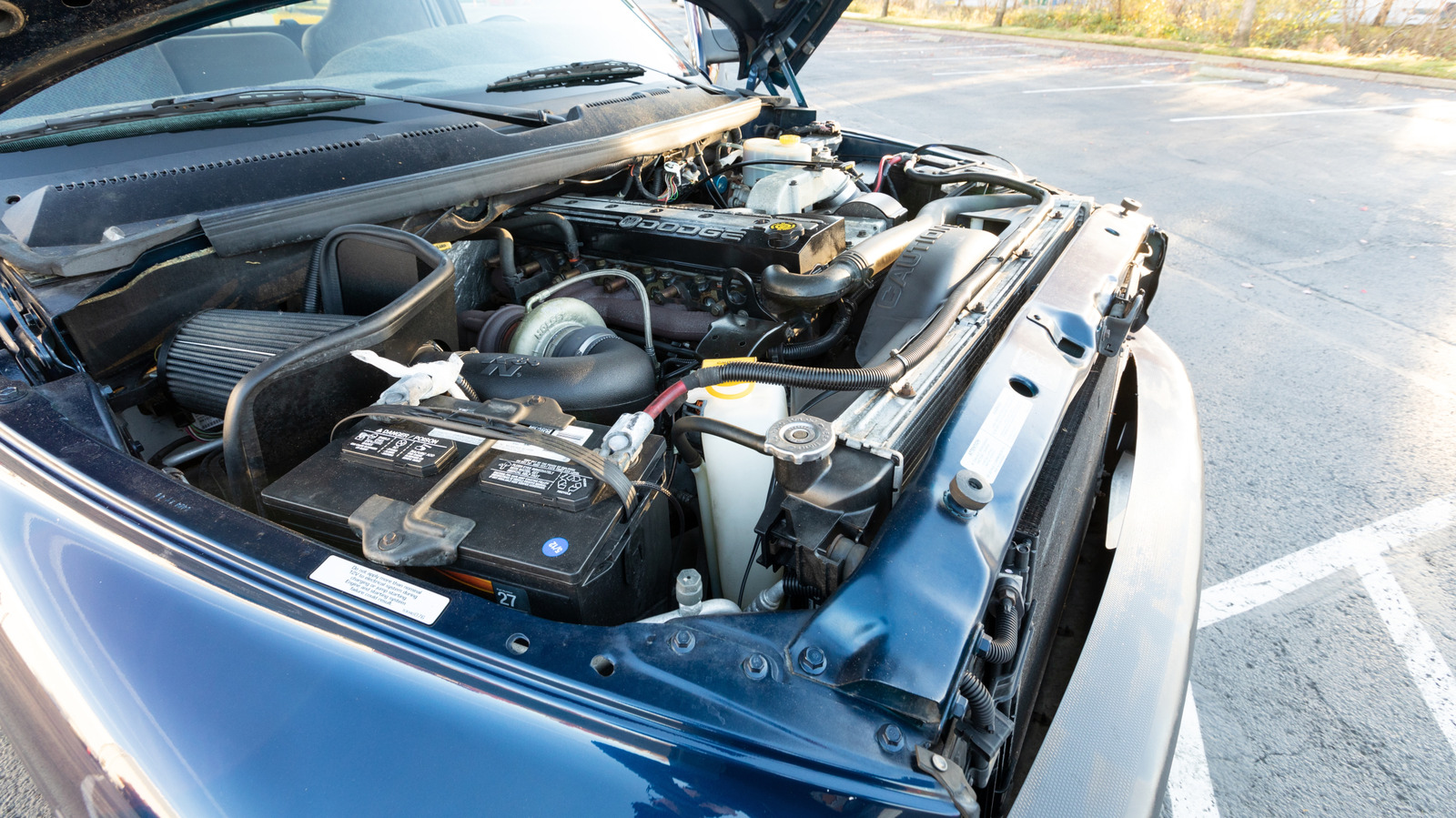


Spray a can of ether into the intake of your diesel truck and you might as well be lighting a fuse. That’s the blunt reality behind a warning experienced diesel mechanics have been shouting for decades but weekend wrenchers keep ignoring. Starting fluid and diesel engines are a catastrophic mismatch.
The chemistry is simple. Diethyl ether, the active ingredient in most starting fluids, has a far lower flash point than diesel fuel. In a gasoline engine, that’s manageable because spark timing controls when combustion happens.
A diesel has no such luxury. Compression alone triggers ignition, and the engine has zero ability to govern when a volatile substance like ether decides to go off.
That’s the trap. The ether-laced air charge can ignite before the piston finishes its compression stroke, sending explosive force in the wrong direction at the wrong time. Mechanics call it detonation. Engine builders call it a death sentence.
The damage list reads like an autopsy report: shattered pistons, snapped wrist pins, bent connecting rods, cracked blocks, blown head gaskets. If a component exists inside that engine, detonation can destroy it. One ill-timed spray on a cold morning and you’re looking at a five-figure rebuild instead of a late arrival at work.
The frustrating part is how preventable it all is. Modern diesels are engineered with glow plugs, intake heaters, and block heaters specifically to handle cold starts without chemical shortcuts. Those systems exist because manufacturers understood the detonation risk and designed around it. Bypassing them with a $4 can of starting fluid is the mechanical equivalent of skipping the parachute because you found a bedsheet.
There is one narrow exception, and it’s worth stating precisely so nobody stretches it into permission. Some older diesel engines — generally those more than 20 years old, lacking glow plugs, and running relatively low compression ratios — can tolerate starting fluid, but only when the manufacturer’s documentation explicitly says so. We’re talking vintage farm tractors and old pre-chamber diesels, the kind of iron designed before electronic engine management existed.
If your truck has a turbo, a common-rail fuel system, or was built this century, the exception does not apply to you.
The internet is full of guys who swear they’ve been spraying ether into their Cummins or Duramax every winter for years without issue. Some of them are telling the truth in the same way a chain smoker who hasn’t gotten cancer yet is telling the truth. Surviving a bad practice doesn’t validate it.
Detonation doesn’t happen every single time. It happens the one time conditions line up wrong, and then you’re shopping for a long block.
Cold-start problems in a modern diesel almost always point to a real underlying issue: weak glow plugs, a failing intake heater, degraded batteries, or fuel that’s gelled because nobody bothered with winter-blend additive. Diagnosing and fixing those problems costs a fraction of what an engine replacement runs.
Starting fluid was formulated for gasoline engines. It says “diesel safe” on some cans because marketing departments are not in the business of limiting their customer base. The laws of thermodynamics, however, don’t care what the label says.
A diesel’s compression stroke doesn’t negotiate. It just fires whenever the flash point arrives, invited or not. Keep the ether away from the intake. Let the glow plugs do their job.






Share this Story