
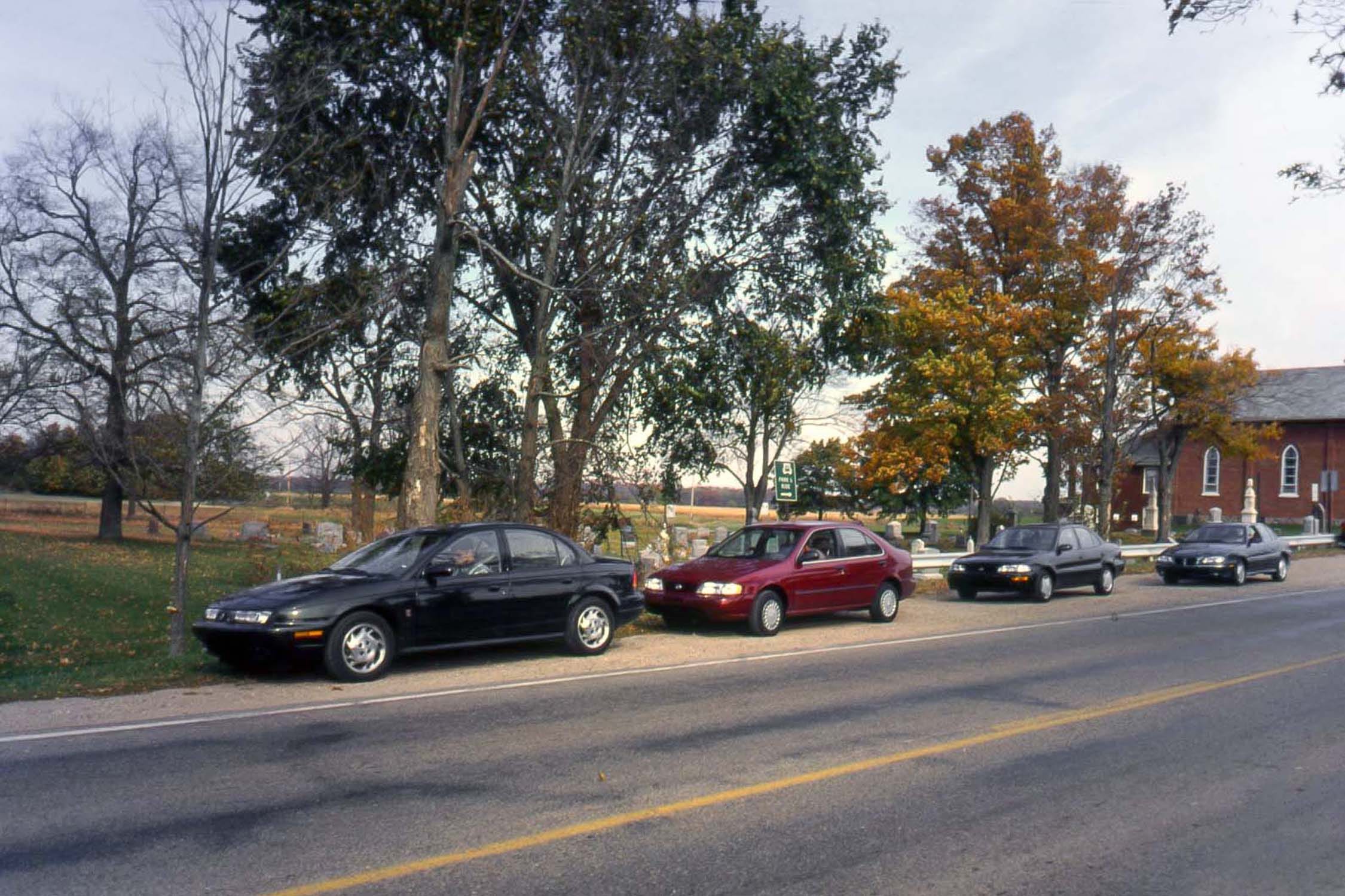


Car and Driver just dusted off a nearly three-decade-old comparison test, republishing its 1996 small sedan shootout with a full photo gallery. Eight cars, all of them now dead or unrecognizable. The lineup reads like a tombstone: Dodge Stratus, Ford Contour GL, Geo Prizm, Honda Civic LX, Mazda Protegé ES, Nissan Sentra GXE, Pontiac Grand Am SE, and Saturn SL2.
Every single brand in that test has either vanished, abandoned sedans, or been absorbed into something else entirely.
Geo is gone. Saturn is gone. Pontiac is gone. The Dodge Stratus and Ford Contour didn’t survive the 2000s. The Mazda Protegé evolved into the Mazda3, which Mazda still builds but barely anyone notices.
Nissan killed the Sentra’s relevance long before it finally killed the car. Only the Honda Civic endures in anything resembling its original mission, and even that car now starts at nearly $30,000.
The timing of this republication is no accident. Car and Driver’s archive pieces tend to surface when the present makes the past look interesting, and right now the American market has almost no affordable small sedans left. The segment that once defined everyday transportation — the car you bought because you needed four doors, decent gas mileage, and a payment under $250 a month — has been steamrolled by crossovers, SUVs, and relentless price inflation.
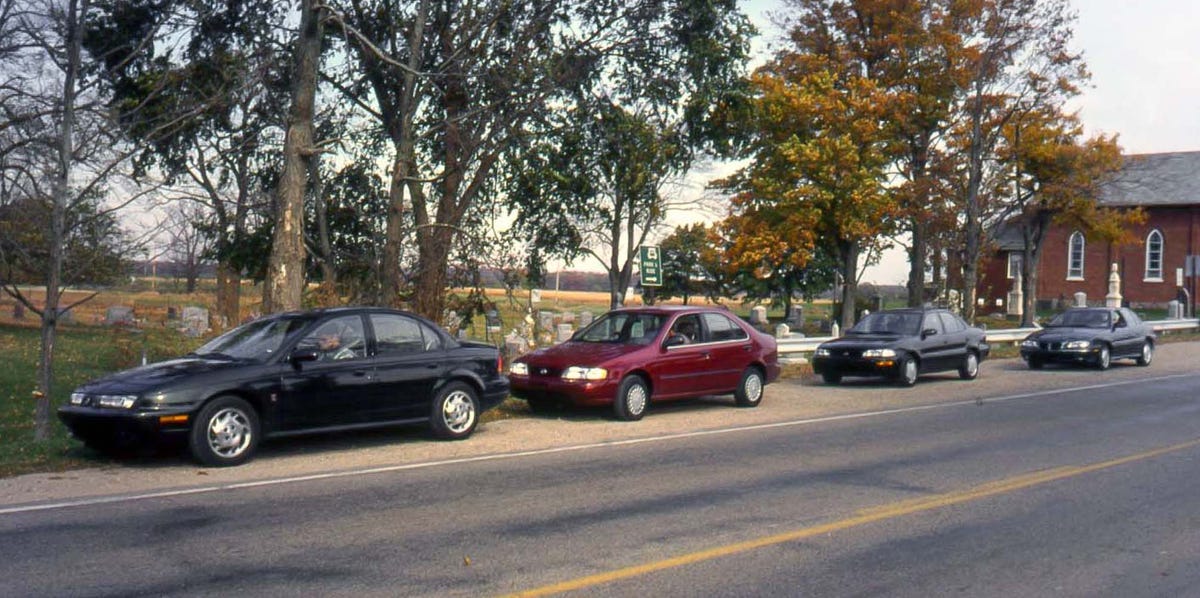
In 1996, these eight cars represented the sharpest edge of real competition. Manufacturers fought viciously for buyers spending $13,000 to $16,000. The differences between a good small sedan and a bad one came down to shift quality, seat bolstering, and whether the trunk hinges would crush your groceries.
These were not aspirational vehicles. They were tools, and the best ones delivered honest, uncomplicated transportation.
The photos, shot by Jim Frenak, Tom Cosgrove, and Phil Berg, capture that era with striking clarity. Cloth seats with no pretension. Dashboards built from hard plastic that made no apologies.
Engines you could actually see and reach into without removing half the front end. The Pontiac Grand Am’s swoopy plastic interior looked adventurous at the time. Now it looks like a museum piece from a civilization that believed body cladding was the future.
General Motors had three separate entries in this test — the Grand Am, the Prizm, and the Saturn — each from a different division, each targeting the same buyer, each cannibalizing the others. That alone tells you everything about why GM nearly went bankrupt a decade later. Ford brought the Contour, a car derived from the European Mondeo that deserved better than the neglect it received.
Chrysler’s Stratus was the cab-forward experiment that aged fast and rusted faster.
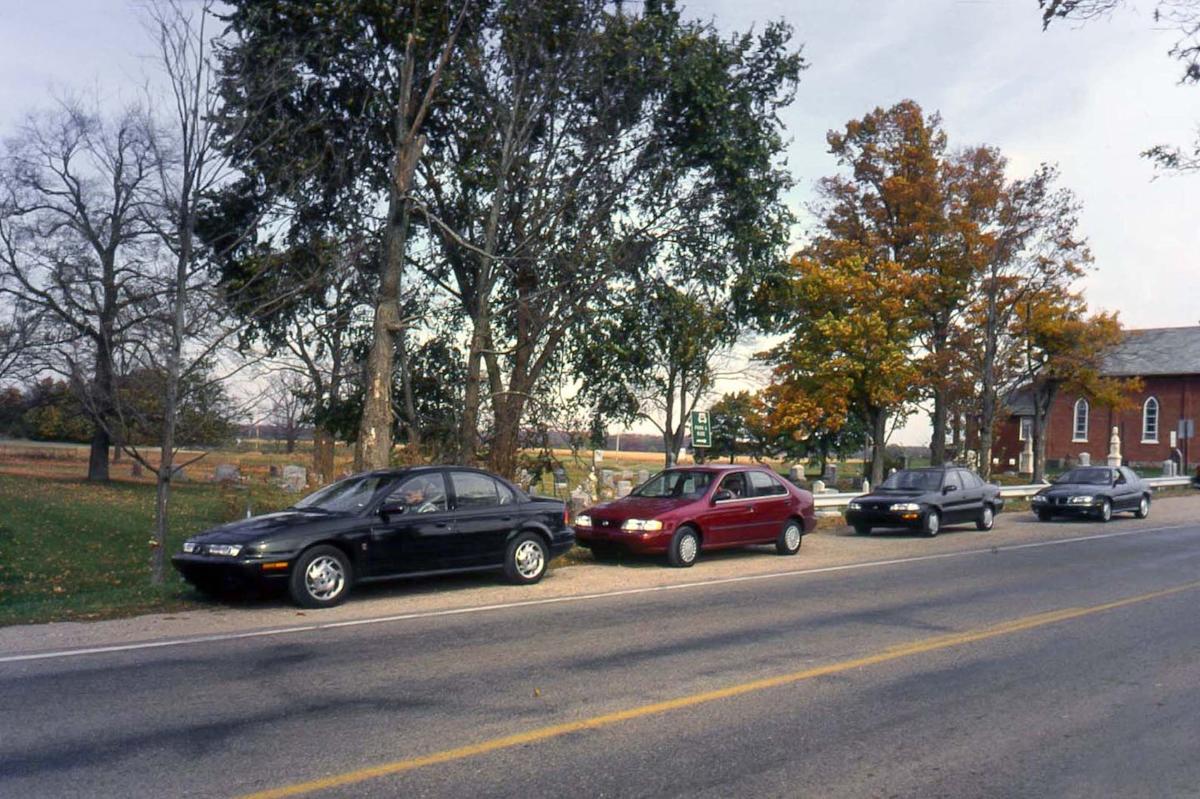
The Japanese entries, predictably, were the ones built to last. The Civic and Protegé represented engineering philosophies that prioritized durability and driver satisfaction over flash. The Sentra split the difference, competent but forgettable, a pattern Nissan has never quite shaken.
What strikes you looking at this lineup three decades later is not nostalgia. It is absence. An entire category of vehicle, the honest affordable sedan, has been hollowed out.
The buyers who once cross-shopped these eight cars are now choosing between subcompact crossovers that cost $28,000 and used cars with 80,000 miles. The competition that made the 1996 test possible — eight manufacturers slugging it out below $16,000 — does not exist anymore.
Car and Driver can republish these old tests because the cars themselves have become artifacts. The small sedan didn’t die of natural causes. It was killed by SUV profits, regulation, and an industry that decided affordable wasn’t worth the effort.





Share this Story