
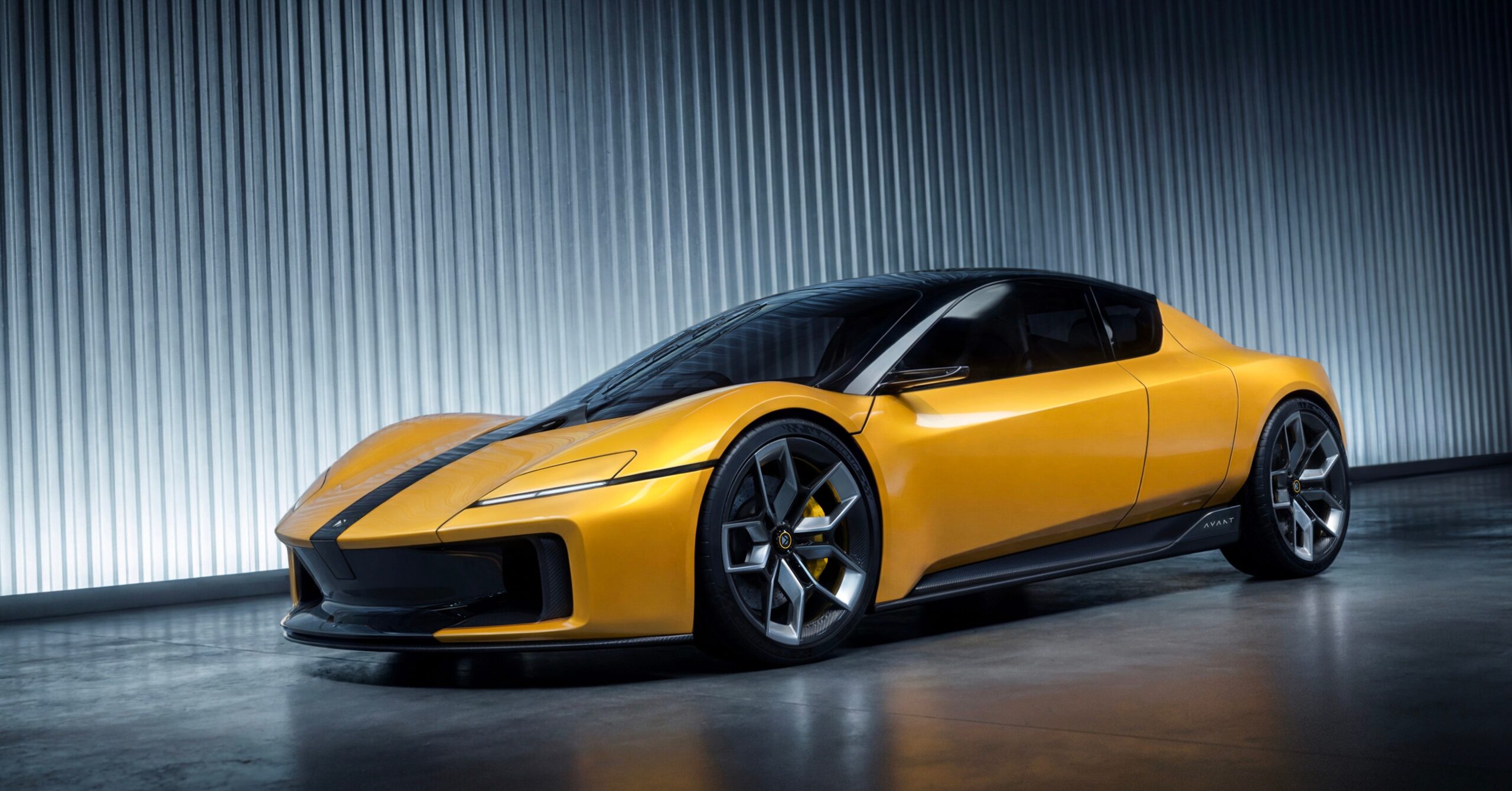


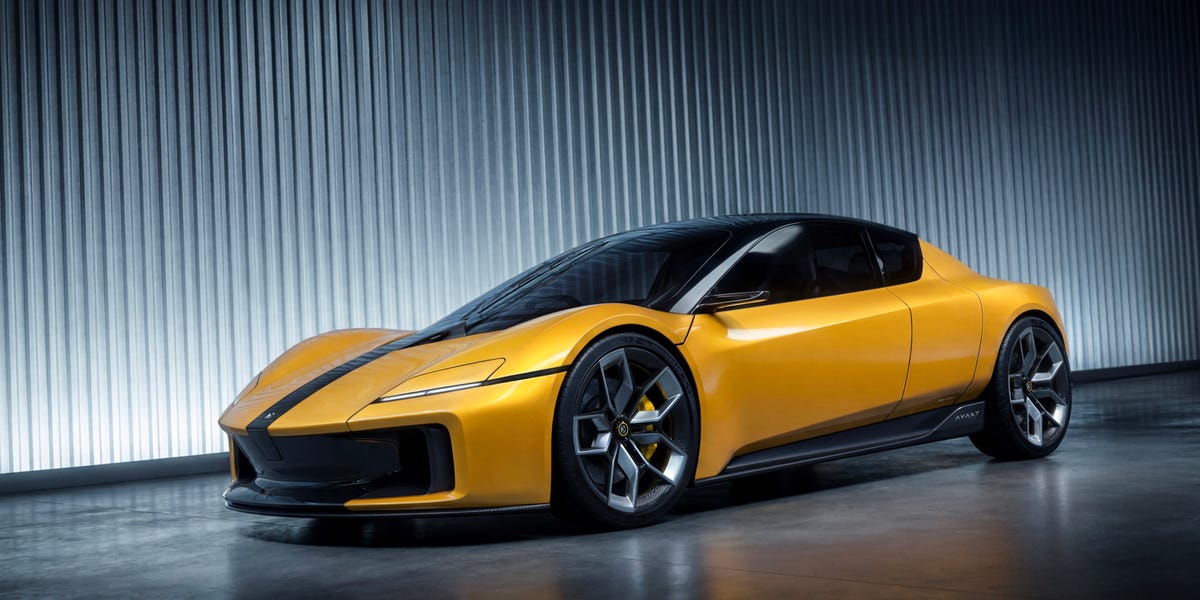
A mid-engine V-8 2+2 weighing 2000 pounds. A spiritual successor to the Lotus Esprit. And two small U.K. firms claim they could have it road-legal in a year and into production in two. By automotive standards, that’s not fast — it’s reckless optimism. Or maybe it’s exactly the kind of audacity this industry desperately needs.
The concept comes from a collaboration between Watt Electric Vehicles, a small-volume chassis manufacturer, and Avant Design, a studio that uses VR not to make pretty pictures but to engineer functional vehicles in virtual 3-D space. The project was commissioned by U.K. publication Autocar as a thought experiment after Lotus announced it would end production at its historic Hethel headquarters. The question was simple: what would it take to bring a lightweight British sports car back to life on British soil?
Their answer looks gorgeous and sounds impossible.
Avant Design’s contribution goes deeper than styling. The firm claims its VR modeling process fully resolves real-world engineering constraints during the design phase — packaging, structural requirements, regulatory considerations — rather than punting those problems to a later stage where they burn months and millions. It’s design-as-engineering, not design-then-engineering.
Watt Electric Vehicles brings the underpinnings. The company’s PACES platform — Passenger And Commercial EV Skateboard — was shown in drivable form at CES earlier this year. Despite the EV-centric name, Watt says the chassis architecture can accommodate combustion and hybrid powertrains. For this Lotus concept, the target is a mid-mounted V-8, which tells you these two aren’t chasing trends.
The broader pitch is aimed squarely at OEMs drowning in crossover sameness. Manufacturers know the path from interesting render to functional prototype is brutally expensive and slow. That cost calculus is why we get another lifted hatchback instead of the sports car everyone claims to want. Watt and Avant argue they can compress that timeline dramatically, getting a concept to proof-of-concept status fast enough to lower the financial risk of trying something different.
There’s historical precedent for this kind of British cottage-industry brilliance. Mazda leaned on U.K. specialist firms to develop the original Miata. Cosworth grew from a tiny London workshop into a name synonymous with racing engines. The U.K. has a deep bench of small engineering outfits that punch absurdly above their weight.
The difference now is the tooling. VR design environments that can stress-test packaging before a single piece of aluminum gets cut. Modular skateboard platforms that genuinely flex across vehicle types. These aren’t new ideas individually, but combining them under one roof — or two small roofs — with the explicit goal of serving outside clients is a sharper business model than most EV startups have managed.
Whether this particular Lotus concept ever becomes real is almost beside the point. Lotus itself is busy building SUVs in China. The Esprit’s successor isn’t coming from Norfolk.
But the underlying capability is what matters to anyone paying attention. If a mid-engine sports car can be virtually engineered and prototyped in under two years by firms most people have never heard of, then the traditional excuse — that sports cars are too expensive to develop for small volumes — starts to weaken.
The auto industry has spent the last decade telling enthusiasts that the cars they love don’t pencil out. Two companies in a country that invented the kit car are calling that bluff.





Share this Story